High Voltage Cable Sheath Testing
Introduction to High-Voltage Cable Sheath Testing
The Cable's Outer Armor
High-voltage cables are the arteries of our power grid, carrying massive amounts of electrical energy over long distances. To do this safely, the core conductors are wrapped in layers of insulation. The final, outermost layer is the sheath, or jacket. Think of it as the cable's armor.
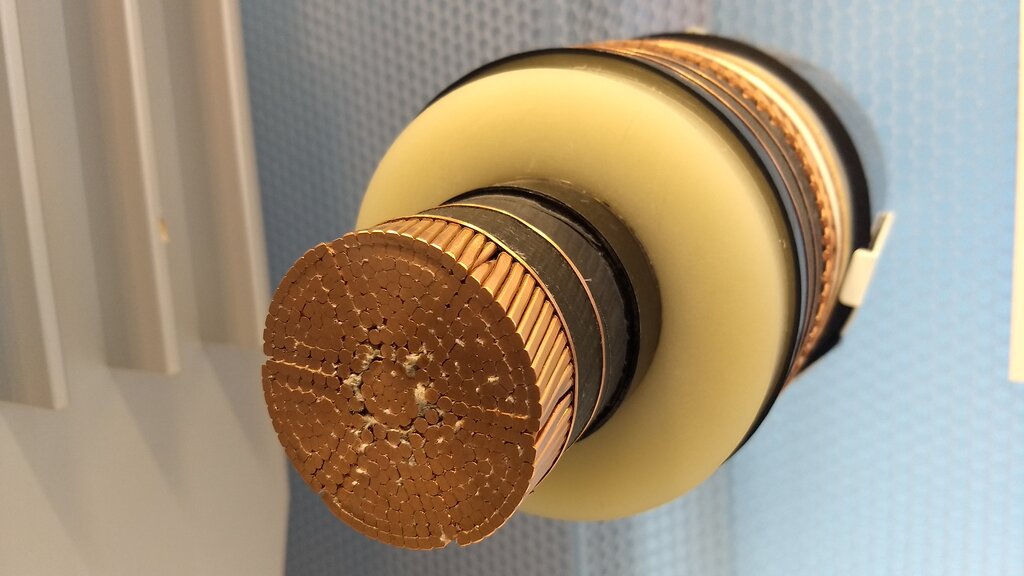
This sheath has a critical job: it protects the sensitive inner layers from the outside world. It shields the cable from moisture, chemicals in the soil, and physical damage from rocks or digging. Without a sound sheath, the cable's insulation would quickly degrade, leading to a failure and a potential power outage.
Why Test the Sheath?
Even a small nick or crack in the sheath, perhaps made during installation, can become a major problem. Water can seep in through these tiny faults, slowly compromising the insulation and corroding the metallic components within the cable. Over time, this damage can lead to a complete breakdown of the cable.
Sheath testing is a form of preventative maintenance. The goal is to find these small defects before they cause a catastrophic failure.
By verifying the integrity of the sheath, technicians can ensure the cable is well-protected and will have a long, reliable service life. It's a crucial step after a new cable is installed, after any repairs are made, or as part of a routine maintenance program for critical power lines.
How the Tests Work
So how do you find a tiny, invisible hole in a cable that might be buried underground? The basic principle is to apply a specific test voltage to the sheath and measure how much current leaks through it. A healthy sheath will allow very little current to pass. If there's a defect, current will leak out at that point, and the test equipment will detect it.
There are two common methods for this.
DC Voltage Test
noun
A test that applies a steady, constant voltage to the cable sheath. It is effective at finding existing, direct faults like cuts or punctures. It's a straightforward test of the sheath's basic integrity.
Another, more modern approach uses a different kind of voltage.
VLF Test
noun
Stands for Very Low Frequency. This test uses an AC voltage, but at a frequency far lower than the standard 50 or 60 Hz of our power grid. This low-frequency stress is very effective at detecting developing weaknesses and potential failure points that a DC test might miss.
By using these testing methods, engineers can get a clear picture of a cable sheath's health and make sure our power grid remains robust and reliable. Before we finish, let's check your understanding.
What is the primary function of a high-voltage cable's outer sheath?
According to the principles of sheath testing, a healthy, undamaged sheath will exhibit which characteristic when a test voltage is applied?
Confirming the integrity of a cable's outer sheath is a simple but vital step in maintaining a stable power supply.