High Throughput Screening for Space Aging and Longevity
Introduction to High-Throughput Screening
What Is High-Throughput Screening?
High-throughput screening, or HTS, is a method used in drug discovery and biology to rapidly test thousands to millions of chemical compounds. The goal is to identify substances that have a specific effect on a biological target, like a protein or a cell.
High-throughput screening (HTS) is a drug discovery process that allows automated testing of large numbers of chemical and/or biological compounds for a specific biological target, for example through binding assays.
Think of it as a massive search operation. Scientists have a vast library of compounds but don't know which, if any, will work. HTS acts like a powerful filter, quickly sifting through the entire library to find a handful of promising candidates, called “hits.” These hits can then be studied more closely.
This process dramatically speeds up the initial phase of research. Instead of manually testing compounds one by one over years, researchers can get initial results in a matter of days or weeks.
The Power of Automation
The “high-throughput” part of HTS is only possible because of automation. The sheer scale of testing—often involving hundreds of thousands of samples—is far beyond what a person could do by hand. Modern HTS labs rely on sophisticated robotics to handle the repetitive tasks of moving liquids and samples.
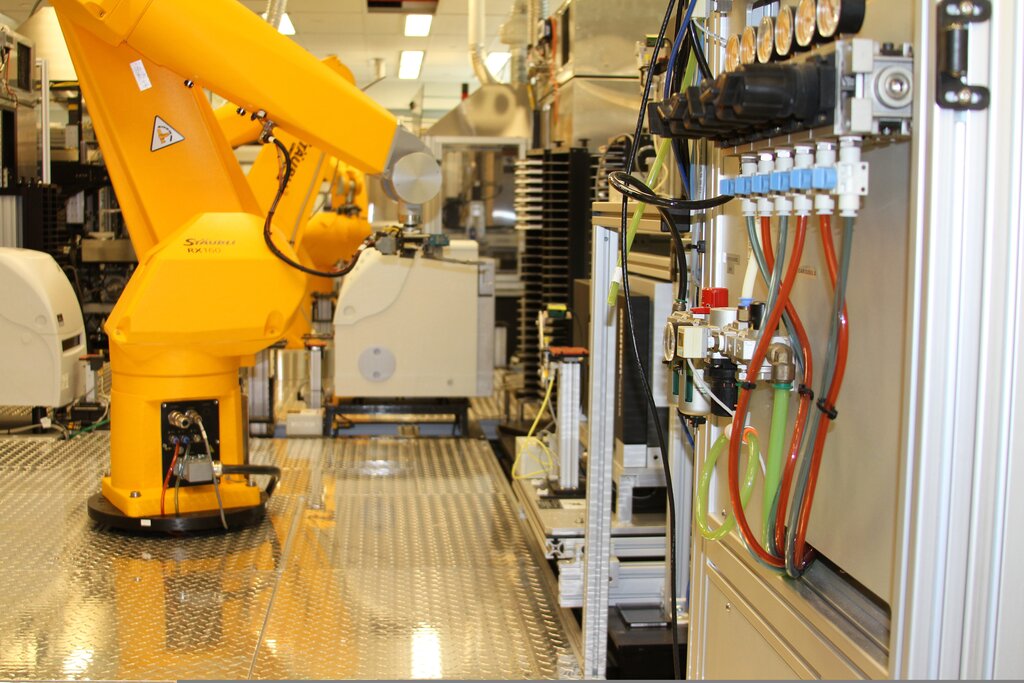
These automated systems use special containers called microplates, which look like small trays with many tiny wells. Each well serves as a miniature test tube. Robots precisely dispense compounds from the chemical library into these wells, add the biological target, and then introduce any other necessary reagents.
This level of automation not only provides incredible speed but also improves accuracy. Robots perform each step with a consistency that minimizes human error, ensuring the results are reliable.
Designing the Right Test
Before any screening can begin, scientists must develop a suitable test, known as an assay. Creating a robust and reliable assay is one of the most critical steps in the entire HTS process. It's not enough to just mix a compound with a target; the assay must produce a clear, measurable signal that indicates whether the compound is having the desired effect.
Assay development and validation are critical and time-intensive activities of High Throughput Screening Shared Resource projects.
An effective HTS assay needs to be:
- Sensitive: It must be able to detect even small effects from the compounds.
- Specific: It should only respond to the biological activity of interest, avoiding false signals.
- Robust: The assay must perform consistently across thousands of wells and over time.
- Simple: It needs to be straightforward enough to be automated, often involving only a few steps.
Commonly, these assays are designed to produce a signal that can be easily read by a machine, such as a change in color, light emission (fluorescence), or radioactivity. This signal is what the automated readers will measure.
Making Sense of the Data
An HTS campaign generates a massive amount of data. For each well on every plate, a detector measures the signal, resulting in millions of individual data points. The final step is to analyze this data to distinguish the true “hits” from the noise.
Bioinformaticians and data scientists use statistical methods to process this raw data. They normalize the results to account for variations between plates or batches. Then, they look for wells where the signal is significantly different from the control wells, which contain no test compound.
These statistical standouts are the preliminary hits. However, the work isn't over. HTS is designed to be a rapid first pass, and it can sometimes produce false positives. The list of hits is carefully reviewed and validated through further, more focused experiments to confirm the initial findings. Only then do these promising compounds move on to the next stage of development.
Now, let's test your understanding of these core concepts.
What is the primary goal of High-Throughput Screening (HTS) in the context of drug discovery?
The development of a reliable test, or assay, is a critical first step for any HTS campaign.
HTS provides a powerful foundation for modern biological research, enabling scientists to explore vast chemical landscapes in search of new discoveries.