Helicopter Aerodynamics Explained
Introduction to Helicopter Aerodynamics
How Helicopters Fly
Unlike airplanes that use fixed wings, helicopters use a set of rotating wings called rotor blades. These blades are what allow a helicopter to do things a plane can't, like take off vertically, hover in one spot, and fly backward.
At its core, flight is a battle against gravity. Any aircraft needs to generate an upward force, called lift, that is stronger than the downward pull of its own weight. Airplanes create lift by moving their entire body forward at high speed, forcing air over their wings. Helicopters achieve the same result by spinning their rotor blades through the air.
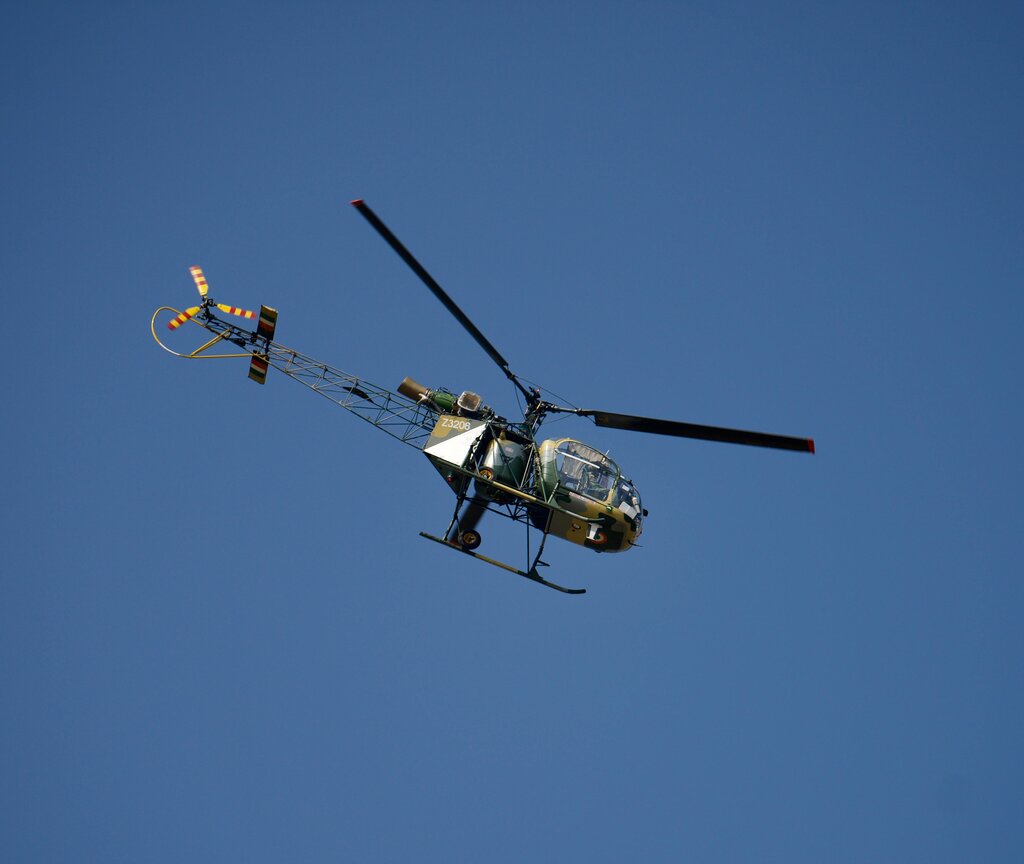
The fundamental principles of aerodynamics apply to both, but the mechanics are quite different. While an airplane needs a runway to build up speed, a helicopter can generate lift while staying perfectly still. This is the magic of the rotor system.
The Shape of Lift
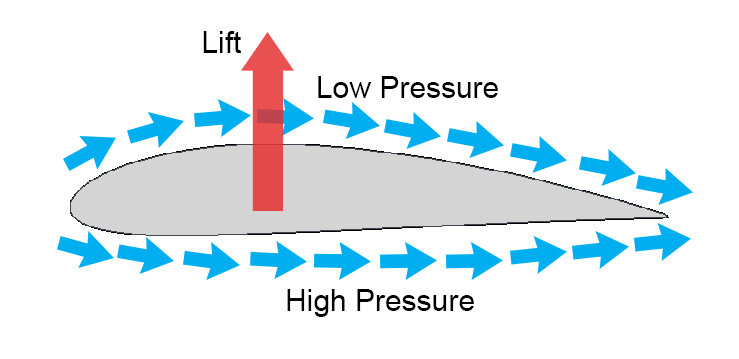
A helicopter's rotor blade, if you slice it open and look at the cross-section, has a specific teardrop-like shape. This shape is called an airfoil, and it's the key to creating lift. You'll find the same basic shape on an airplane's wing.
This shape works because of a principle of fluid dynamics discovered by Daniel Bernoulli. Bernoulli's principle states that as the speed of a moving fluid (like air) increases, the pressure within the fluid decreases.
The airfoil is designed to take advantage of this. As a rotor blade spins, air flowing over the curved top surface has to travel a longer distance than the air flowing along the flatter bottom surface. To cover more ground in the same amount of time, the air on top must move faster. According to Bernoulli's principle, this faster-moving air creates a pocket of lower pressure above the blade. Meanwhile, the slower-moving air below the blade creates a region of higher pressure.
This pressure difference—high pressure below and low pressure above—results in a net upward force. That force is lift.
Tilting for More Lift
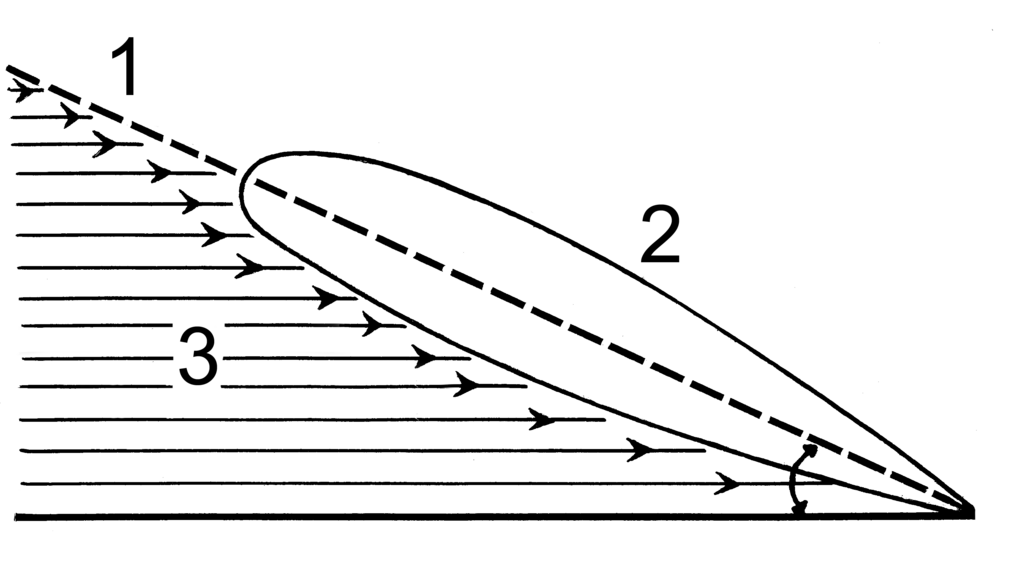
The airfoil's shape isn't the only thing that matters. Pilots can also change the angle of the rotor blades to control the amount of lift they generate. The angle between the blade's chord line (an imaginary straight line from its leading edge to its trailing edge) and the oncoming air is called the angle of attack.
Angle of Attack
noun
The angle between an airfoil's chord line and the direction of the relative wind.
A small angle of attack produces a small amount of lift. By increasing the angle of attack, a pilot can force the air to deflect more sharply, increasing the pressure difference and generating more lift. This is how a helicopter climbs.
However, there's a limit. If the angle of attack becomes too steep, the smooth flow of air over the top of the blade will detach and become turbulent. This condition, known as a stall, causes a sudden and dramatic loss of lift. Helicopter pilots are highly trained to manage the angle of attack to avoid this situation.
Creating Wind and Motion
The biggest difference between a helicopter and an airplane is how they create airflow over their lifting surfaces. An airplane must move its entire body forward to make air flow over its wings. A helicopter, on the other hand, creates its own airflow by spinning its blades.
Even when a helicopter is hovering motionless, its rotor blades are slicing through the air at hundreds of miles per hour. This constant motion ensures that there is always "relative wind" flowing over the airfoils, generating the lift needed to stay aloft.
To fly forward, the helicopter tilts its entire rotor system slightly. This tilt directs some of the lift force forward, creating thrust that propels the helicopter through the air. The same principle allows it to fly backward or sideways. This remarkable versatility is all thanks to the unique aerodynamics of its rotating wings.
What is the primary difference in how a helicopter generates lift compared to a fixed-wing airplane?
According to Bernoulli's principle as it applies to an airfoil, the area of lower pressure is found where the air is moving faster.
That's a brief look at the principles that get a helicopter off the ground. The interaction of lift, airfoil design, and angle of attack is what makes these versatile machines possible.