GPU Acceleration Explained
Introduction to GPU Acceleration
More Than Just Graphics
For decades, the Central Processing Unit, or CPU, was the undisputed brain of the computer. It handled everything, from running your operating system to calculating spreadsheets. But as digital worlds became more complex, especially in video games, the CPU started to struggle with one particular task: creating images on your screen.
To help out, engineers designed a specialized chip called the Graphics Processing Unit, or GPU. Its only job was to handle the intense, repetitive calculations needed to draw realistic 3D graphics. For a long time, that's all it did.
But researchers soon realized the GPU's unique design was good for more than just games. This led to the idea of GPU acceleration: using a GPU to speed up all kinds of demanding computational tasks, not just graphics.
Think of a CPU as a master chef. It can follow a very complex, multi-step recipe from start to finish with incredible skill. A GPU, on the other hand, is like an army of kitchen assistants. You wouldn't ask them to create a gourmet meal, but you could ask all of them to chop onions at the same time, and they'd finish the job much faster than the single master chef.
This difference in approach is the key to understanding GPU acceleration. CPUs are masters of sequential tasks—completing one step before starting the next. GPUs are champions of parallel tasks—doing thousands of simple, similar things all at once.
How a Tool for Gaming Grew Up
In the early days of computing, the CPU handled graphics, but the results were basic. The boom in 3D gaming during the 1990s pushed hardware to its limits. The demand for realistic lighting, textures, and geometry was too much for CPUs to handle alone.
This created a need for dedicated graphics cards with specialized GPUs. Initially, these GPUs were “fixed-function,” meaning they were built to do a very specific set of graphics-related operations and nothing else. They were incredibly fast at those tasks, but they weren't flexible.
The real turning point came in the early 2000s with the invention of programmable shaders. This innovation allowed developers to write small, custom programs that could run directly on the GPU's many cores. It gave them more creative control over graphics, but it also opened a door. Scientists and engineers realized they could use this programmability to run their own calculations, effectively turning the GPU into a general-purpose parallel processor.
An Army of Cores
The secret to a GPU's power lies in its architecture. While a typical CPU might have a handful of very powerful, complex cores (the “master chefs”), a GPU has hundreds or even thousands of smaller, simpler cores (the “kitchen assistants”).
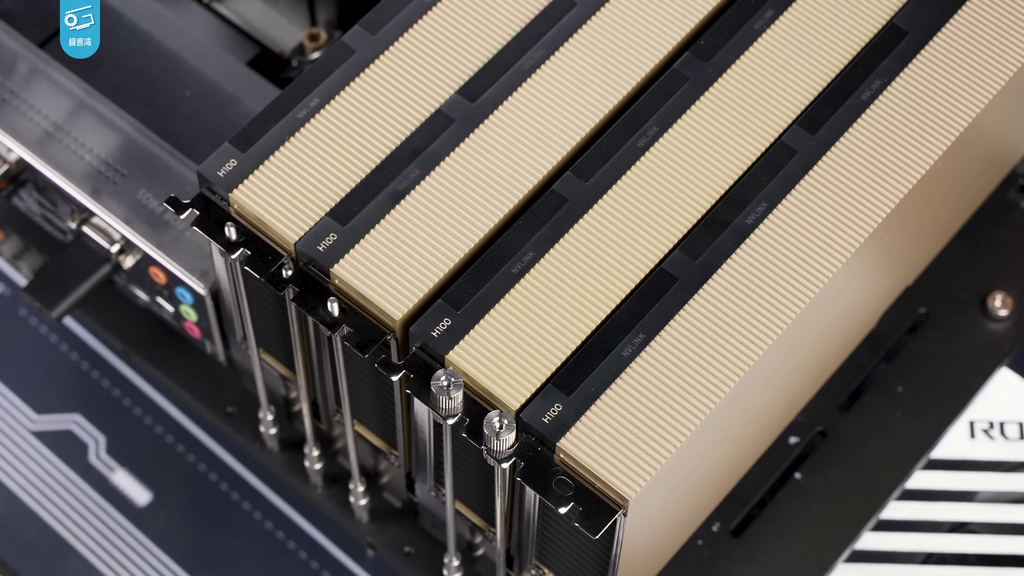
Each individual GPU core isn't very fast or smart on its own. But working together, they can tackle massive datasets with incredible speed, as long as the problem can be broken down into many independent pieces. This is the essence of parallel processing.
Unlike the design of traditional central processing units (CPUs, see “GPU vs CPU” discussion below), GPU design involves a massive number of smaller processing units (cores) that can handle tasks in parallel—tasks that can be divided into many smaller subtasks to be processed simultaneously.
A task like processing a single large image is perfect for a GPU. Each core can be assigned a few pixels to work on simultaneously. By the time a CPU would have processed just the first few rows of pixels one by one, a GPU has already finished the entire image.
This ability to perform many simple calculations at once has made GPU acceleration essential. It's the engine behind today's breakthroughs in scientific research, data analysis, and artificial intelligence, all of which rely on processing enormous amounts of data in parallel.
What was the primary technological innovation that allowed GPUs to evolve from specialized graphics hardware into general-purpose parallel processors?
Which analogy best describes the architectural difference between a CPU and a GPU?
By moving beyond their origins in graphics, GPUs have become fundamental accelerators for modern computing, tackling problems that were once too large or complex to solve.