GitHub Copilot Beyond Code
Introduction to Vibe Coding
What Is Vibe Coding?
Imagine describing an app idea to a friend, and that friend instantly starts building it for you. That's the essence of vibe coding. Instead of writing precise lines of code in a programming language, you describe what you want to create in plain English. An AI assistant then translates your instructions—your "vibe"—into working code.
Vibe coding is the practice of creating software by describing what you want in natural language, letting artificial intelligence generate the code, and then refining it through conversation.
This process is conversational. You might start with a simple request, see what the AI produces, and then ask for changes. For example, you could say, "Make the button blue," or "Add a feature that saves user notes." You guide the AI through a series of natural language prompts until the software matches your vision. The focus shifts from memorizing syntax to clearly articulating your ideas.
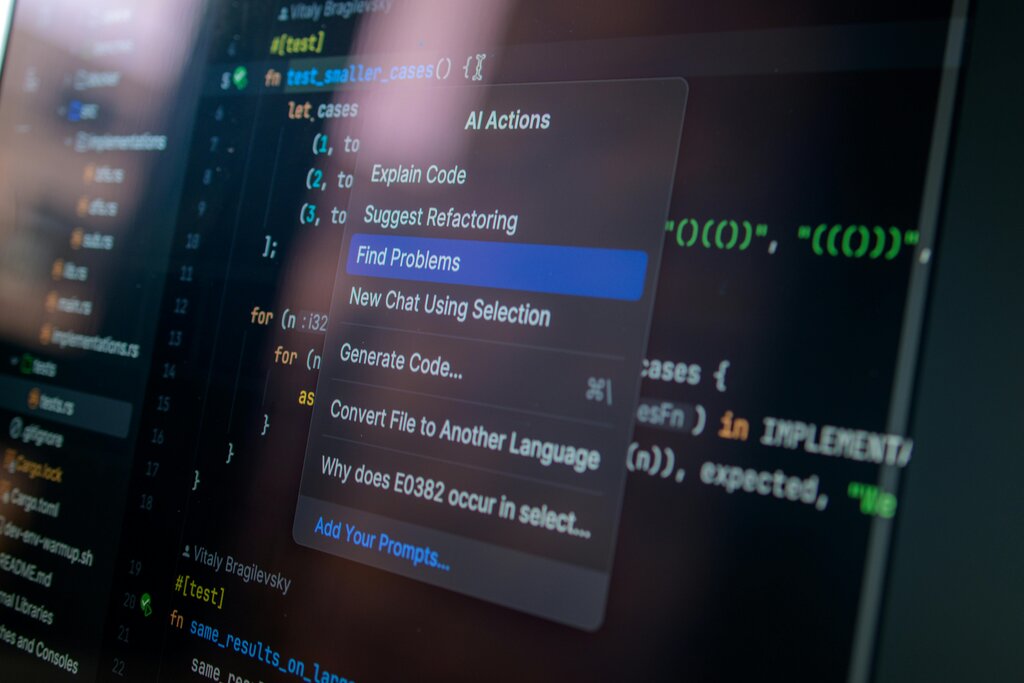
Coding Without Code
The biggest advantage of vibe coding is that it makes software development accessible to everyone, not just trained programmers. If you have an idea, you can start building it without spending months learning a programming language first. This dramatically lowers the barrier to entry for creating websites, mobile apps, or simple tools.
You focus on the "what," and the AI handles the "how."
This approach also speeds up the development process. Tasks that used to take hours of manual coding can now be completed in minutes. This is especially useful for rapid prototyping, where the goal is to quickly build a basic version of an application to test an idea. You can experiment with different features and designs without a major time investment.
GitHub Copilot in Action
One of the most popular tools for vibe coding is GitHub Copilot. It works like an AI pair programmer that lives inside your code editor. As you describe what you want to do in a comment, Copilot automatically suggests entire blocks of code to accomplish the task.
Let's walk through a simple example. Say you want to create a web page that greets a user by name. You could start by writing a simple prompt in your HTML file.
<!-- Create a title that says 'Welcome!' and a text input field for a user's name. Add a button that says 'Submit'. -->
GitHub Copilot would see this comment and instantly suggest the HTML code needed to create those elements. Then, you could add another prompt to describe the desired behavior.
<!-- When the user clicks the submit button, display a personalized greeting like 'Hello, [Name]!' below the button. -->
Copilot would then generate the necessary JavaScript to make the page interactive. Through a series of simple, descriptive steps, you can build a functional application without writing a single line of traditional code yourself. You just provide the vision, and the AI handles the implementation details.
Ready to check your understanding?
What is the core idea behind "vibe coding"?
What is the most significant advantage of vibe coding highlighted in the text?
By leveraging tools like GitHub Copilot, vibe coding empowers you to bring your ideas to life, transforming you from a spectator into a creator.