Generative AI Essentials
Introduction to Generative AI
What is Generative AI?
Generative AI creates new things. Instead of just analyzing or categorizing information that already exists, it can produce original content—like text, images, music, or code—that has never been seen before. It learns patterns and structures from huge amounts of data and then uses that knowledge to generate something fresh.
Generative AI is a branch of artificial intelligence that focuses on creating new content such as text, images, code, music and video using models like transformers, GANs and diffusion models.
Think of it like this: If you study thousands of paintings by a famous artist, you might learn to recognize their style. That's analysis. But if you then paint a new picture in that artist's style, you're doing something generative. Generative AI works in a similar way, but on a massive scale.
Not Your Typical AI
Most AI systems you might have encountered before are what we could call "traditional" or "discriminative" AI. Their main job is to make predictions or classify data. For example, a traditional AI can look at a photo and tell you if it's a cat or a dog. It can read your email and decide if it's spam or not. It sorts and labels existing information.
Generative AI is different. It doesn't just label things; it creates them. You don't ask it, "Is this a dog?" You ask it, "Create a picture of a dog wearing a superhero cape." The fundamental difference is between recognizing patterns and generating new examples that follow those patterns.
| Feature | Traditional AI (Discriminative) | Generative AI |
|---|---|---|
| Primary Goal | Classify or predict from data | Create new data |
| Example Task | Identifying spam email | Writing a new email |
| Question It Answers | "What is this?" | "What would this look like?" |
| Output | A label or a number | New content (text, image, etc.) |
The AI Artist
The range of what Generative AI can create is already vast and is constantly expanding. It can write a poem, draft a business plan, or summarize a long document. It can compose a piece of music in the style of Bach or create a catchy pop tune. It can design logos, generate realistic photographs of people who don't exist, and even write computer code to build an application.
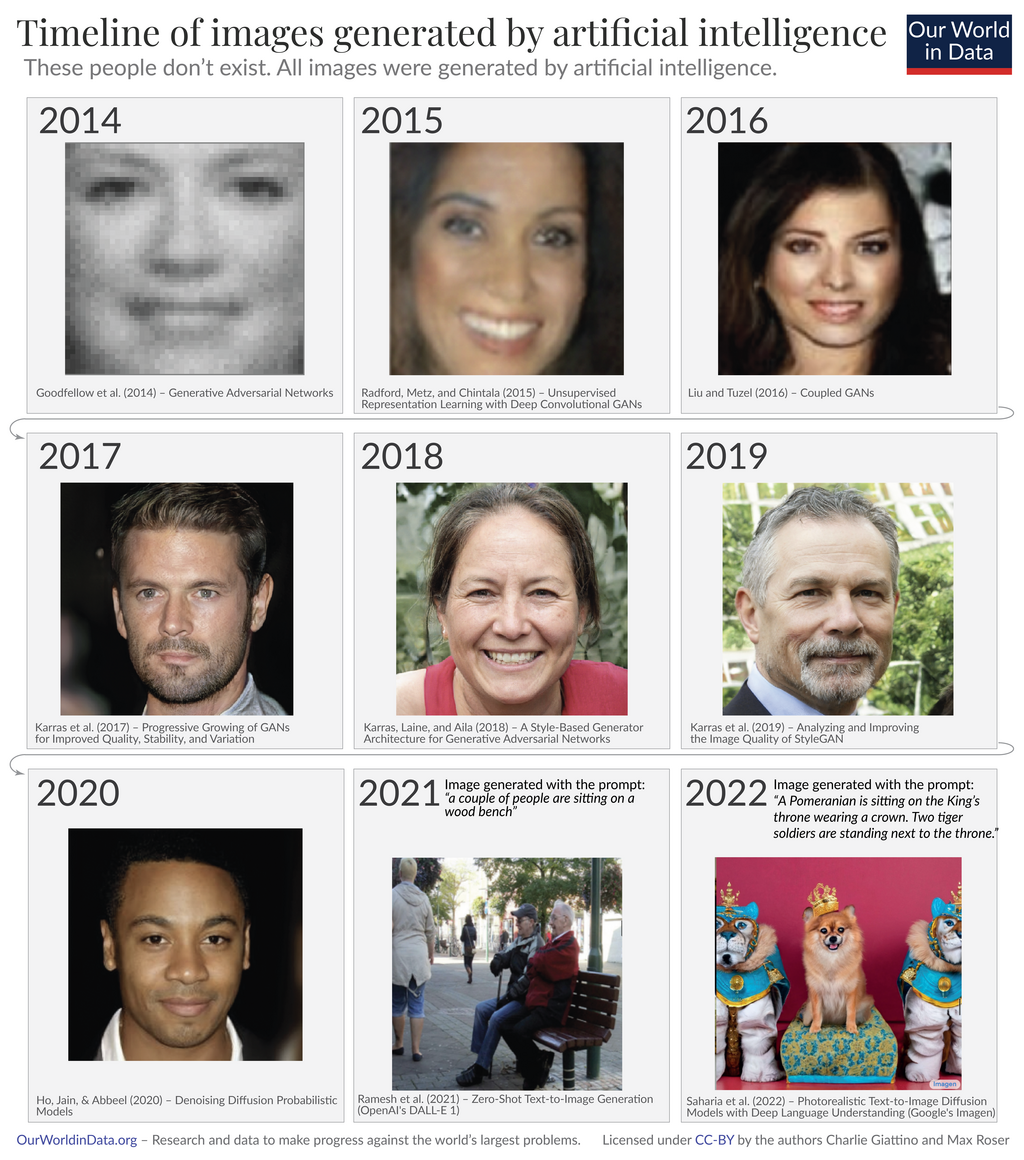
This ability to produce original content is what makes Generative AI so powerful. It's not just a tool for analysis but a partner in the creative process.
A Brief History
The idea of machines that create isn't new. Early experiments with algorithmic art and music date back to the mid-20th century. However, for a long time, the results were limited by computing power and the amount of available data.
A key breakthrough came in 2014 with the invention of Generative Adversarial Networks (GANs). This technique involved two AIs competing against each other—one generating content and the other judging its quality—which dramatically improved the realism of generated images. More recently, the development of a powerful architecture called the "Transformer" has led to the large language models (LLMs) like ChatGPT that have brought Generative AI into the mainstream.
This rapid progress has turned Generative AI from a niche academic field into a technology that is reshaping industries and changing how we interact with information and creativity.
What is the primary function of Generative AI?
Which of the following is a key difference between Generative AI and traditional AI?