Foundations of Software Programming
Introduction to Programming
What is Programming?
At its heart, programming is simply the act of giving instructions to a computer. Think of it like writing a very precise recipe. The computer is your chef, but it's a chef that follows every step exactly as written, without any intuition or prior knowledge. It won't know to preheat the oven unless you tell it to.
Your job as the programmer is to write that recipe—the program—using a special language the computer can understand. These instructions tell the computer how to process information, make decisions, and perform tasks. The goal can be anything from calculating a budget, to creating a video game, to guiding a rocket to Mars.
Programming turns a general-purpose machine (a computer) into a specialized tool designed to solve a specific problem.
Languages for Computers
Humans communicate using languages like English or Spanish. We communicate with computers using programming languages. A computer's native tongue is machine code, a sequence of ones and zeros that's incredibly difficult for people to read or write. So, we invented high-level programming languages that use words and syntax closer to human language.
Languages like Python, Java, and C++ allow us to write instructions in a more understandable way. But how does the computer understand them? A special program called a compiler or an interpreter acts as a translator. It converts our human-readable code into the binary machine code the computer's processor can execute.
| Language | Common Uses |
|---|---|
| Python | Web development, data science, automation |
| JavaScript | Building interactive websites and web apps |
| Java | Android apps, large-scale enterprise systems |
| C++ | Video games, operating systems, high-performance software |
Your Programming Workshop
To start programming, you need a place to write and run your code. This is called a development environment. It's like a writer's desk, complete with paper, pen, and a dictionary. For a programmer, the basic tools are a text editor and a compiler or interpreter.
IDE
noun
An Integrated Development Environment is a software application that bundles all the essential tools for programming into one place. It typically includes a text editor for writing code, a compiler/interpreter for translating it, and debugging tools to help find and fix errors.
Using an IDE is often the easiest way to get started. It handles the complicated parts of setting up your environment so you can focus on writing code. The general workflow looks like this:
Hello, World!
A long-standing tradition in programming is to make your first program display the text "Hello, World!". It's a simple task that confirms your development environment is set up correctly and you understand the basic process of writing and running code.
The exact code to do this varies between languages, but the core idea is always the same: you write a statement that tells the computer to output a specific piece of text to the screen.
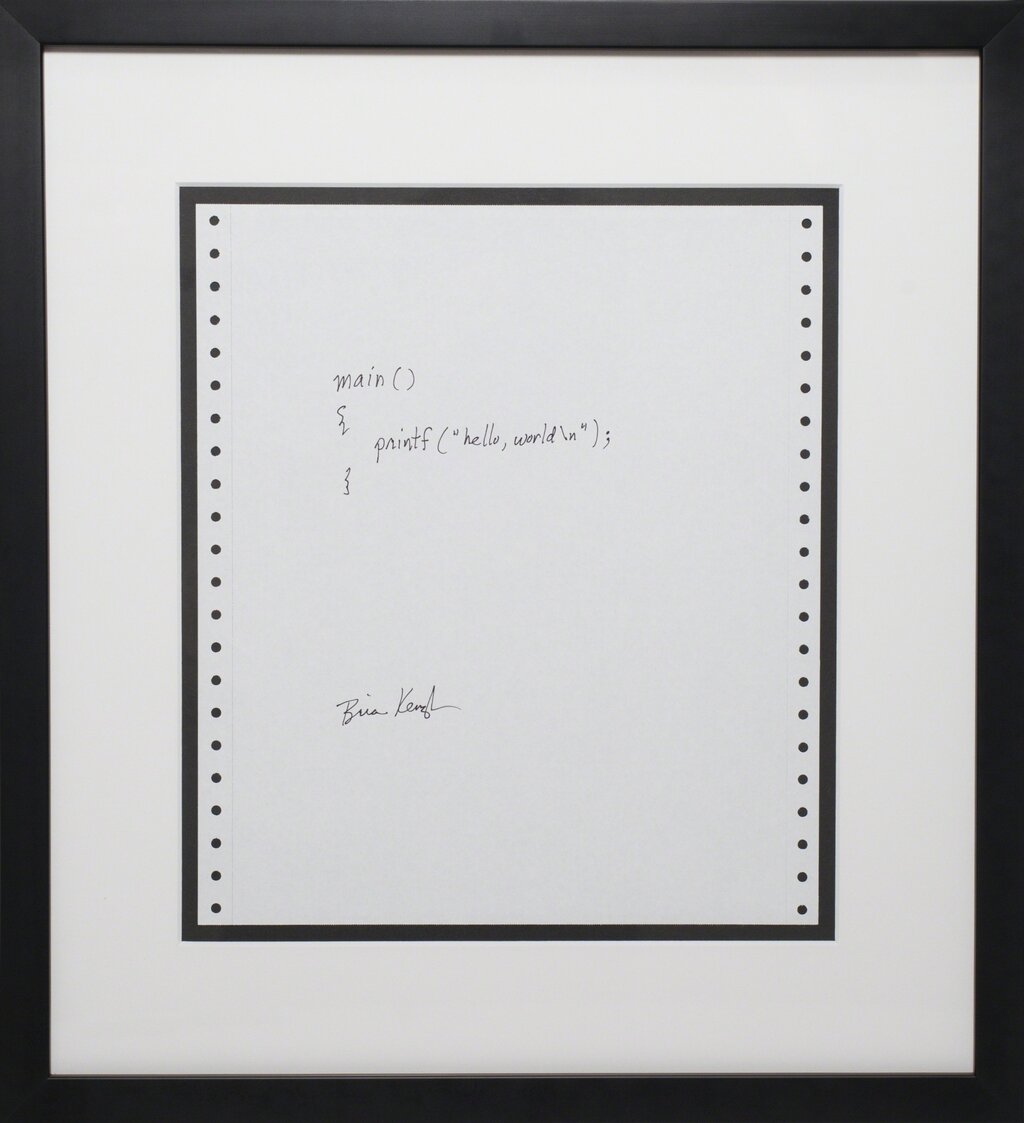
The program itself is just a plain text file. You write the instructions, save the file, and then use your compiler or interpreter to run it. If everything is correct, "Hello, World!" appears. It's a small victory, but it's the first step on the path to building much more complex and powerful applications.
What is the fundamental act of programming?
What is the role of a compiler or an interpreter?
That's the big picture of what programming is. It's a creative process of problem-solving, logic, and precision that allows us to harness the power of computers.