Foundations of Music Theory
Musical Notation
The Musical Canvas
Music is written on a framework of five lines and four spaces called a staff. Think of it as a ladder. The higher a note is placed on the staff, the higher its pitch. The lower it's placed, the lower its pitch.
Each line and space corresponds to a specific musical pitch, represented by letters A through G. But how do we know which line is which note? That's where clefs come in.
Setting the Pitch
A clef is a symbol placed at the beginning of the staff that assigns a specific pitch to one of the lines. This anchors all the other notes on the staff. The two most common clefs are the treble clef and the bass clef.
The treble clef, or G-clef, curls around the second line from the bottom, fixing that line as the note G above middle C. Instruments with higher pitches, like the flute, violin, and the right hand of the piano, use the treble clef.
To remember the notes on the treble clef lines, you can use the mnemonic: Every Good Boy Does Fine. For the spaces, just remember the word FACE.
The bass clef, or F-clef, has two dots that surround the fourth line from the bottom, fixing that line as the note F below middle C. Lower-pitched instruments, like the cello, bass guitar, and the left hand of the piano, use the bass clef.
A helpful mnemonic for the bass clef lines is: Good Boys Do Fine Always. For the spaces: All Cows Eat Grass.
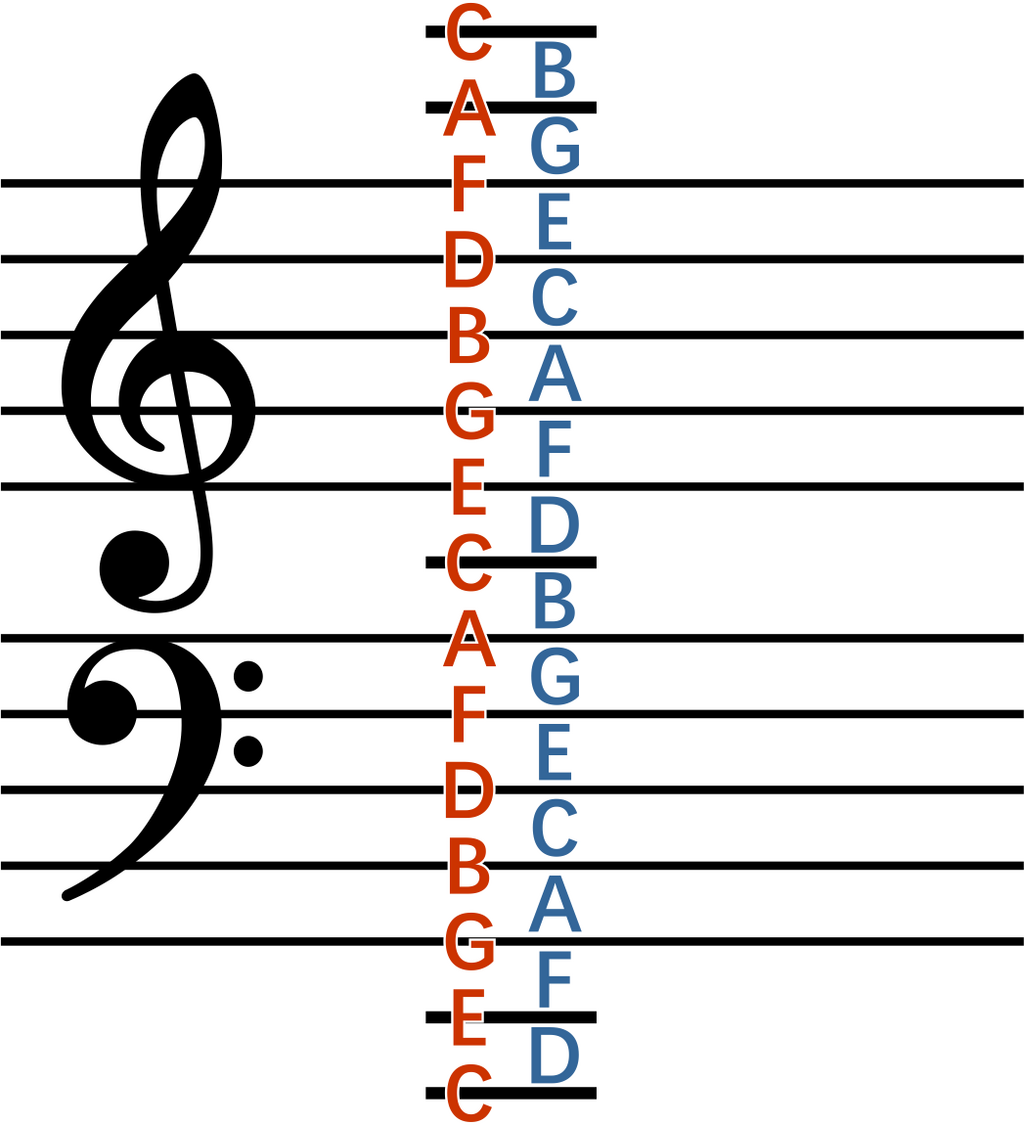
When the treble and bass staves are joined together by a brace, they form the grand staff. This provides a complete picture of the musical landscape, from low to high pitches.
Timing is Everything
Besides pitch, musical notation also tells us how long to hold each note. This is called the note's duration or value. Different types of notes represent different lengths of time.
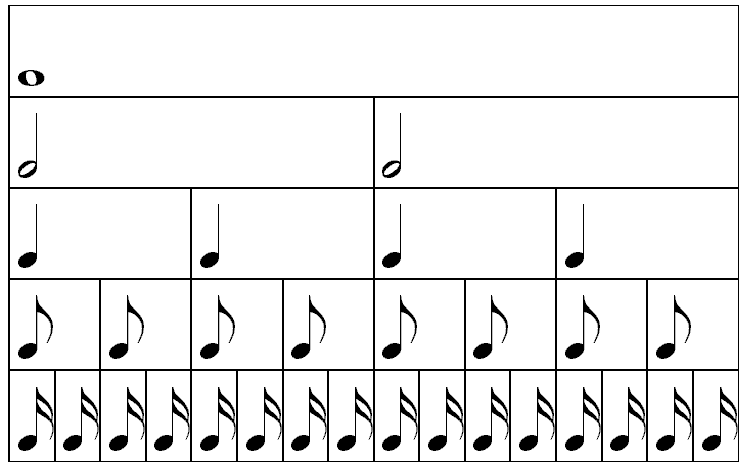
The system is mathematical. A whole note is the longest standard note value. A half note is half the duration of a whole note. A quarter note is a quarter of a whole note. This pattern continues with eighth notes and sixteenth notes.
Two half notes equal one whole note. Four quarter notes equal one whole note. You get the idea. The appearance of the note—whether its head is filled in, or if it has a stem and flags—tells you its value.
The Sound of Silence
Music isn't just about the sounds you make; it's also about the silence between them. These moments of silence are called rests, and they are just as important as notes for creating rhythm and feel. Every note value has a corresponding rest of the same duration.
| Note | Rest | Duration (in a 4/4 measure) |
|---|---|---|
| Whole Note | Whole Rest | 4 beats |
| Half Note | Half Rest | 2 beats |
| Quarter Note | Quarter Rest | 1 beat |
| Eighth Note | Eighth Rest | 1/2 beat |
| Sixteenth Note | Sixteenth Rest | 1/4 beat |
Notice that the whole rest hangs down from the fourth line, while the half rest sits on top of the third line. It's a small difference, but a crucial one for reading music correctly.
Keeping the Beat
So how do we know how many beats are in a measure? That's the job of the time signature. It appears at the beginning of the music, right after the clef. It's made of two numbers stacked on top of each other.
So, a 4/4 time signature, also called common time, means there are four beats per measure, and the quarter note gets one beat. This is the most common time signature in Western music.
Another common one is 3/4, which you'd find in a waltz. It means there are three beats per measure, and the quarter note gets one beat. The time signature sets the rhythmic foundation for the entire piece.
What does the top number in a time signature indicate?
The bass clef is also known as the F-clef because its two dots surround the line for the note F.
These are the fundamental building blocks of reading music. By understanding the staff, clefs, notes, rests, and time signatures, you have the basic tools to decode any piece of sheet music.