Foundations of Data Structures and Algorithms
Introduction to Data Structures
What Are Data Structures?
Think about a library. If all the books were thrown into a giant pile, finding the one you want would be nearly impossible. Libraries organize books by genre, then alphabetically by author. This system makes finding a specific book fast and efficient.
In computer science, a data structure is like that library's organizational system, but for data. It's a specific way of arranging and storing data in a computer so that it can be accessed and used effectively. The goal isn't just to store data, but to store it in a way that makes sense for the problem you're trying to solve.
Choosing the right data structure can be the difference between a program that runs in a fraction of a second and one that takes minutes or even hours. It's all about efficiency. Different structures are good at different things. Some are great for searching for items, while others excel at adding or removing them.
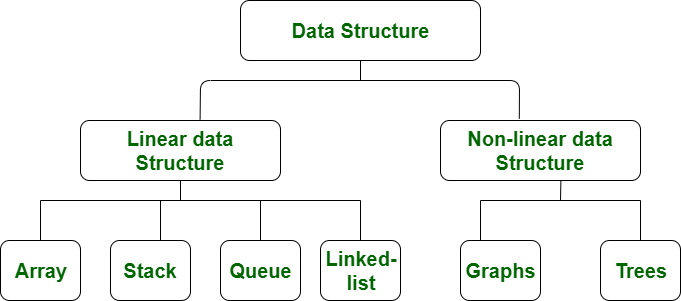
The way you organize your data determines how well your program can work with it.
Data Structures in the Real World
You interact with data structures every day, even if you don't realize it.
When you hit the 'back' button in your web browser, you're using a stack. The last page you visited is the first one you go back to.
Your social media feed, which shows connections between friends, uses a graph. Each person is a point, and the friendships are the lines connecting them.
When you're waiting in line for a coffee, you're in a queue. The first person in line is the first person to get served. These principles are used in everything from printer jobs to server requests.
These are just a few examples. Data structures are the silent workhorses behind countless applications we use. Here's a quick look at some common types and what they're generally used for.
| Structure | What it's like | Good for... |
|---|---|---|
| Array | A numbered list of boxes | Storing and accessing items in order. |
| Linked List | A chain of connected items | Easily adding or removing items. |
| Stack | A stack of plates | Handling tasks in a Last-In, First-Out (LIFO) order. |
| Queue | A line of people | Managing tasks in a First-In, First-Out (FIFO) order. |
| Tree | A family tree | Representing hierarchical data, like file systems. |
| Graph | A map of cities and roads | Modeling networks and connections. |
Understanding these fundamental building blocks is the first step toward writing powerful and efficient code. Let's review what we've covered.
What is the primary purpose of a data structure?
Which data structure best models a line of people waiting for a single cashier, where the first person in line is the first person to be served?
Now that you have a grasp of what data structures are and why they matter, you're ready to explore how they actually work.