Forex Trading for Beginners
Forex Market Basics
What is the Forex Market?
The foreign exchange market, or forex, is a global marketplace where currencies are traded. It’s not a physical place like a stock exchange. Instead, it's a decentralized network of banks, brokers, and traders connected electronically.
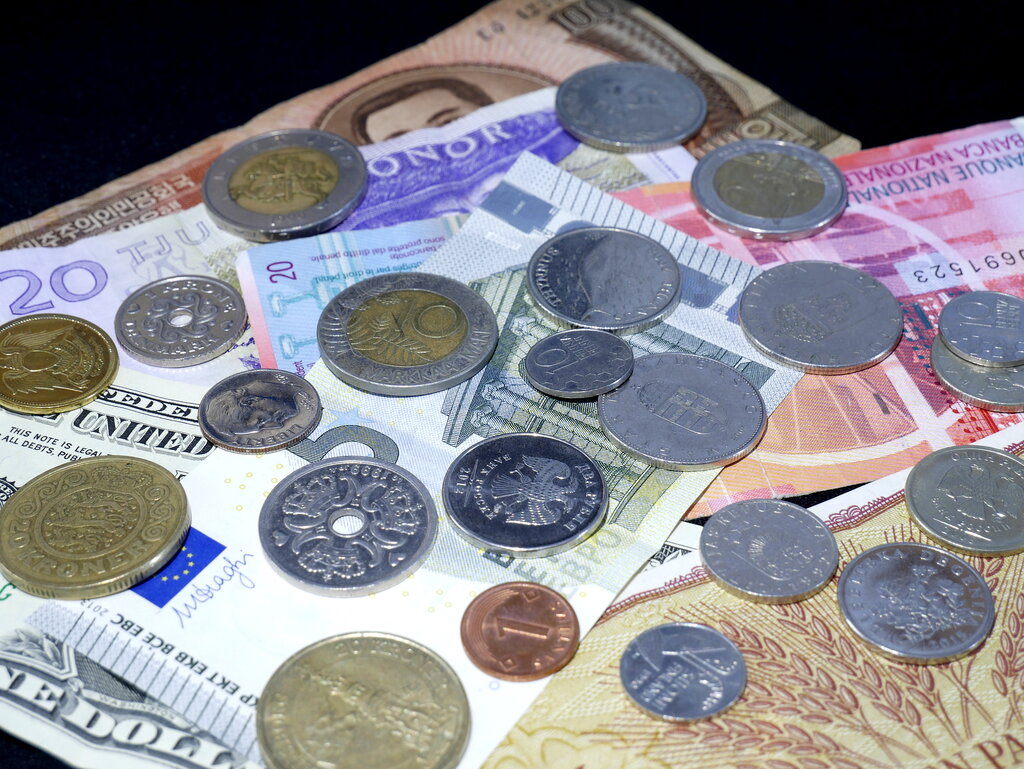
Its main purpose is to make international trade and investment possible. If a company in the United States wants to buy goods from Japan, it needs to pay in Japanese yen. The forex market is where it swaps its U.S. dollars for yen. It’s the largest financial market in the world, with trillions of dollars changing hands every day.
Who Trades Currencies?
The forex market isn't just for globetrotters swapping cash at the airport. It's a complex ecosystem with players of all sizes, each with different motivations.
At the top are the major banks, which form the interbank market where the bulk of trading happens. They trade for their clients—large corporations, governments, and investment funds—and for their own accounts. Central banks, like the U.S. Federal Reserve, also participate to manage their country's currency reserves and influence exchange rates as part of their monetary policy.
Corporations need forex for practical business reasons, such as paying foreign suppliers or converting profits earned abroad. Finally, there are retail traders—individuals who speculate on the price movements of currencies, hoping to profit from fluctuations. While their individual trades are small, their collective volume is significant.
The Language of Currency Pairs
In forex, you never just buy "the dollar" or sell "the euro." Currencies are always traded in pairs. When you trade a pair, you are simultaneously buying one currency and selling the other.
A currency pair is shown as two three-letter codes, like EUR/USD. The first currency (EUR) is the base currency, and the second (USD) is the quote currency. The price of the pair tells you how much of the quote currency you need to buy one unit of the base currency.
If EUR/USD = 1.08, it means that 1 euro costs 1.08 U.S. dollars.
Currency pairs are categorized into three main groups:
| Category | Description | Examples |
|---|---|---|
| Major Pairs | The most traded pairs in the world. All involve the U.S. dollar (USD) and are highly liquid. | EUR/USD, USD/JPY, GBP/USD, USD/CHF |
| Minor Pairs | Pairs that do not include the U.S. dollar but feature other major currencies like the euro, yen, or pound. | EUR/GBP, EUR/JPY, GBP/AUD, CHF/JPY |
| Exotic Pairs | A major currency paired with the currency of a smaller or emerging economy. These are less liquid. | USD/ZAR (South African Rand), USD/TRY (Turkish Lira) |
When Can You Trade?
The forex market is unique because it operates 24 hours a day, five days a week. Trading follows the sun around the globe, starting with the Sydney session, then moving to Tokyo, London, and finally New York. This continuous nature means you can trade at almost any time, day or night.
However, not all times are created equal. The market is most active when two or more sessions overlap. The busiest period is the overlap between the London and New York sessions, as this is when both European and American markets are open. During these hours, trading volume and liquidity are at their highest, which can lead to more significant price movements.
Understanding these core concepts—what the market is, who participates, how currencies are quoted, and when trading occurs—provides the foundation needed to explore the world of forex.
What is the primary purpose of the foreign exchange (forex) market?
In the currency pair AUD/CHF, the 'AUD' is known as the __________ currency.