Forex Trading Essentials
Forex Basics
The Global Currency Marketplace
The foreign exchange market, or Forex (FX), is where the world's currencies are traded. It’s not a physical place like a stock exchange. Instead, it’s a global, decentralized network of banks, financial institutions, and individuals buying and selling currencies 24 hours a day, five days a week.
It is by far the largest financial market in the world. Trillions of dollars are exchanged every day, dwarfing the volume of all the world's stock markets combined. This massive scale is driven by everything from international trade and tourism to governments managing their currency reserves.
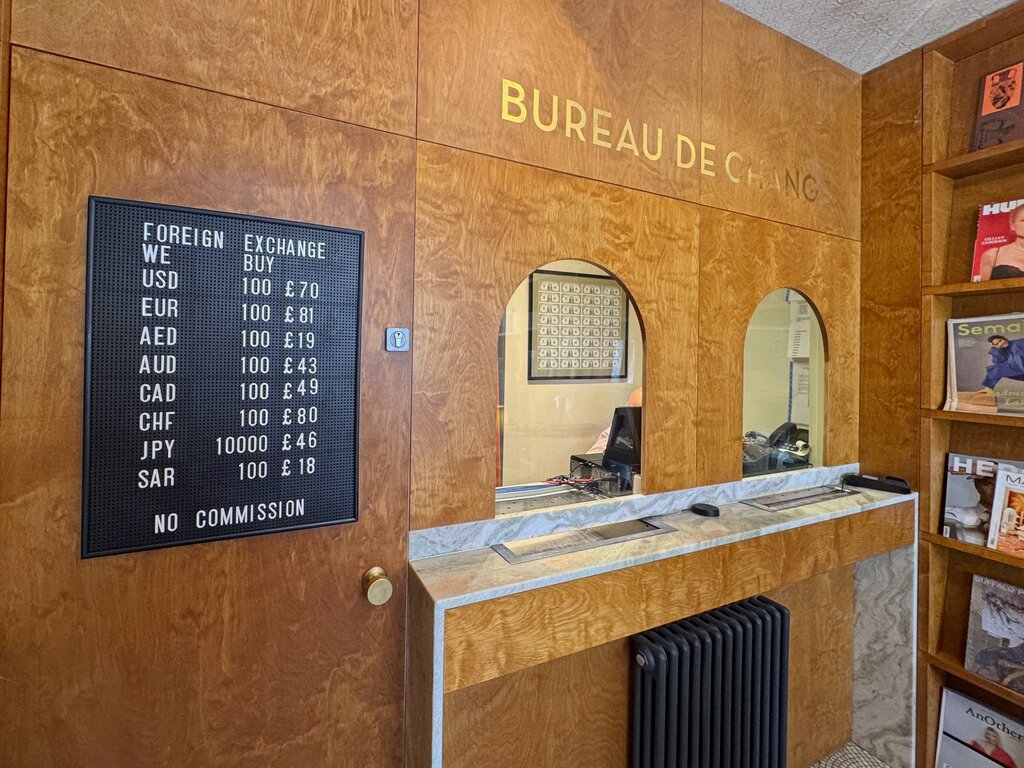
This constant activity means the market is always moving, creating opportunities for traders who speculate on the shifting values between different currencies.
Who Trades on the Forex Market?
The Forex market isn't just for globetrotters swapping cash for their vacation. It’s a diverse ecosystem with several key players, each with different motivations.
| Participant | Primary Role |
|---|---|
| Central Banks | Manage a country's currency, money supply, and interest rates. They intervene to stabilize their currency. |
| Major Banks | Handle the vast majority of FX trades for their clients and for their own speculative purposes. |
| Corporations | Engage in international trade, needing to convert currencies to buy materials or sell goods abroad. |
| Retail Traders | Individuals who speculate on currency movements to try and make a profit. |
While large institutions dominate the market, technology has made it accessible to individuals, known as retail traders. They typically trade through online brokers, speculating on the same currency movements as the big players.
The Language of Currency Pairs
In forex, currencies are always traded as ‘currency pairs’.
When you trade on the Forex market, you're not just buying a currency; you're exchanging one currency for another. This is why they are always quoted in pairs, like EUR/USD or GBP/JPY. Think of it as a tug-of-war between two economies.
The first currency in the pair is the base currency, and the second is the quote currency. The exchange rate tells you how much of the quote currency is needed to buy one unit of the base currency.
For example, if the EUR/USD exchange rate is 1.07, it means one Euro costs 💲1.07.
If you believe the Euro will strengthen against the US Dollar, you would buy the EUR/USD pair. If you think it will weaken, you would sell it.
Types of Pairs and Pips
Currency pairs are generally sorted into three main categories:
| Category | Description | Examples |
|---|---|---|
| Majors | Pairs that include the US Dollar and are the most frequently traded. | EUR/USD, USD/JPY, GBP/USD |
| Minors | Pairs that consist of other major currencies but do not include the US Dollar. | EUR/GBP, EUR/JPY, AUD/CAD |
| Exotics | Pairs that include one major currency and one currency from an emerging economy. | USD/MXN, EUR/TRY, JPY/NOK |
Because exchange rates can move by very small amounts, traders need a standard unit to measure these changes. This unit is called a pip.
pip
noun
Short for 'percentage in point', a pip is the smallest standard price move a currency pair can make.
For most currency pairs, a pip is a change in the fourth decimal place. For example, if the EUR/USD moves from 1.0750 to 1.0751, that is a one-pip move. For pairs involving the Japanese Yen (JPY), a pip is the second decimal place.
Pips are the building blocks of profit and loss in Forex trading. Understanding how to count them is a fundamental first step.
Which of the following best describes the Forex market?
In the currency pair USD/CAD, the US Dollar is referred to as the what?
You've now covered the core concepts of the Forex market. These fundamentals are the essential starting point for anyone looking to understand how global currencies are traded.