Fire Instructor Mastery
Instructor Roles
The Instructor's Role
Becoming a fire service instructor is more than just a promotion; it’s a fundamental shift in responsibility. You move from being a doer to a teacher, a mentor, and a guardian of safety. The National Fire Protection Association (NFPA) 1041, Standard for Fire and Emergency Services Instructor Professional Qualifications, outlines the framework for this critical role. It’s not just about knowing the material. It’s about effectively transferring that knowledge to others so they can perform safely and efficiently when it counts.
An instructor's primary duty is to ensure students can master the required skills and knowledge. This involves everything from demonstrating how to operate a piece of equipment to explaining complex fire behavior. You are the link between the standards and the street-level firefighter.
Wearing Many Hats
As an instructor, you will fill several roles, often simultaneously. You are a teacher, responsible for presenting information clearly. You are also a safety officer, ensuring every practical evolution and classroom activity is conducted without unnecessary risk. For many, you will be a mentor, offering guidance that extends beyond the lesson plan.
Your responsibilities include:
- Delivering Instruction: Presenting lesson plans in a way that is engaging and easy to understand.
- Managing the Classroom: Maintaining a safe and positive learning environment where all students feel respected and able to participate.
- Record Keeping: Accurately documenting training activities, student attendance, and performance.
- Ensuring Safety: Constantly monitoring the training ground or classroom to identify and mitigate hazards. This is your most important job.
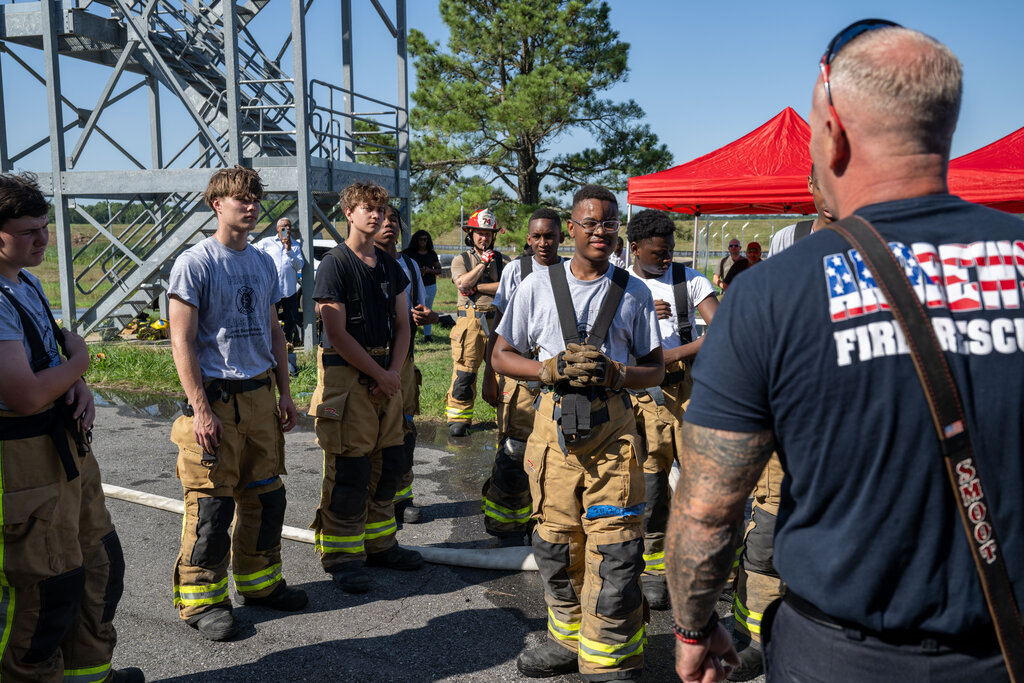
Think of yourself as a bridge. On one side, you have the established standards, procedures, and accumulated knowledge of the fire service. On the other, you have recruits and seasoned firefighters who need that information to protect lives, including their own. Your job is to make sure the traffic across that bridge flows smoothly and safely.
The Bedrock of the Job
Beyond the technical duties, an instructor must embody the highest standards of professional and ethical conduct. Your actions, attitudes, and words set the tone for the next generation of firefighters. Professionalism isn't just about appearance; it’s about your commitment to fairness, integrity, and the mission of the fire service.
Ethical conduct means treating all students with respect, evaluating them impartially, and maintaining confidentiality. It means admitting when you don't know an answer and upholding the rules, even when it's difficult.
Your students will look to you as a role model. How you handle stress, manage conflict, and demonstrate respect for the craft will be absorbed just as much as any lesson on hose lays or ventilation. The importance of this cannot be overstated. Effective instruction builds competent firefighters; ethical instruction builds trustworthy ones.
The foundation you lay doesn't just impact individual careers. It strengthens the entire department, ensuring that safety, competence, and professionalism are passed down from one firefighter to the next.
According to the provided text, what is described as an instructor's MOST important job?
Which NFPA standard specifically outlines the professional qualifications for a Fire and Emergency Services Instructor?