Exploring Non-Duality
Introduction to Non-Duality
Beyond Two
We spend our lives seeing the world in pairs: me and you, subject and object, mind and body. This sense of separation feels fundamental. But what if it isn't? What if, beneath the surface of all these divisions, reality is a single, unified whole?
This is the core idea of non-duality. The term literally means "not two." It's a perspective that challenges our most basic assumption—that we are separate selves looking out at an external world. Instead, it suggests that the observer and the observed are ultimately one and the same. It's not a belief system you have to adopt, but rather a different way of seeing what's already here.
Non-duality, at its core, is the understanding that there is no fundamental separation between the self and the world—between "you" and "everything else."
Think of a wave in the ocean. From our perspective, a wave is a distinct thing. It has a beginning, a middle, and an end. But the wave is never separate from the ocean. It's simply the ocean moving in a particular way. Non-duality proposes that we are like those waves—temporary patterns arising from a single, underlying reality.
An Ancient Idea
This isn't a new concept. The roots of non-dual thinking stretch back thousands of years, appearing in various philosophical and spiritual traditions around the globe. One of its clearest expressions comes from ancient India, particularly in the Upanishads—a collection of sacred texts. They use a specific term for this idea.
not two
Advaita Vedanta is a school of thought built entirely around this principle. But the idea isn't exclusive to Hinduism. Similar concepts of unity and interconnectedness are central to traditions like Taoism, Zen Buddhism, and even strands of mystical thought within Christianity and Islam. Each uses different language, but they all point toward the same fundamental reality.
Principles of Oneness
So, how does non-dual thinking work in practice? It rests on a few key principles.
-
There is One Reality. Everything that exists—from the farthest star to the thoughts in your head—is an expression of a single, undivided consciousness or being. There isn't a separate creator and a separate creation; there is only the unfolding of this one reality.
-
The Separate Self is an Illusion. The feeling of being a distinct "I" inside your body, separate from everything else, is a mental construction. This "ego" is a useful tool for navigating the world, but it doesn't reflect the true nature of who you are. The real you is not the character in the story; it's the consciousness in which the story is appearing.
-
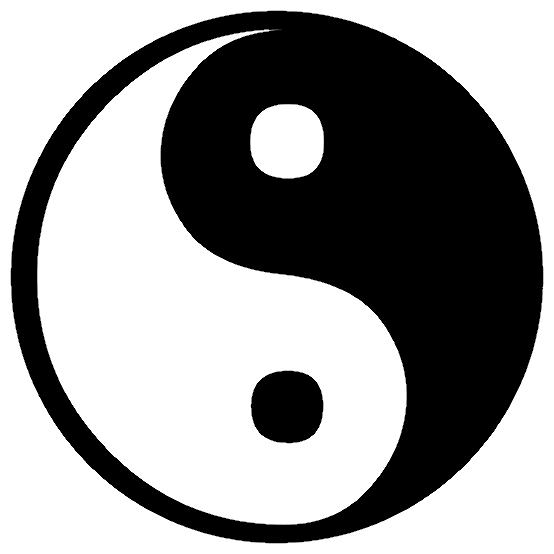
Duality is an Appearance. Hot and cold, light and dark, good and bad—these opposites don't exist as independent forces. They are two sides of the same coin, defining each other. You can't have an "up" without a "down." Non-duality sees these pairs not as a conflict to be resolved, but as a harmony that makes up the whole.
This perspective doesn't deny our unique experiences. It simply reframes them. Your individual life, with all its joys and sorrows, is seen as a unique and precious expression of the one, universal consciousness.
Understanding these principles isn't about solving a puzzle. It's about shifting perception—moving from seeing a world of separate things to experiencing a unified reality directly.
Ready to check your understanding?
What is the central idea of non-duality?
In the analogy of the wave and the ocean, what does the wave represent?
This initial exploration of non-duality provides a foundation. By questioning the familiar divide between self and other, we open the door to a deeper understanding of consciousness and our place in the cosmos.