Exploring Artificial Intelligence Tools
Introduction to Artificial Intelligence
What is AI?
Artificial intelligence is the science of making machines that can think, learn, and solve problems. The goal is to build systems that can perform tasks that normally require human intelligence, like understanding language, recognizing patterns, or making decisions.
Think of it this way: a traditional computer program follows instructions. An AI, on the other hand, can learn from experience and adapt to new situations on its own.
Artificial Intelligence
noun
A field of computer science dedicated to creating systems capable of performing tasks that typically require human intelligence.
This field isn't about creating conscious robots like in the movies. It's about building practical tools that can analyze vast amounts of data and find solutions that might be too complex or time-consuming for a person to uncover.
A Quick History
The idea of intelligent machines has been around for centuries, but the modern field of AI officially began in the 1950s. A group of scientists gathered for a workshop at Dartmouth College in 1956, where they coined the term "artificial intelligence" and laid out the discipline's core ambitions.

The journey hasn't been a straight line. The field has experienced periods of great excitement and funding, known as "AI summers," followed by times of disappointment and reduced investment, called "AI winters." These cycles were often driven by the gap between ambitious promises and the available computing power. Today, thanks to massive datasets and powerful computers, we are in the middle of a major AI summer.
Two Kinds of AI
When people talk about AI, they are usually referring to one of two broad categories: narrow AI and general AI. Understanding the difference is key.
Artificial Narrow Intelligence (ANI) is the only kind of AI that exists today. It's designed to perform a single, specific task very well. A chess program that can beat a grandmaster is a form of ANI. So is your phone's facial recognition or a spam filter for your email. These systems are powerful, but they can't operate outside of their specialized domain. The chess program can't write an email, and the spam filter can't play chess.
Artificial General Intelligence (AGI) is the hypothetical AI of science fiction. It would possess the ability to understand, learn, and apply its intelligence to solve any problem, much like a human being. An AGI could switch from translating languages to composing music to writing a scientific paper. We are still a long way from creating true AGI.
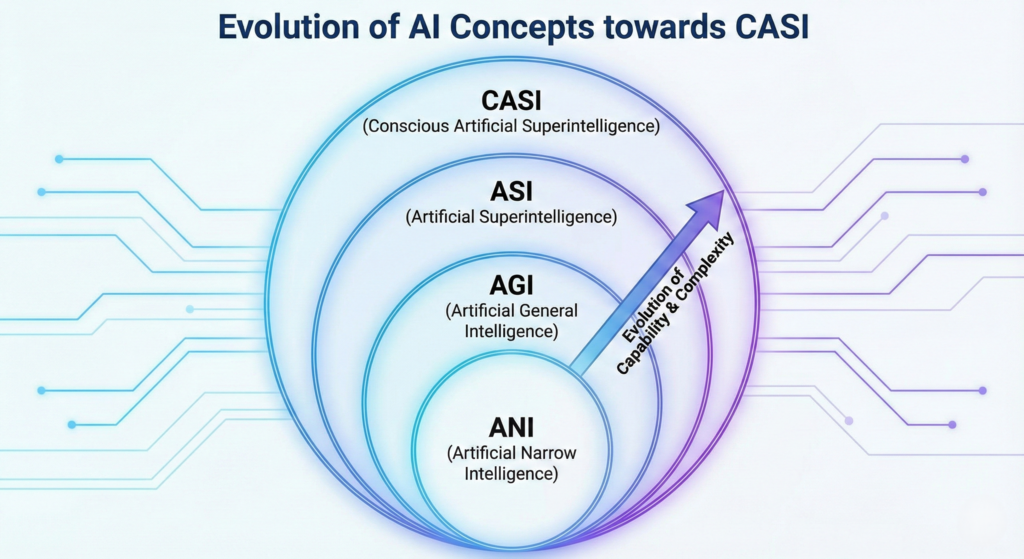
Beyond AGI lies the idea of Artificial Superintelligence (ASI), an intellect that would be much smarter than the best human brains in practically every field. This remains a purely theoretical concept.
The AI Family Tree
AI is a broad umbrella term that covers several specialized subfields. Think of them as different branches of the same family, each with its own focus.
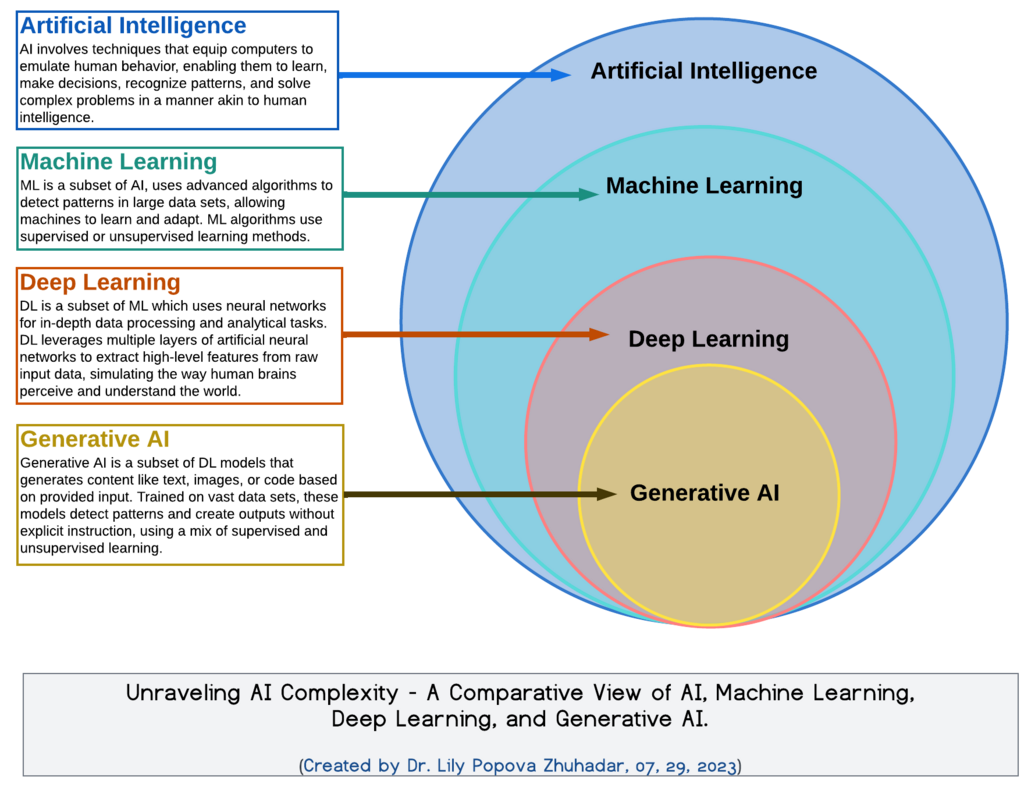
Here are three of the most important ones:
-
Machine Learning (ML): This is the engine that powers most modern AI. Instead of being explicitly programmed with rules, a machine learning model is trained on a large amount of data. It learns to recognize patterns and make predictions from that data. For example, you can train an ML model on thousands of pictures of cats, and it will learn to identify a cat in a new photo it has never seen before.
-
Natural Language Processing (NLP): This subfield focuses on the interaction between computers and human language. NLP allows machines to read, understand, interpret, and generate human language. Every time you use a translation app, talk to a voice assistant, or see an email get automatically sorted, you're seeing NLP in action.
-
Computer Vision: This is how computers gain a high-level understanding from digital images or videos. Computer vision seeks to automate tasks that the human visual system can do. It's the technology behind self-driving cars navigating roads, facial recognition systems, and medical imaging analysis.
Thinking About a Smarter Future
As AI becomes more integrated into our lives, it brings up important questions. The development and use of AI aren't just technical challenges; they are also ethical and societal ones.
We have to consider issues like fairness and bias. If an AI is trained on biased data, it will produce biased results. This can have serious consequences in areas like hiring, loan applications, and criminal justice.
Privacy is another major concern. Many AI systems rely on vast amounts of personal data to function, raising questions about how that data is collected, used, and protected.
The societal impact is also significant. AI has the potential to drive enormous progress in fields like medicine, climate science, and education. It can automate dangerous or repetitive jobs, freeing up people for more creative work. At the same time, it raises fears about job displacement and the need for new skills in the workforce.
Use of artificial intelligence (AI) in human contexts calls for ethical considerations for the design and development of AI-based systems.
Navigating these challenges requires careful thought and planning. The goal is to build AI that is not only powerful but also safe, fair, and beneficial for everyone.
Ready to check your understanding?
What is the primary goal of Artificial Intelligence as described in the field's modern definition?
An AI that can translate languages, compose music, and analyze scientific data with the same versatility as a human is an example of what?
Understanding these core ideas is the first step in seeing how AI is changing our world and what its future might hold.