Everyday Probability for Better Decisions
Probability Basics
What Are the Chances?
Life is full of uncertainty. Will it rain tomorrow? Will my favorite team win the championship? Will I catch the bus? We deal with these questions by making educated guesses. Probability is simply a way of measuring this uncertainty with numbers.
Probability
noun
A numerical measure of the likelihood that an event will occur. It is expressed as a number between 0 and 1.
A probability of 0 means an event is impossible. For example, the probability of rolling a 7 on a standard six-sided die is 0. A probability of 1 means an event is certain to happen. The probability that the sun will rise tomorrow is very, very close to 1.
Most events fall somewhere in between. To calculate these probabilities, we first need to understand all the possible results of an action, or what we call an 'experiment'. An experiment could be anything from flipping a coin to drawing a card from a deck.
Sample Spaces and Events
Before we can figure out the chance of something happening, we need to list every possible outcome. This complete set of outcomes is called the sample space.
Sample Space
noun
The set of all possible outcomes of a random experiment. It is often denoted by the letter S.
For a simple coin flip, the sample space is {Heads, Tails}. There are only two possibilities. For a single roll of a standard six-sided die, the sample space is all the numbers on its faces: {1, 2, 3, 4, 5, 6}.
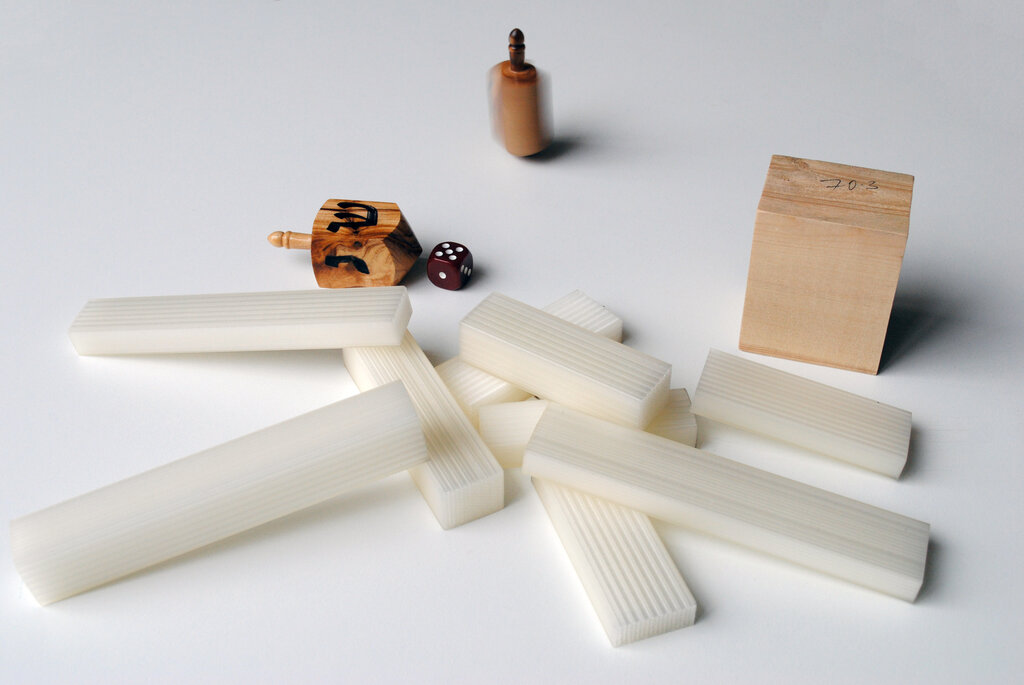
An 'event' is the specific outcome or group of outcomes we're interested in. It's a subset of the sample space. Using our die-rolling experiment, an event could be 'rolling an odd number'. The outcomes that satisfy this event are {1, 3, 5}.
Think of it this way: The sample space is the entire menu at a restaurant. An event is the specific dish you decide to order.
Calculating Probability
Once we know the sample space and the event, calculating the probability is straightforward, especially when all outcomes are equally likely. The formula is simple: divide the number of outcomes in your event by the total number of outcomes in the sample space.
Let's use our die example. What's the probability of the event 'rolling an odd number'?
First, identify the favorable outcomes. The odd numbers on a die are 1, 3, and 5. So there are 3 favorable outcomes.
Next, count the total possible outcomes in the sample space. There are 6 faces on the die, so there are 6 total outcomes.
The probability is 3 out of 6, which simplifies to 1/2. This can also be expressed as 0.5 or 50%.
Some Basic Rules
There are a few fundamental rules that govern probability. First, as we've seen, the probability of any event is a number between 0 and 1, inclusive.
Second, the sum of the probabilities of all possible outcomes in a sample space must equal 1. For our die, each number has a 1/6 chance of being rolled. If you add up the probabilities for all six outcomes, you get 1.
Finally, the probability that an event does not occur is 1 minus the probability that it does occur. This is called the complement rule. For instance, the probability of not rolling a 6 is:
This makes sense, as there are 5 outcomes that are not a 6 ({1, 2, 3, 4, 5}). This rule is a handy shortcut for more complex problems.
Let's test your understanding of these core concepts.
Which of the following values cannot be the probability of an event?
What is the complete set of all possible outcomes of an experiment called?
Understanding these basics of probability is the first step toward making more informed judgments in situations involving uncertainty, from simple games to complex real-world decisions.