Ethical Hacking and Penetration Testing Fundamentals
Advanced Network Reconnaissance
Seeing Without Being Seen
Effective reconnaissance is less about brute force and more about finesse. It's the art of building a detailed map of a target's digital footprint before making a single move. This process begins passively, gathering intelligence from public sources, and then cautiously transitions to active methods, where you directly probe the target's systems. The constant challenge is to gather as much information as possible while maintaining operational security, or OPSEC, to avoid tipping off defensive systems.
The goal is to know more about the target's network than they do, all while leaving no trace.
Gathering Clues from the Sidelines
Passive reconnaissance relies on (OSINT), using publicly available data to piece together a picture of the target. This is a no-contact sport; you never directly touch the target's servers. Tools like theHarvester and Recon-ng are staples here. They automate the process of scouring search engines, social media, and public databases for valuable information.
For instance, theHarvester can be used to find email addresses, subdomains, and employee names associated with a domain. It queries sources like Google, Bing, and LinkedIn to build its list.
# Find data for a target domain using Google and LinkedIn
theHarvester -d targetdomain.com -l 500 -b google,linkedin
Recon-ng offers a more structured, modular approach. It functions like a framework, where you can install different modules to query specific data sources. This allows for a more organized and repeatable reconnaissance process. You might use one module to find subdomains, another to pull IP addresses from DNS records, and a third to check for exposed files on GitHub.
Mapping the Digital Territory
Once you've gathered initial OSINT, the next step is to map the target's infrastructure. This involves deep dives into DNS records and ownership information. A is the first stop. It provides registration data for a domain, including the owner's name, contact email, and the domain registrar. This can sometimes reveal other domains owned by the same entity.
Analyzing a target's Autonomous System Number (ASN) can also be incredibly revealing. An ASN identifies a large block of network prefixes belonging to a single organization, like a cloud provider or a large corporation. By finding the ASN, you can identify the full range of IP addresses owned by your target, potentially uncovering forgotten servers or development environments.
A DNS zone transfer is the holy grail of DNS enumeration. If misconfigured, a target's name server will hand over all of its DNS records, providing a complete map of their internal and external hosts. It rarely works, but it must always be checked.
Knocking on the Door
Active reconnaissance is where the risk increases. You are now sending packets directly to the target's infrastructure. The key is to blend in with normal internet noise. For initial discovery across large network ranges, a tool like MASSCAN is ideal. It's an incredibly fast port scanner designed to scan the entire internet in minutes. Its goal isn't detail, but speed and breadth. You use it to find potential points of interest quickly.
# Scan the 10.0.0.0/8 network for port 443 (HTTPS)
# at a rate of 100,000 packets per second
masscan 10.0.0.0/8 -p443 --rate=100000
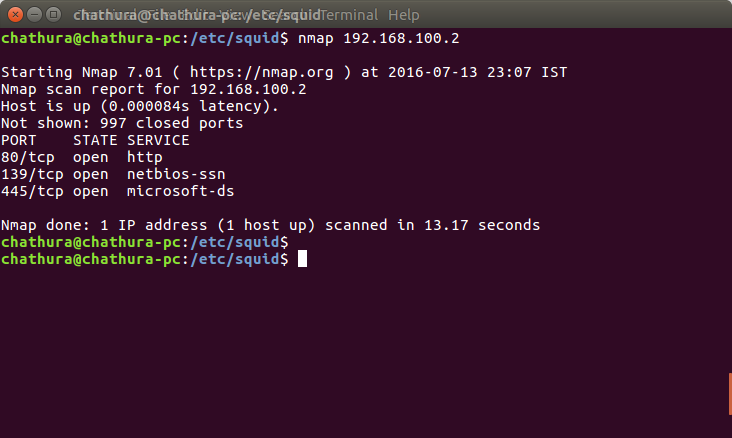
Once MASSCAN identifies open ports, you switch to a more surgical tool: (Network Mapper). Nmap is used for detailed follow-up scans on specific hosts. It can identify the services running on open ports, detect software versions, and even infer the underlying operating system. This is where you begin to identify potential vulnerabilities.
# Run a default script scan and attempt version detection
# on specific ports of a target host
nmap -sC -sV -p 80,443,8080 192.168.1.101
The output of an Nmap scan provides a clear, actionable list of running services, which is the foundation for the next phase of a penetration test: vulnerability analysis and exploitation.
Throughout both passive and active reconnaissance, maintaining OPSEC is paramount. This means using proxies or VPNs, randomizing scan timings, and using scan settings that mimic legitimate traffic. The best intelligence is useless if it gets you discovered before you can act on it.
What is the primary difference between passive and active reconnaissance?
You need to quickly identify live hosts with open ports across a massive range of IP addresses. Which tool is best suited for this initial, broad discovery phase?