ERPNext Practical Implementation
ERPNext Overview
Bringing Your Business Together
Imagine a growing business. The sales team uses one tool to track customers. The accounting department has its own set of spreadsheets. Inventory is managed on a separate list, maybe even on paper. Information is scattered everywhere. Getting a clear picture of the company's health means manually pulling data from different places, which is slow and often leads to errors.
This is where an Enterprise Resource Planning (ERP) system comes in. An ERP integrates all these separate functions into a single, unified system. Think of it as the central nervous system for a company. It connects every department and ensures everyone is working with the same, up-to-date information.
ERPNext is a powerful, open-source ERP system that gives businesses this central hub without the high cost of many commercial alternatives. It's designed to be flexible and cover the essential needs of most companies.
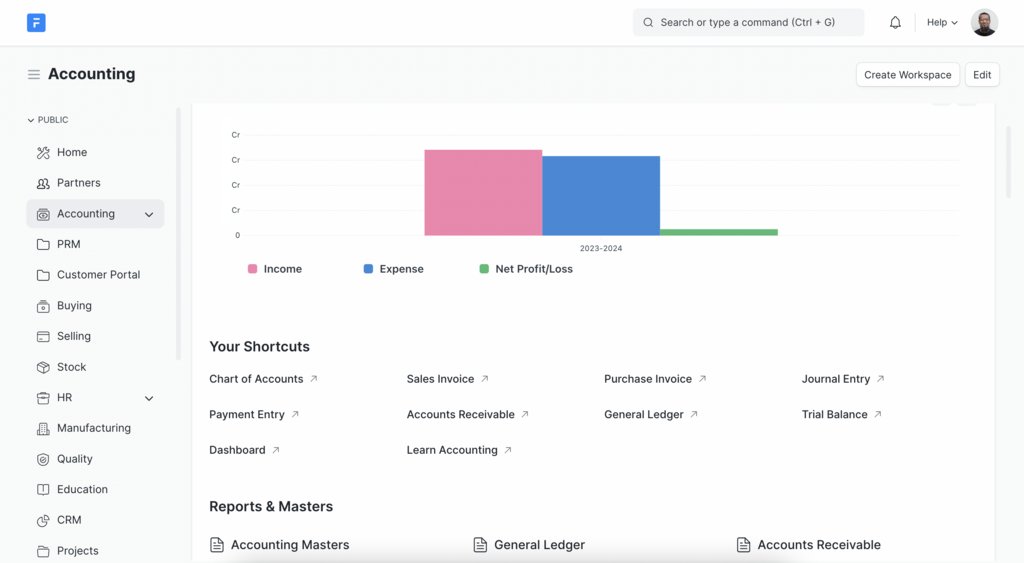
The Core Modules
ERPNext is built around a series of modules, each handling a specific part of the business. While they can work independently, their real power comes from how they work together. Let's look at the most important ones.
| Module | Key Function |
|---|---|
| Accounting | Manages all financial transactions, including the general ledger, accounts payable, and accounts receivable. It automates invoicing and generates financial reports. |
| Inventory Management | Tracks stock levels across different warehouses, manages item variants, and handles serial numbers or batches. It helps prevent stockouts and overstocking. |
| Human Resources (HR) | Handles the entire employee lifecycle. This includes recruitment, onboarding, payroll, leave requests, attendance, and performance appraisals. |
| CRM | The Customer Relationship Management module helps you track leads, opportunities, and interactions with customers. It gives your sales team a complete view of every client relationship. |
When these modules are connected, magic happens. For example, when the sales team closes a deal in the CRM module, it can automatically trigger an invoice in the Accounting module and update stock levels in the Inventory module. No manual data entry, no chasing down information. Everything just flows.
Why Use ERPNext?
The primary benefit of using ERPNext is creating a single source of truth for your entire organization. When everyone from sales to finance to the warehouse is looking at the same data, decision-making becomes faster and more accurate.
ERP System Administration is a function that manages Enterprise Resource Planning (ERP) software, a suite of integrated business applications.
This integration has several key advantages:
- Increased Efficiency: Automating routine tasks, like generating invoices or updating inventory, frees up employees to focus on more strategic work.
- Better Visibility: With real-time dashboards and reports, managers can get an instant snapshot of the business's performance without waiting for month-end reports.
- Improved Collaboration: Silos between departments break down. The sales team can see if an item is in stock, and the finance team knows immediately when a big sale is made.
- Scalability: As a business grows, its processes become more complex. ERPNext provides a solid foundation that can scale with the company, adding new functions as needed.
Now, let's test what you've learned.
What is the primary function of an Enterprise Resource Planning (ERP) system?
A salesperson closes a deal in their ERP's CRM module. Which of the following best demonstrates the system's integrated power?
By centralizing information and automating workflows, ERPNext helps businesses operate more smoothly and make smarter decisions.