Elegant Tech Communication for IT Leaders
Foundations of Technical Communication
The Goal Is Clarity
Technical communication isn't about showing off how much you know. It's about helping others understand complex information. The goal is always clarity, not cleverness. Whether you're writing an instruction manual, a project update, or a bug report, your reader needs to grasp the key points quickly and accurately.
Effective technical communication transfers information so the reader can understand it, use it, and act on it.
Think of it as building a bridge. Your technical knowledge is on one side, and your reader's need for that knowledge is on the other. Your words form the bridge. If the bridge is wobbly, confusing, or full of gaps, your reader won't make it across. To build a sturdy bridge, you need to be clear and concise. Every word should serve a purpose. If it doesn't add to the reader's understanding, it's clutter.
Be clear and concise: When communicating technical information, it is important to be clear and concise so that your message is easily understood.
Know Your Audience
Before you write a single word, ask yourself: Who is this for? The answer changes everything. Communicating with a software engineer is different from communicating with a customer support agent or a new user. Their background, expertise, and goals are all different.
Audience analysis is the process of figuring out who you're talking to. You don't need to conduct a formal study. Just take a moment to consider a few key questions. This simple step will help you tailor your message, choose the right words, and provide the appropriate level of detail.
| Question to Ask | Why It Matters |
|---|---|
| What is their role and expertise? | Determines the technical depth and terminology you can use. |
| What do they need to do with this information? | Shapes the structure and helps you focus on the most relevant details. |
| What is their primary concern? | Helps you anticipate their questions and address their needs directly. |
For example, when describing a new software feature, an engineer might need to know about the specific code libraries used. A marketing manager, however, needs to know the user benefits to create promotional material. Same feature, two completely different messages because the audiences are different.
Speak Their Language
Technical fields are full of specialized terms, acronyms, and jargon. This shorthand is efficient for experts communicating with each other. For anyone outside that specific group, it's a barrier.
jargon
noun
Special words or expressions that are used by a particular profession or group and are difficult for others to understand.
Using unnecessary jargon can make your reader feel confused or excluded. A good rule is to avoid it whenever possible. If you must use a technical term, define it clearly the first time it appears.
Consider this sentence: *"We need to leverage our cloud-native microservices architecture to enhance CI/CD pipeline velocity."
An expert might understand that, but most people won't. A clearer version would be: *"We need to use our modern, independent services to speed up how we test and release new software updates."
When in doubt, explain the term or find a simpler way to say it.
Structure for Success
How you organize information is just as important as the words you use. A clear structure acts like a roadmap, guiding your reader through the content. Without it, even the clearest sentences can get lost in a confusing jumble.
One of the most effective structures for technical communication is the inverted pyramid. Start with the most important information first: the main point, the conclusion, or the key takeaway. Then, provide the supporting details, and finish with general background information.
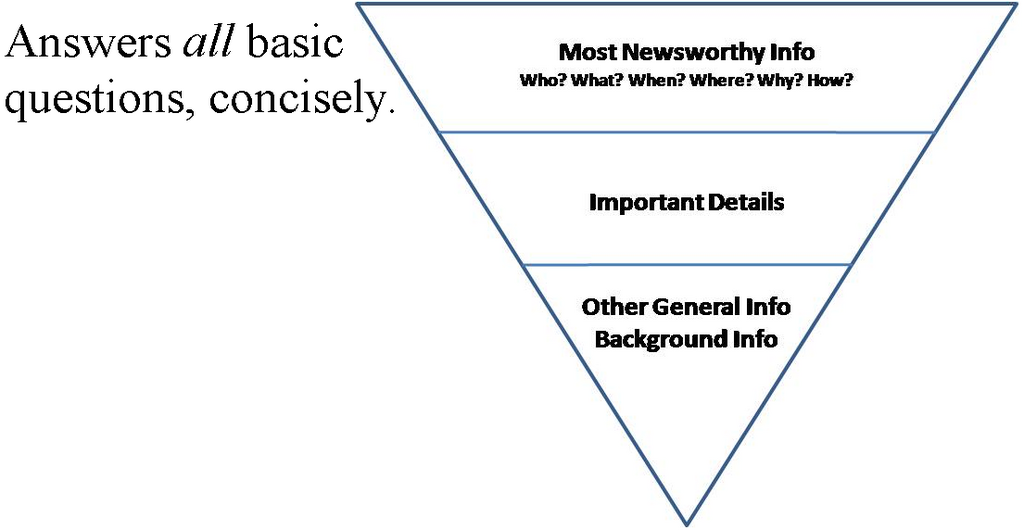
This approach respects your reader's time. They can get the essential message immediately. If they need more context, they can keep reading. This is perfect for busy professionals who need to scan documents for key information. Other useful structures include chronological order for instructions or a problem-solution format for proposals.
Now, let's test what you've learned about these foundational principles.
What is the primary goal of technical communication?
Before writing a technical document, why is it crucial to analyze your audience?
Mastering these fundamentals—clarity, audience awareness, simple language, and logical structure—will make your technical communication more effective and professional.