EEG and Expanded Consciousness
Introduction to EEG
Listening to the Brain
Your brain is constantly buzzing with activity, even when you're asleep. Billions of tiny cells called neurons are talking to each other, sending electrical signals back and forth. This chatter is what allows you to think, feel, and move. But how can we listen in on this conversation?
One of the oldest and most effective methods is called Electroencephalography, or EEG. Think of it as putting a sensitive microphone on the outside of a huge stadium. You can't hear individual conversations, but you can definitely hear the roar of the crowd. EEG works similarly. It doesn't listen to single neurons, but to the combined electrical activity of millions of them firing in sync.
Electroencephalography
noun
A non-invasive method for recording the electrical activity of the brain using electrodes placed on the scalp.
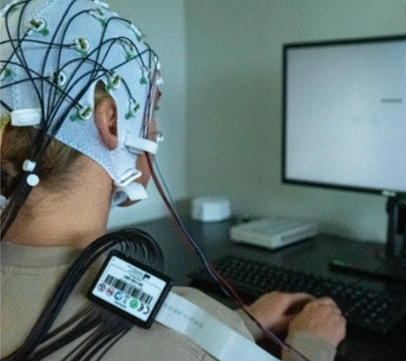
The technique was invented by a German psychiatrist named Hans Berger in the 1920s. He was the first to show that the brain's weak electrical signals could be recorded from outside the head. To do this, electrodes are placed on the scalp, often using a special cap. These electrodes detect the tiny voltage changes that result from neuronal activity.
The Rhythms of the Brain
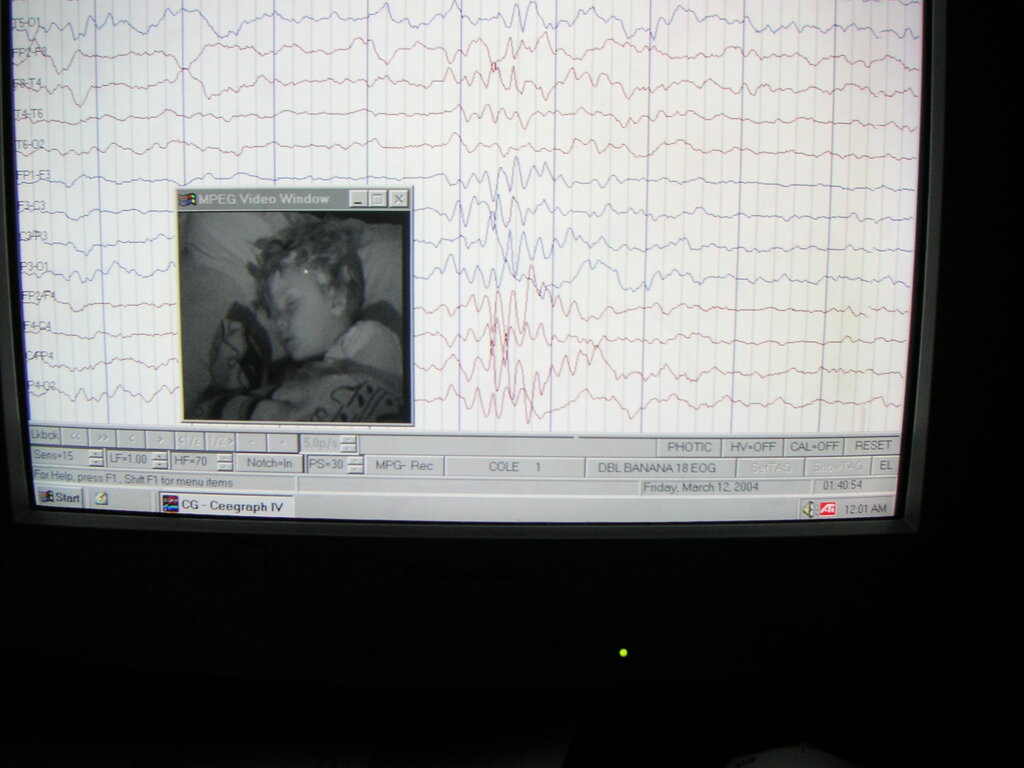
The electrical signals recorded by an EEG are called brainwaves. These aren't random noise; they have distinct patterns and rhythms. Neuroscientists classify brainwaves based on their frequency, which is how fast they oscillate. Different frequencies are associated with different mental states.
The main types of brainwaves are Delta, Theta, Alpha, Beta, and Gamma, ranging from very slow to very fast.
| Brainwave | Frequency (Hz) | Associated State |
|---|---|---|
| Delta (δ) | 0.5 - 4 Hz | Deep, dreamless sleep |
| Theta (θ) | 4 - 8 Hz | Drowsiness, light sleep, deep meditation |
| Alpha (α) | 8 - 13 Hz | Relaxed, calm, wakeful rest (eyes closed) |
| Beta (β) | 13 - 30 Hz | Alert, focused, active thinking |
| Gamma (γ) | > 30 Hz | High-level information processing, problem-solving |
By looking at which brainwaves are dominant at any given time, researchers can get a good idea of what a person's brain is doing. For example, if your EEG shows a lot of alpha waves, you're likely in a relaxed, resting state. If beta waves take over, you're probably focused on a task.
What We Learn from EEG
Because it's non-invasive and relatively inexpensive, EEG is a powerful tool in neuroscience. It allows scientists to watch the brain in action with incredible timing. While other techniques like fMRI are better at showing where activity is happening, EEG is unmatched at showing when it happens, down to the millisecond.
This precise timing makes EEG perfect for studying rapid cognitive processes, like how the brain reacts to a surprising sound, recognizes a face, or processes language.
It's widely used to study sleep stages, attention, memory, and emotional responses. By presenting a person with a stimulus—like a word or a picture—and recording the brain's immediate electrical response, scientists can map out the sequence of events that happen during perception and cognition.
Let's review the key terms from this section.
Now, let's test your knowledge.
What does Electroencephalography (EEG) primarily measure?
Who was the psychiatrist who first demonstrated that the brain's electrical signals could be recorded from the scalp?
EEG provides a window into the brain's dynamic electrical landscape, revealing the rhythms that underlie our thoughts, feelings, and actions.