Digital Marketing Essentials
Digital Marketing Fundamentals
What Is Digital Marketing?
At its core, digital marketing is the practice of promoting products, services, or brands using online channels and digital technologies. If you've ever seen an ad on social media, received a promotional email, or used a search engine to find a local business, you've experienced digital marketing firsthand.
It’s more than just placing ads online. It's a broad field that involves understanding customer behavior, creating valuable content, and building relationships in a digital space. The goal is to connect with your audience where they spend their time: on the internet.
Think of it as the modern evolution of marketing. The fundamental principles are the same, but the tools and platforms have changed dramatically.
Digital vs. Traditional
Traditional marketing relies on channels like print ads, television commercials, and billboards. It casts a wide net, hoping to catch the attention of potential customers. It’s effective for building broad brand awareness but can be expensive and difficult to measure.
Digital marketing, on the other hand, is precise and data-driven. It allows you to target specific demographics, interests, and behaviors, ensuring your message reaches the people most likely to be interested. This targeted approach often leads to a better return on investment and provides clear data on what works and what doesn't.
| Feature | Traditional Marketing | Digital Marketing |
|---|---|---|
| Targeting | Broad and general | Specific and personalized |
| Measurement | Difficult to track results | Highly measurable with analytics |
| Interaction | One-way communication | Two-way conversation |
| Cost | Often high initial investment | Scalable and budget-friendly |
The Digital Marketing Toolkit
Digital marketing isn't a single activity but a collection of different channels and tactics working together. A strong strategy usually combines several of these to create a comprehensive online presence.
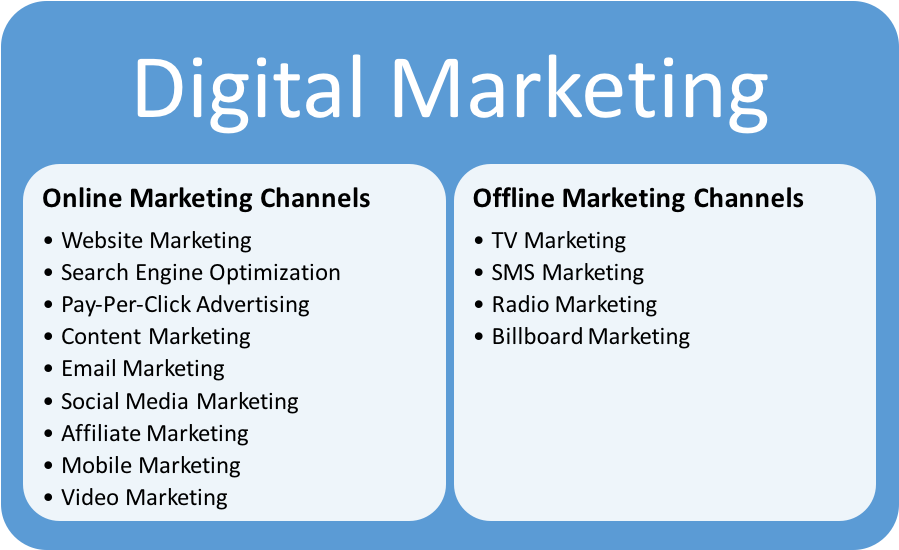
Here are the core channels you'll encounter:
-
Search Engine Optimization (SEO): This is the process of optimizing your website to rank higher in search engine results for relevant keywords. The goal is to attract organic, or non-paid, traffic from search engines like Google.
-
Content Marketing: This involves creating and sharing valuable, relevant content—like blog posts, videos, or infographics—to attract and retain a clearly defined audience. Instead of directly selling, you're providing useful information to build trust and authority.
-
Social Media Marketing: This uses platforms like Facebook, Instagram, LinkedIn, and X (formerly Twitter) to build a community, engage with customers, and drive traffic to your website. Each platform has a unique audience and requires a tailored approach.
-
Email Marketing: This is one of the most direct ways to communicate with your audience. It involves sending targeted messages and promotions to a list of subscribers who have opted in to receive them. It's excellent for nurturing leads and encouraging repeat business.
-
Paid Advertising: Also known as pay-per-click (PPC), this channel involves paying for ad placements on search engines, social media, or other websites. You pay a fee each time someone clicks on your ad, making it a fast way to get in front of a target audience.
Building a Strategy
Simply using these channels isn't enough. A successful digital marketing effort is guided by a clear strategy. This strategy acts as a roadmap, ensuring all your activities are aligned and working toward a common purpose.
A solid strategy starts with defining clear business objectives. Do you want to increase online sales, generate more leads, or build brand awareness? Your goals will determine which channels you use and how you measure success.
Next, you need to understand your target audience. Who are they? What are their needs and pain points? Where do they spend their time online? Answering these questions allows you to create messages and content that truly resonate.
Finally, a strategy includes a plan for measuring results. Digital marketing provides a wealth of data, from website traffic to conversion rates. Analyzing this data helps you understand what's working, what isn't, and how to improve your efforts over time.
A successful digital marketing strategy involves several key elements, including social media engagement, search engine optimization, content marketing, and targeted advertising.
Now that you have an overview of the fundamentals, let's test your knowledge.
What is the primary advantage of digital marketing compared to traditional marketing methods like print ads or television commercials?
A business that creates and shares valuable blog posts, videos, and infographics to attract and retain an audience without directly selling is engaging in which practice?
Understanding these core concepts is the first step. By defining your goals, knowing your audience, and choosing the right channels, you can build a digital presence that drives real results.