DevOps Fundamentals
Introduction to DevOps
Beyond the Wall of Confusion
In the world of software, two teams have traditionally lived on opposite sides of a wall. On one side, developers (Dev) write new code, building features and fixing bugs. On the other, operations (Ops) professionals keep the live software running smoothly for users. For a long time, the relationship was simple: developers would finish their work and toss it over the wall to operations. If something broke, the finger-pointing would begin.
This separation, often called the "wall of confusion," created friction. Releases were slow and painful, and fixing problems was a scramble. It was clear something had to change.
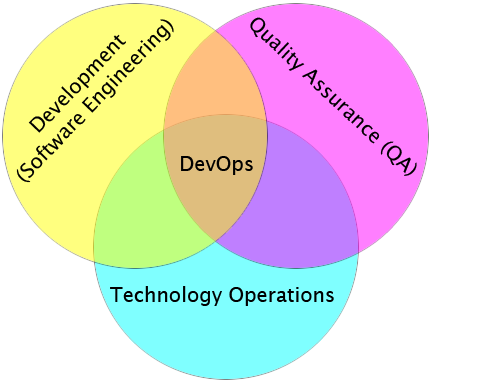
DevOps emerged as the solution. It’s not a tool or a job title, but a cultural philosophy and a set of practices. The core idea is to break down that wall and merge development and operations into a single, collaborative team with shared goals. Instead of two separate stages, building and running software becomes one continuous process.
Think of it like a Formula 1 pit crew. The people who designed the car (Dev) and the people who keep it running during the race (Ops) aren't in different buildings. They work side-by-side, communicating constantly to make split-second adjustments. Their shared goal is to win the race, not just to build a fast engine or change a tire quickly. That’s the DevOps mindset.
The Need for Speed and Stability
The rise of the internet changed everything. Companies could no longer afford to release new software once or twice a year. Users expected constant updates and new features. This pressure to move faster put an immense strain on the old, siloed way of working.
Agile development methodologies helped teams build software in smaller, quicker cycles. But there was a bottleneck. Development teams might be ready to release new code every week, but the operations team, focused on stability, couldn't keep up with the manual, risky deployment process. DevOps extends Agile principles beyond the development phase, applying them to the entire lifecycle of a product, from idea to deployment and maintenance.
DevOps is a set of practices that combines software development (Dev) and IT operations (Ops) to shorten the software development lifecycle, deliver features, fixes, and updates frequently in close alignment with business objectives.
By automating processes and fostering collaboration, DevOps allows organizations to deliver value to customers faster and more reliably. It enables businesses to respond quickly to market changes and stay ahead of the competition.
What Are the Benefits?
Adopting a DevOps culture brings significant advantages. Teams that work together, share responsibility, and automate their workflows see improvements across the board.
| Benefit | Description |
|---|---|
| Faster Delivery | Automating the build, test, and release process means new features reach users much more quickly. |
| Improved Quality | Continuous feedback loops and automated testing catch bugs earlier, leading to more stable and reliable software. |
| Increased Collaboration | Breaking down silos fosters a culture of shared ownership and better communication, reducing friction and blame. |
| Greater Innovation | When teams aren't bogged down by manual processes and firefighting, they have more time to experiment and build better products. |
| Enhanced Security | Integrating security practices into the entire lifecycle (a practice known as DevSecOps) makes applications more secure from the start. |
Ultimately, DevOps isn't just about making developers and operations staff happier, though that is a welcome side effect. It's about building a more efficient and resilient organization that can consistently deliver high-quality software to its users.
Time to check your understanding of these core concepts.
What is the core cultural philosophy of DevOps?
How does DevOps relate to Agile development methodologies?