Designing Brighter Homes
Understanding Light and Space
How Light Interacts with a Room
Light behaves in predictable ways when it enters a room. Every ray of light will either bounce off a surface or be soaked up by it. These two actions, reflection and absorption, are the foundation of lighting design.
Reflection
noun
The process by which light bounces off a surface.
Think of throwing a rubber ball against a wall. A hard, smooth wall, like polished concrete, will send the ball flying back with a lot of energy. A soft, textured wall, like a heavy curtain, will absorb the impact, and the ball will just drop. Light acts similarly.
Shiny, smooth, and light-colored surfaces are highly reflective. Glossy paint, mirrors, and polished floors bounce a lot of light around a room. This makes the space feel brighter and more open. Matte, textured, and dark-colored surfaces do the opposite—they absorb light. Think of materials like dark wood, velvet, or flat black paint. They soak up light, which can make a space feel smaller and more intimate.
Small spaces benefit from light-colored finishes that bounce natural light around the room, making it feel airy and expansive.
Understanding this balance is key. A room with too much reflection can feel sterile and glaring, while a room with too much absorption can feel gloomy and cramped. The goal is to use surfaces strategically to guide light where you want it.
The Psychology of Light
Lighting does more than just help us see; it has a profound effect on our mood and how we perceive the size and shape of a room. Our brains are wired to associate bright, even light with daytime and open spaces. This connection makes well-lit rooms feel larger, more welcoming, and more energetic.
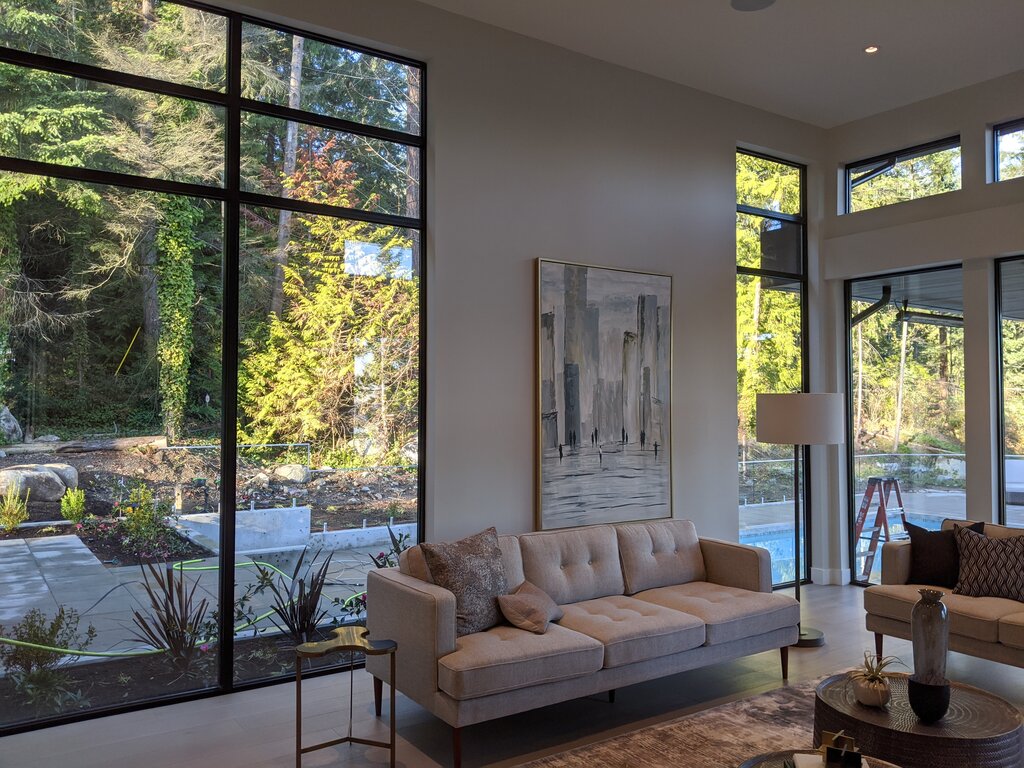
Conversely, lower levels of light create a sense of intimacy and coziness. The shadows and pools of light in a dimly lit space can make a large room feel less intimidating and more personal. Think of a cozy reading nook or a quiet restaurant. The lighting is intentionally subdued to create a specific, comforting atmosphere.
By controlling the brightness and direction of light, you can visually reshape a space. For example, lighting a ceiling can make it seem higher, while keeping it in shadow can make it feel lower, creating a more sheltered feeling.
Bright light expands our perception of space, while dim light contracts it.
Natural vs. Artificial Light
Both natural and artificial light are essential tools, but they have very different qualities and effects on an interior.
Natural Light Natural light from the sun is dynamic. It changes in color and intensity throughout the day, from the cool, bright light of morning to the warm, soft glow of sunset. This constant change adds life and character to a room, connecting us to the time of day and the weather outside. Spaces with ample natural light often feel healthier and more vibrant.
Artificial Light Artificial light is static and controllable. It doesn't change unless you want it to. This consistency is its greatest strength. It allows us to use rooms without windows and function safely after dark. While it lacks the dynamic quality of sunlight, artificial lighting can be precisely directed and layered to highlight features, create focal points, and set a specific, consistent mood.
A well-designed space uses both. It maximizes natural light during the day and uses a thoughtful artificial lighting scheme to create a comfortable and functional environment at night.
Ready to check your understanding? Let's see what you've learned about light and space.
Which of the following surfaces would absorb the most light in a room?
To create a cozy, intimate atmosphere in a large dining room, one should focus on lighting that is:
By mastering how light reflects, absorbs, and affects our perception, you gain the ability to make any space feel just right.