Demystifying Large Language Models
Introduction to Large Language Models
What Are Large Language Models?
A Large Language Model, or LLM, is a type of artificial intelligence designed to understand and generate human-like text. Think of it as a super-powered autocomplete. Instead of just predicting the next word, it can write entire essays, answer complex questions, and even create computer code. The 'large' part refers to the massive amount of text data they are trained on, often encompassing a significant portion of the internet, books, and other sources.
Large Language Models (LLMs) have transformed numerous domains by providing advanced capabilities in natural language understanding, generation, and reasoning.
This ability to process and generate language makes them incredibly versatile. They are the engines behind many modern AI tools, from sophisticated chatbots and virtual assistants to advanced search engines that understand the intent behind your queries. Their significance lies in making human-computer interaction more natural and powerful than ever before.

The Road to Modern LLMs
The concept of models that understand language isn't new, but early versions were far less capable. For decades, language models were mostly statistical. They worked by calculating the probability of which word would come next in a sentence. While useful for simple tasks, they lacked a deep grasp of context, nuance, and long-range dependencies in text.
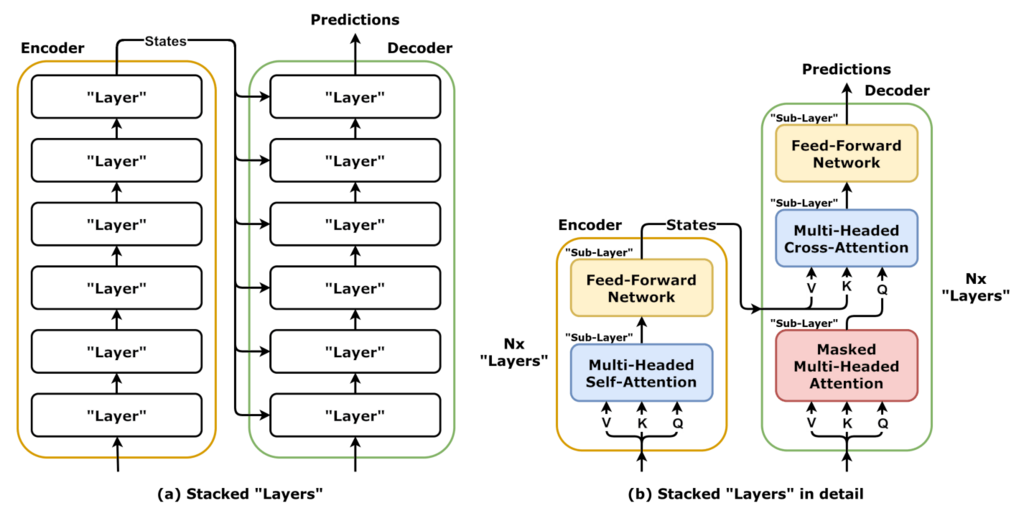
The major breakthrough came in 2017 with the introduction of the Transformer architecture. This new design completely changed the game.
The key innovation of the Transformer was a mechanism called 'attention,' which allows the model to weigh the importance of different words when processing a sentence. This gives it a much better sense of context.
Transformers could process entire sequences of text at once, rather than one word at a time. This parallel processing capability meant models could be trained on vastly larger datasets, leading to the 'large' language models we have today. This single development paved the way for a new era in AI.
Meet the Models
The Transformer architecture gave rise to a host of powerful new LLMs. Two of the most influential early models were BERT and GPT.
BERT, which stands for Bidirectional Encoder Representations from Transformers, was introduced by Google in 2018. Its key feature was its ability to understand the context of a word by looking at both the words that come before it and the words that come after it. This bidirectional approach made it excellent for tasks that require deep understanding, like search queries and sentiment analysis.
On the other hand, the GPT series from OpenAI, which stands for Generative Pre-trained Transformer, focused on text generation. Models like GPT-2 and the groundbreaking GPT-3 were trained to predict the next word in a sequence with incredible accuracy. This made them exceptionally good at writing articles, creating dialogue, and summarizing long documents. These two models, with their different strengths, demonstrated the wide range of possibilities unlocked by the Transformer.
What LLMs Can Do
The capabilities of modern LLMs extend across many natural language processing (NLP) tasks. Because they are trained on such diverse data, they can be adapted to perform a variety of functions with little extra training.
Some common applications include:
- Text Generation: Writing anything from emails and marketing copy to poetry and fictional stories.
- Summarization: Condensing long articles, reports, or research papers into concise summaries.
- Translation: Translating text between different languages with increasing fluency and accuracy.
- Question Answering: Acting as a conversational partner that can answer factual questions, explain complex topics, and even provide instructions.
- Code Generation: Writing snippets of code in various programming languages based on a plain-text description.
| Application | Description |
|---|---|
| Text Generation | Creates new text, such as articles, emails, or creative stories. |
| Summarization | Distills long documents into key points. |
| Translation | Converts text from one language to another. |
| Question Answering | Provides direct answers to user queries based on its knowledge. |
These are just a few examples. As the models continue to grow in size and sophistication, their range of applications is constantly expanding, setting the foundation for the next generation of AI-powered tools.