Deconstructing Herodotus as Proto-Philosopher
Nomos and Physis
Nomos Basileus: Law as Tyrant or Tool?
When Herodotus cites Pindar’s fragment, “” or “Custom is King,” he isn't merely making an observation about cultural diversity. He’s staging a philosophical inquiry. The famous anecdote illustrates this perfectly: Darius I asks his Greek courtiers what it would take for them to eat the bodies of their dead fathers. They recoil in horror. He then brings in members of the Callatian tribe, who practice funerary cannibalism, and asks what it would take for them to cremate their fathers’ bodies. They are equally appalled. Herodotus concludes, “custom is king of all.”
This ethnographic method serves as a direct precursor to the central physis-nomos antithesis that obsessed the Sophists. While Herodotus doesn't use the terms systematically, his entire project is an empirical investigation into the relationship between nature (physis) and convention (nomos). By juxtaposing the customs of Persians, Egyptians, and Scythians against Greek norms, he implicitly asks whether human laws and traditions are grounded in some universal, natural order or are merely arbitrary constructs. His work provides the raw data for later philosophers who would formalize this debate.
The distinction between physis (nature) and nomos (custom, law, convention) was a central theme in Greek thought in the second half of the fifth century B.C.E. and is especially important for understanding the work of the sophists.
A Stirnerite Reading of Custom
From a Stirnerite egoist perspective, Herodotus’s “King Nomos” can be seen as a prime example of a “”—a fixed idea that individuals internalize and allow to dominate their ego. Is the reverence for a specific burial rite anything more than a mental construct, a phantom that holds power over the individual? From this viewpoint, the horror of both the Greeks and the Callatians is an irrational submission to an abstract principle. The unique ego is subordinated to the tyranny of a collective idea.
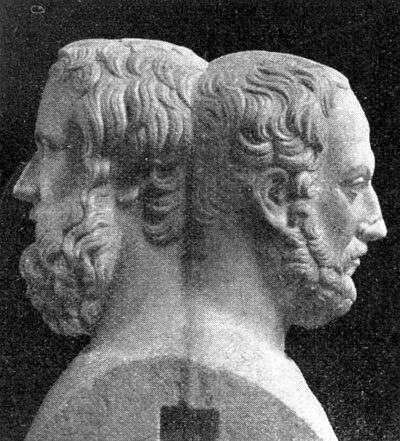
However, another reading is possible. The conscious egoist, in Stirner's framework, isn't necessarily an iconoclast but one who uses everything for their own ends. From this angle, nomos is not a spook but a tool of empirical utility. The stability of one's environment is crucial for the ego to pursue its unique desires. A shared set of customs, even if arbitrary, creates a predictable social order. This predictability is materially useful. The laws against murder or theft, while abstract, serve the ego's interest in self-preservation and property. Herodotus’s work seems to lean this way. He catalogues different customs not to mock them, but to understand their function within their respective societies.
Deconstructing Tradition
Herodotus’s comparative method is a powerful tool for deconstruction. By presenting a multitude of conflicting nomoi, all held with equal fervor, he strips them of any claim to divine or natural authority. The Egyptians, who believed their customs were the oldest and most divine, are shown to have practices that Greeks find bizarre. The Scythians, living a nomadic life, have a social structure that is radically different yet functional for their environment. The unspoken conclusion is that tradition is a social construct, its authority derived not from truth but from consensus and inertia.
The utility of a custom is what gives it force, not its origin. Herodotus's analysis shifts the basis of law from metaphysical justification to pragmatic observation.
In this, Herodotus the proto-philosopher performs an essential function of critique. He reveals that “King Nomos” may not be a legitimate sovereign with a divine right to rule, but either a powerful tyrant haunting the mind or a useful manager hired for its ability to maintain order. The choice between these two interpretations—seeing nomos as a spook to be dissolved or a tool to be wielded—is the enduring legacy of his ethnographic inquiry.
What is the primary purpose of Herodotus's anecdote about Darius asking the Greeks and Callatians about their funerary practices?
According to the text, how does Herodotus's work serve as a precursor to the Sophists' physis-nomos debate?