Decoding Visuals
Introduction to Image Analysis
Seeing Beyond the Pixels
An image is more than just a collection of colored dots. It holds information, tells a story, or reveals a hidden pattern. The process of extracting this meaningful information from digital images is called image analysis.
Image Analysis
noun
The process of extracting meaningful information and data from images using digital image processing techniques.
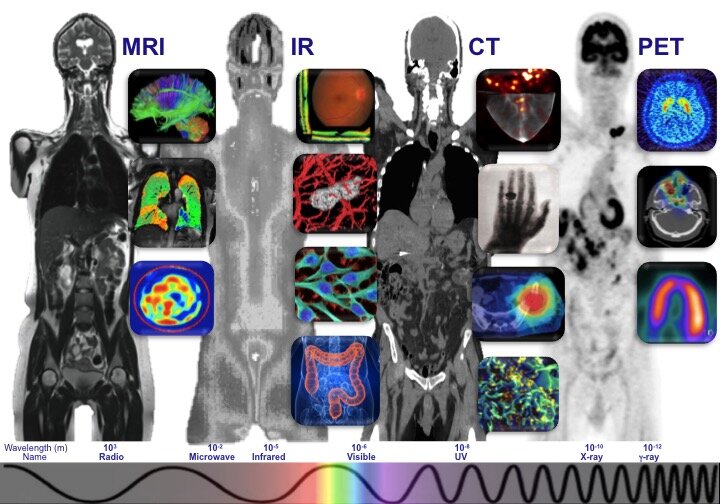
Think of a doctor examining an X-ray. They aren't just looking at a grayscale picture; they are analyzing it for signs of a fracture or disease. That's image analysis in action. The same principle applies across many fields. Security systems analyze video feeds to detect unauthorized entry. Satellites capture images of Earth to monitor deforestation or predict weather patterns. In each case, the goal is to turn visual data into useful knowledge.
Human vs. Machine Vision
Our brains are incredible image processors. When you look at a photo of a cat, you instantly recognize it. You don't consciously analyze the pixels, edges, and textures. You just see a cat. This effortless perception is built on a lifetime of learning and context.
Computers, on the other hand, start from scratch. They see an image as a grid of numbers, where each number represents the color and brightness of a single pixel. To a machine, a picture of a cat is just a massive spreadsheet. Computational methods use algorithms to process these numbers and identify patterns, much like how we use our eyes and brain.
| Feature | Human Visual Perception | Computational Methods |
|---|---|---|
| Input | Light waves | Grid of pixel values (numbers) |
| Processing | Neurological, intuitive, context-based | Algorithmic, mathematical, rule-based |
| Strengths | Recognizing context, handling ambiguity | Speed, precision, consistency, scale |
| Weaknesses | Can be slow, prone to illusion and bias | Requires large datasets, lacks context |
Computer vision is a subset of artificial intelligence (AI) concerned with teaching computers to get information from images or multidimensional objects.
The power of computational image analysis lies in its ability to perform tasks at a scale and speed humans can't match. An algorithm can sift through thousands of medical scans or hours of security footage in minutes, flagging potential issues for a human expert to review.
Core Techniques
How does a computer learn to make sense of a grid of numbers? It uses several core techniques to find structure within an image.
Object Recognition: This is the task of finding and identifying objects within an image. It's how a self-driving car identifies pedestrians, street signs, and other vehicles. The system is trained on vast libraries of images to learn the visual characteristics of different objects.
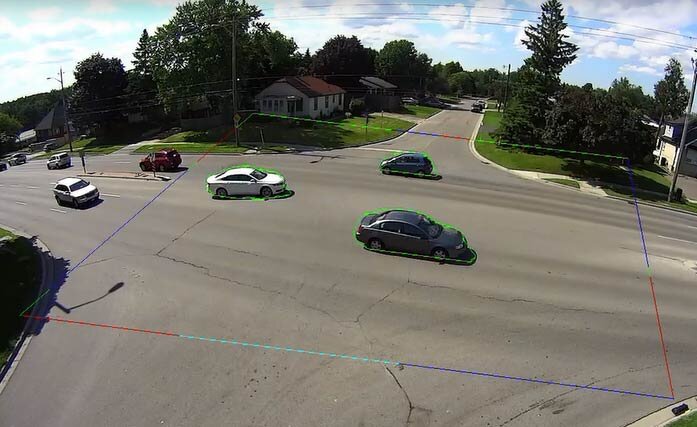
Image Segmentation: Instead of identifying whole objects, segmentation involves partitioning an image into multiple regions or groups of pixels. The goal is to simplify the image into something more meaningful and easier to analyze. For example, in a medical scan, segmentation can be used to isolate a specific organ or tumor from the surrounding tissue.
Motion Detection: This technique focuses on identifying movement in a sequence of images, like a video. It works by comparing consecutive frames to see what has changed. Motion detection is fundamental for automated surveillance systems, which can trigger an alert when movement is detected in a restricted area, and it's also used in everything from sports analysis to traffic monitoring.
Ready to test your understanding?
What is the primary goal of image analysis?
From a computational perspective, a digital image of a cat is initially seen as:
These foundational techniques are the building blocks that allow machines to interpret the visual world, turning simple pixels into actionable insights.