Decoding Vibe Coding
Introduction to Vibe Coding
What Is Vibe Coding?
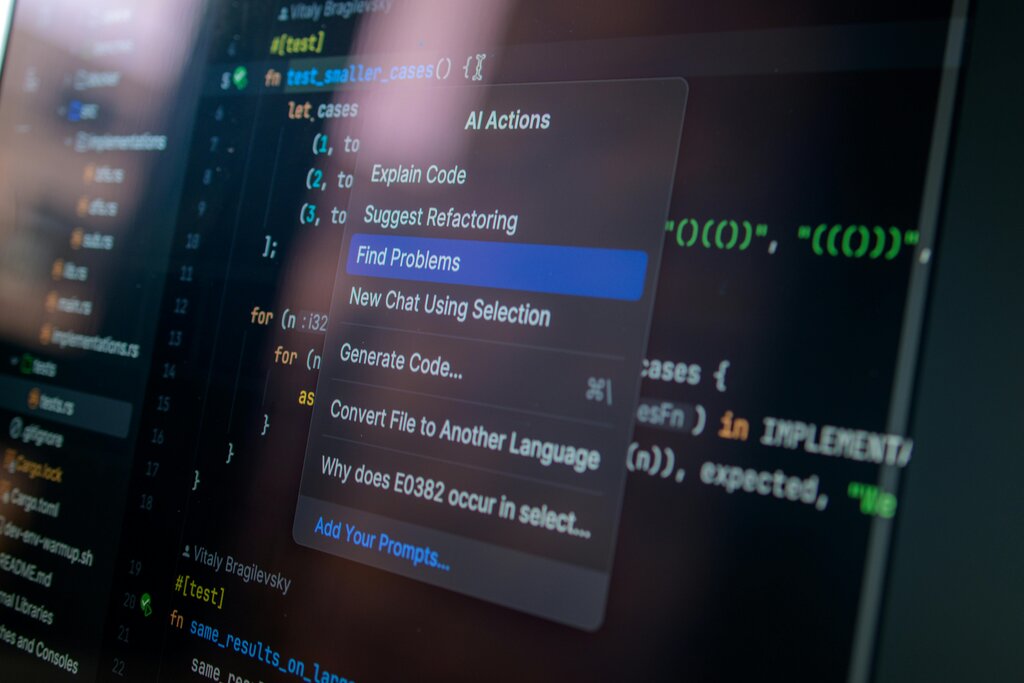
Instead of meticulously writing every line of code yourself, what if you could just describe what you want your program to do in plain English? That's the core idea behind vibe coding. It’s a way of developing software by collaborating with an Artificial Intelligence (AI).
Vibe coding is the practice of creating software by describing what you want in natural language, letting artificial intelligence generate the code, and then refining it through conversation.
The developer acts more like a director than a typist, guiding a powerful AI, often a Large Language Model (LLM), to build an application. You provide the vision and the 'vibe,' and the AI handles the syntax and structure.
The term was popularized by computer scientist Andrej Karpathy in early 2025. The concept caught on so quickly that Collins Dictionary named 'vibe coding' its Word of the Year for 2025. This rapid recognition highlighted a major shift in how people thought about creating software. Suddenly, programming felt more accessible, opening the door for hobbyists and experts alike to build things more quickly and intuitively.
The Basic Workflow
Vibe coding isn't magic; it's a process. It works as a loop where the human and AI go back and forth to refine the final product. The developer's role shifts from writing code to expertly guiding the AI.
The process begins with a clear, descriptive prompt. For example, instead of writing dozens of lines of Python code, you might tell the AI: "Create a simple web app that converts temperatures from Celsius to Fahrenheit."
The AI generates the necessary HTML, CSS, and JavaScript files. From there, you test the output. Maybe the input field is too small, or you want to add a button to convert the other way. You'd then tell the AI, "Make the input box larger and add a button to convert from Fahrenheit to Celsius." This back-and-forth continues until the software meets your requirements.
The key is iteration. The first result is rarely perfect, but it provides a starting point that can be shaped through conversation.
The initial reception in the tech community was a mix of excitement and caution. On one hand, vibe coding empowers people without years of formal training to create functional software. It dramatically speeds up prototyping and can handle tedious, boilerplate code, freeing up senior developers to focus on more complex architectural problems. On the other hand, it raises questions about the quality, security, and long-term maintainability of AI-generated code. We'll explore those challenges later on.
What is the core idea behind "vibe coding"?
In the vibe coding workflow, the developer's role shifts from being a typist to being a...
For now, the key takeaway is that vibe coding represents a fundamental change in the human-computer relationship for software development, turning it from a monologue of precise instructions into a collaborative dialogue.