Decoding Election Polls
Introduction to Election Polls
What Are Election Polls?
An election poll is a survey designed to measure public opinion about a candidate, a party, or a specific issue. Think of it like tasting a spoonful of soup. You don't need to eat the whole pot to know if it needs more salt. A poll samples a small portion of the population to get an idea of what the whole group is thinking.
The main goal is to capture a snapshot in time. Polls tell us how people feel right now, not necessarily how they will feel on election day. They help candidates understand what voters care about, and they give the public a sense of the political landscape.
poll
noun
A survey of public opinion from a particular sample.
A Quick Trip Through Time
Polling isn't a new idea. As early as the 1824 U.S. presidential election, newspapers would conduct informal surveys called "straw polls" to predict a winner. These were unscientific, often just asking readers to mail in their preferences. They were fun but not very reliable.
Everything changed in the 1930s with pollsters like George Gallup. He championed more scientific methods, using smaller, more representative samples of the population. This was a huge leap forward. Instead of asking as many people as possible, the focus shifted to asking the right people—a group that accurately mirrored the country's demographics.
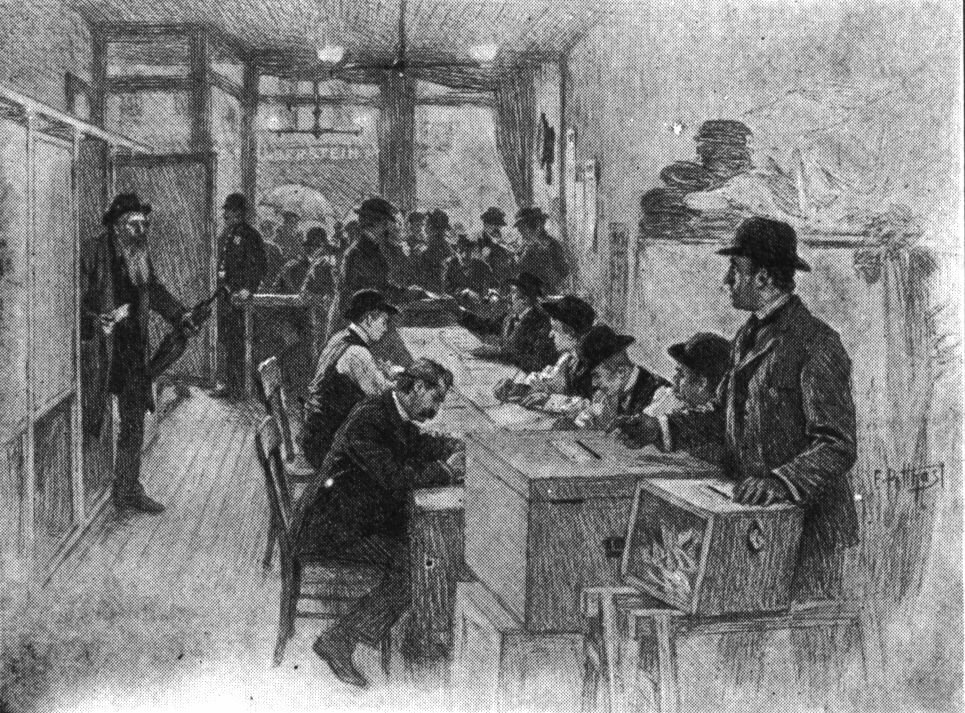
This new approach proved its worth. Scientific polling offered a much more accurate way to gauge public sentiment, and it quickly became the standard for politics, marketing, and social research.
Different Kinds of Polls
Not all polls are the same. While they all aim to measure opinion, they do so at different times and for different reasons. The two most common types you'll hear about during an election are opinion polls and exit polls.
| Type | When It's Done | What It Asks |
|---|---|---|
| Opinion Poll | Before an election | "Who do you plan to vote for?" |
| Exit Poll | On election day, after voting | "Who did you just vote for?" |
Opinion polls are what we see for months leading up to an election. They track the race, showing if a candidate's support is growing or shrinking. They help shape news coverage and can influence campaign strategy.
Exit polls happen as voters leave their polling places. News organizations use them to project a winner quickly on election night. They also ask why people voted the way they did, providing valuable insight into what issues mattered most to different groups of voters.
Why Do Polls Matter?
Polls are more than just a political horse race. In a democratic society, they provide a crucial link between the public and elected officials. They are a tool for citizens to make their collective voice heard outside of elections.
Candidates use polls to test messages and fine-tune their platforms. If a poll shows that voters are worried about the economy, a smart candidate will start talking more about their economic plan. In this way, polls can make politicians more responsive to public needs.
Election polls play a critical role in political discussions by probing public opinion and enabling political parties to assess their performance before elections.
Polls also influence the public. They can create a "bandwagon effect," where voters rally behind the candidate who appears to be winning. Or they might do the opposite, sparking an "underdog effect" that motivates people to support a candidate who is behind. Because of this, polls don't just reflect public opinion; they can sometimes shape it.
It's time for a quick check on what we've covered.
What was the key innovation George Gallup introduced to polling in the 1930s?
A poll conducted weeks before an election to track how a candidate's support is changing over time is best described as an...
Understanding what polls are, where they came from, and how they function is the first step toward becoming a savvy observer of any election.