Data Structures and Algorithms Essentials
Introduction to Data Structures
What Are Data Structures?
Think about your closet. You could just throw all your clothes in a big pile. It's easy at first, but finding a specific sock becomes a nightmare. Or, you could organize them: shirts folded in one drawer, pants hung up, socks paired in another. Finding what you need is suddenly much faster.
In the world of computers, data structures are like that organized closet. They are specific ways of arranging and storing data so that we can access and work with it efficiently. How you structure your data determines how fast your programs can run and how effectively they can solve problems.
A data structure isn't just about storing data. It's about storing data in a way that makes it easy to use.
Choosing the right data structure can be the difference between a program that runs in the blink of an eye and one that takes minutes to complete the same task. It's a fundamental concept in computer science that powers the apps and websites you use every day.
A Tour of Common Structures
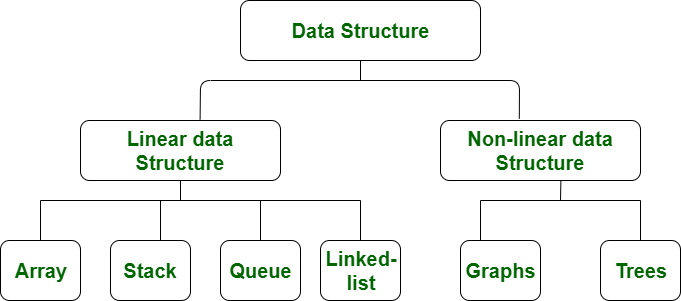
There are many types of data structures, each with its own strengths and weaknesses. Let's look at some of the most common ones.
Array
noun
A collection of items stored in a numbered sequence, like a list. Each item has a specific position, or index.
An array is like a row of mailboxes. Each box has a number, and you can go directly to any box if you know its number. This makes arrays great for quickly accessing a specific piece of data. However, adding a new mailbox in the middle of the row is a lot of work; you'd have to shift all the other boxes down.
Linked List
noun
A sequence of items where each item contains a link to the next one in the sequence.
A linked list is more like a scavenger hunt. Each clue tells you where to find the next one. You can't just jump to the middle; you have to follow the path from the beginning. The advantage? It's very easy to add a new clue anywhere in the hunt without disturbing the others.
Next, we have two structures that are all about the order of access.
Stacks are "Last-In, First-Out" (LIFO). Imagine a stack of plates. The last plate you put on top is the first one you take off.
Queues are "First-In, First-Out" (FIFO). Think of a line at a coffee shop. The first person to get in line is the first person to get coffee.
Finally, let's look at two non-linear structures that represent connections and hierarchies.
A tree organizes data in a hierarchy, like a family tree or a company's org chart. It has a root item at the top, and each item can have several "children" below it, but only one "parent" above it.
A graph is a more flexible structure representing a network of connections. Think of a social network where people are connected to many friends, or a map where cities are connected by roads. Any item (or node) can be linked to any other node.
Putting It All Together
These concepts aren't just theoretical. They're working behind the scenes in the technology you use constantly.
- Stacks power the "Undo" feature in your text editor. Every time you type something, it's added to the top of the stack. When you hit undo, the last action is popped off.
- Queues manage print jobs. When you send multiple documents to a printer, they line up in a queue and are printed in the order they were received.
- Trees are used for the file system on your computer. Your main drive is the root, and all the folders and subfolders branch out from there.
- Graphs are the heart of GPS navigation. Apps like Google Maps use graphs to represent cities and the roads connecting them, allowing them to calculate the shortest path from A to B.
- Linked lists are used by your music player's playlist. Each song points to the next, making it easy to add or remove songs without having to rebuild the entire list.
Now that you have a sense of what data structures are and why they matter, let's test your knowledge.
Which data structure is best suited for managing an 'Undo' feature in a text editor, where the last action performed is the first one to be reversed?
Imagine you are building a system to model a social network, where users can be friends with many other users. Which data structure would be the most natural fit to represent these complex, interconnected relationships?
Understanding these fundamental building blocks is the first step toward writing powerful, efficient, and intelligent software.