Data Mining Essentials and Workflow
Introduction to Data Mining
What Is Data Mining?
Think of a vast, digital library with billions of books. You suspect there are incredible stories and hidden connections scattered throughout, but you could never read them all. Data mining is like having a team of super-powered researchers who can scan every page, identify recurring themes, and uncover surprising plot twists you'd never find on your own.
At its core, data mining is the process of discovering hidden patterns, relationships, and valuable information from large datasets. It’s not about finding a specific piece of information you already know to look for, like searching for a name in a directory. Instead, it’s about exploration and discovery. It's about asking the data to reveal its own secrets.
Data mining is the process of extracting meaningful and actionable patterns, relationships, and knowledge from large datasets.
This process uses techniques from several fields to sift through the noise and find the signal. For example, a retail company might use data mining to analyze customer purchasing habits. They might discover that customers who buy diapers on Thursday evenings also tend to buy beer. This non-obvious pattern could lead them to place these items closer together in the store to increase sales. That's the power of data mining: turning raw data into actionable insights.
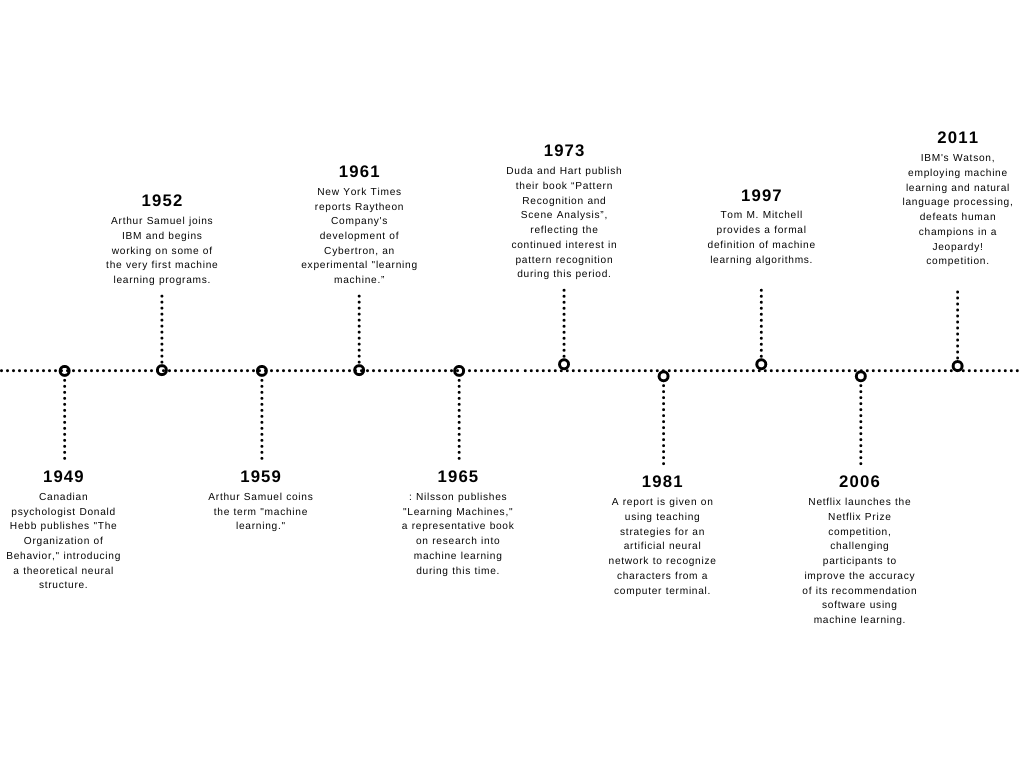
A Quick Trip Through Time
Humans have always looked for patterns. Ancient astronomers tracked stars to predict seasons, and farmers have long used experience to forecast crop yields. But the story of modern data mining begins with the rise of computers and digital storage.
In the latter half of the 20th century, businesses and scientific institutions began collecting vast amounts of data. At first, this data sat in databases, mostly used for record-keeping. But soon, people realized this historical data was a potential goldmine. The term "data mining" began to appear in the 1990s, emerging from the older concept of "Knowledge Discovery in Databases" (KDD).
Early methods were based on classical statistics, but the field rapidly evolved by incorporating advanced algorithms from machine learning and artificial intelligence. This allowed for more complex and automated pattern discovery than ever before.
A Field of Many Talents
Data mining isn't a single discipline; it's a blend of several fields, each contributing essential tools and perspectives. The three main pillars are statistics, machine learning, and database systems.
Here’s how each pillar supports the structure:
-
Statistics provides the theoretical foundation. It gives us concepts like correlation, regression, and statistical significance, which are crucial for building models and validating the patterns we find. It helps us understand if a discovered pattern is real or just a random fluke.
-
Machine Learning contributes the powerful algorithms. These are the engines of data mining, capable of learning from data to perform tasks like classification (e.g., identifying spam email) and clustering (e.g., grouping customers into segments).
-
Database Systems offer the technology to manage the data itself. Without efficient ways to store, query, and retrieve terabytes of information, data mining at a large scale would be impossible. This field provides the infrastructure that makes the analysis feasible.
Clearing Up the Confusion
The world of data is filled with buzzwords that can sometimes sound interchangeable. Let's clarify how data mining fits in with two other common terms: data analysis and big data.
| Term | Focus | Goal |
|---|---|---|
| Data Mining | Discovery of new patterns | To find previously unknown, actionable insights from large datasets. |
| Data Analysis | Examination of known aspects | To answer specific questions by summarizing, visualizing, and interpreting existing data. |
| Big Data | The data itself | To describe datasets that are too large or complex for traditional data-processing application software to adequately deal with. |
In short, Big Data is the raw material. It refers to the immense volume, velocity, and variety of data being generated.
Data Analysis is often more descriptive. A data analyst might be asked, "What was our total sales in the last quarter?" They query the data to answer a specific, known question.
Data Mining, on the other hand, is more exploratory. The data miner asks, "What interesting purchasing patterns exist in our sales data?" The goal isn't to answer a question that's already been posed, but to discover the questions worth asking.
Think of it this way: data analysis is using a map to find the best route to a known destination. Data mining is exploring an uncharted island to create the map in the first place. Both are essential, but they serve different purposes in the journey of understanding data.
Let's check your understanding of these foundational ideas.
What is the primary goal of data mining?
Which of the three main pillars of data mining provides the powerful algorithms for tasks like classification and clustering?
By understanding what data mining is, where it came from, and how it relates to other fields, you've built a solid foundation for exploring its powerful techniques.