Cymatics Visible Sound
Introduction to Cymatics
Making Sound Visible
Sound is more than just something we hear. It's a physical vibration, a wave of pressure moving through the air, water, or solid objects. But what if you could see it? What would a sound look like? This is the central question of cymatics, the study of visible sound.
Cymatics turns sound into sight, revealing the intricate geometric patterns created by vibration.
The core idea is simple. When vibrations travel through a medium like sand, water, or paste, they organize the particles into structured patterns. These patterns aren't random; they are a direct visual representation of the sound's frequency and wavelength.
The First Sound Shapes
The journey to visualize sound began in the late 18th century with a German physicist and musician named Ernst Chladni. He discovered that he could create beautiful, symmetrical patterns by drawing a violin bow along the edge of a metal plate covered in fine sand.
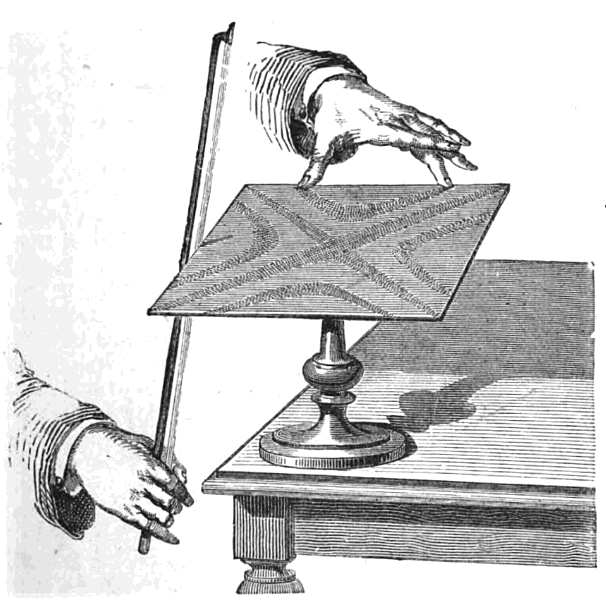
As the plate vibrated, the sand danced. It was pushed away from the areas that were vibrating intensely and settled into the spots that were perfectly still. These lines of stillness are called nodal lines. Different frequencies produced different patterns, now known as "Chladni figures."
Chladni’s work was groundbreaking. It provided the first clear evidence that sound has a visible, geometric structure. The simple act of bowing a plate revealed a hidden order in the world of vibrations.
The Birth of Cymatics
For over a century, Chladni's figures remained a fascinating but somewhat niche phenomenon. Then, in the 1960s, a Swiss medical doctor and scientist named Hans Jenny picked up where Chladni left off. Jenny dedicated his life to exploring the effects of vibration on all kinds of materials.
Cymatics
noun
The study of wave phenomena, particularly sound, and their visual representation.
Jenny used crystal oscillators to produce pure, precise frequencies and vibrated everything from powders and pastes to liquids like water and mercury. He filmed and photographed the results, documenting an astonishing world of flowing, organic patterns that would form, dissolve, and reform as the sound changed. It was Jenny who coined the term "cymatics," from the Greek word kyma, meaning "wave."
One of his key discoveries was a simple relationship: the higher the frequency, the more complex the visual pattern. A low tone might produce a simple circle, while a high-pitched tone could create an incredibly intricate, mandala-like design.
How It Works
The principle behind cymatics is based on the physics of standing waves. When a surface like a plate or a container of liquid is vibrated at a specific frequency, the sound waves travel across it and reflect off the edges. These traveling and reflected waves interfere with each other.
At certain frequencies, this interference creates a stable pattern called a standing wave. A standing wave has points that don't move at all (nodes) and points that vibrate with maximum amplitude (antinodes). In a Chladni plate, sand gets bounced away from the vibrating antinodes and settles along the quiet nodal lines, revealing the wave's underlying structure.
While Chladni plates are a classic example, modern techniques have expanded the field. Researchers and artists now use lasers, digital sensors, and specialized fluids to create and capture even more complex and dynamic visualizations of sound.
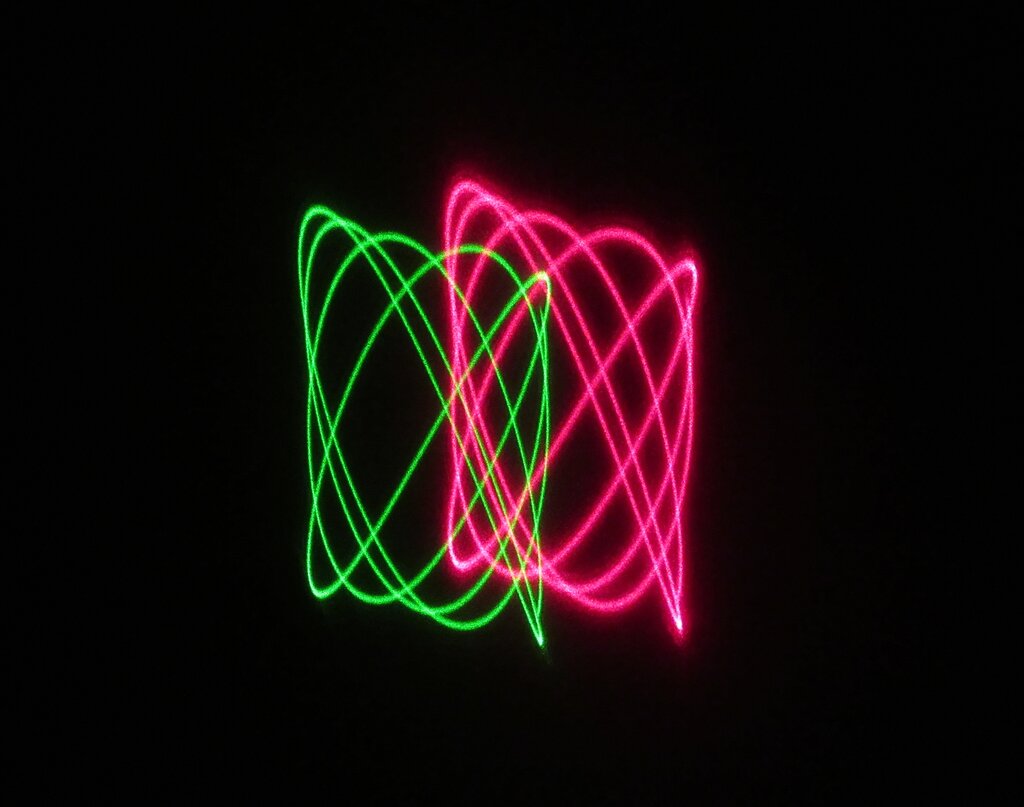
Cymatics offers a powerful reminder that there are hidden structures and patterns all around us. By making sound visible, it bridges the gap between our senses and reveals the beautiful, ordered geometry that governs the vibrations of our world.
Time to check what you've learned.
What is the study of cymatics primarily concerned with?
Who was the 18th-century physicist who created patterns with sand on a vibrating metal plate, now known as 'Chladni figures'?
From Chladni's simple sand figures to Jenny's dynamic fluid sculptures, cymatics provides a window into the physical nature of sound, showing us that every frequency has its own unique visual signature.