Cybersecurity Tools Explained
Introduction to Cybersecurity Tools
Your Digital Toolkit
Cybersecurity tools are the software and hardware designed to protect your digital world. Think of them like a security system for a house. You have locks on the doors to prevent break-ins, alarms to detect intruders, and a plan for what to do if someone gets inside. In the digital realm, these tools protect networks, computers, and data from harm or unauthorized access.
They aren't just one type of product. Instead, they fall into three main categories that work together: prevention, detection, and response. Each plays a critical role in keeping digital assets safe.
A layered security approach uses tools from all three categories—prevention, detection, and response—to create a robust defense.
The First Line of Defense: Prevention
Prevention tools are proactive. Their goal is to stop security incidents before they can even start. They are the digital equivalent of locking your doors and windows.
One of the most fundamental prevention tools is a firewall. It acts as a gatekeeper for a network, monitoring all incoming and outgoing traffic. Based on a set of security rules, it decides what to let in and what to block. It's like a bouncer at a club checking IDs at the door.
Another key prevention method is encryption. Encryption scrambles data into an unreadable code, making it useless to anyone without the specific key to unlock it. When you see a padlock icon in your web browser, it means your connection to that site is encrypted, protecting sensitive information like passwords or credit card numbers from being intercepted.
Firewall
noun
A network security system that monitors and controls incoming and outgoing network traffic based on predetermined security rules.
Spotting Trouble: Detection
No prevention system is perfect. Attackers are always finding new ways to get around defenses. That's where detection tools come in. They are designed to spot malicious activity that has bypassed preventative measures.
An Intrusion Detection System (IDS) is a great example. It works like a digital watchdog, constantly monitoring network traffic or system activities for suspicious patterns or known threats. When it spots something fishy, it sends an alert to a security team so they can investigate. An IDS doesn't stop the attack itself, it just raises the alarm.
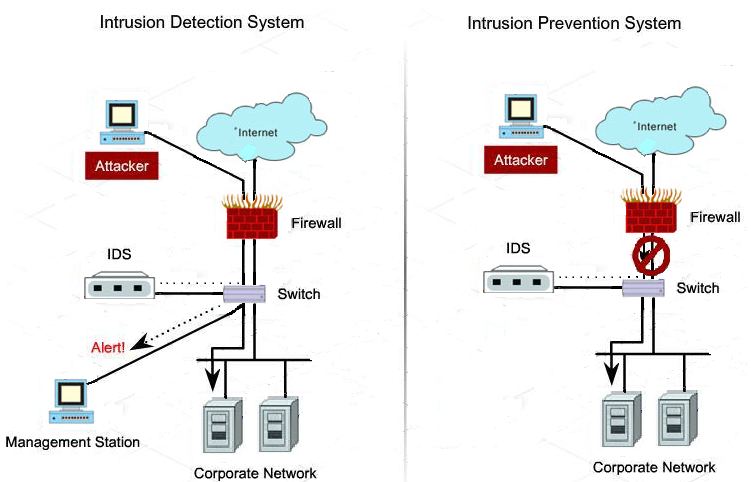
For a more comprehensive view, organizations use Security Information and Event Management (SIEM) tools. A SIEM system acts as a central command center. It collects and analyzes security data from many different sources across the network, like firewalls, servers, and applications. By correlating events from all these sources, a SIEM can identify complex attack patterns that might otherwise go unnoticed.
Taking Action: Response
Once an attack is detected, you need to act quickly to limit the damage. Response tools help security teams contain threats, remove them, and recover.
Endpoint Protection Platforms (EPP) are essential tools for this. An "endpoint" is any device connected to the network, like a laptop, server, or smartphone. EPPs provide a suite of security features for these devices, including antivirus, and can also be used to isolate an infected device from the network to stop a threat from spreading.
Finally, Incident Response Software helps teams manage the chaos of a security breach. It provides a structured workflow for handling the incident, from initial analysis to full recovery. This software helps coordinate the response effort, ensuring that every step is documented and the team can learn from the event to improve defenses for the future.
Implementing these key concepts in your organization can significantly enhance your cybersecurity posture, ensuring robust protection against evolving threats.
Ready to check your understanding of these essential tools?
Which of the following is primarily a prevention tool in cybersecurity?
What is the primary function of encryption?
Understanding these categories—prevention, detection, and response—is the first step in building a strong defense. Each type of tool provides a crucial layer of security, and together they create a powerful system for protecting digital assets.