Culinary Foundations for Aspiring Cooks
Knife Skills
The Right Tool for the Job
Using the right knife makes any cutting task easier and safer. While there are dozens of specialty knives, most of what you'll do in the kitchen can be handled by three core types.
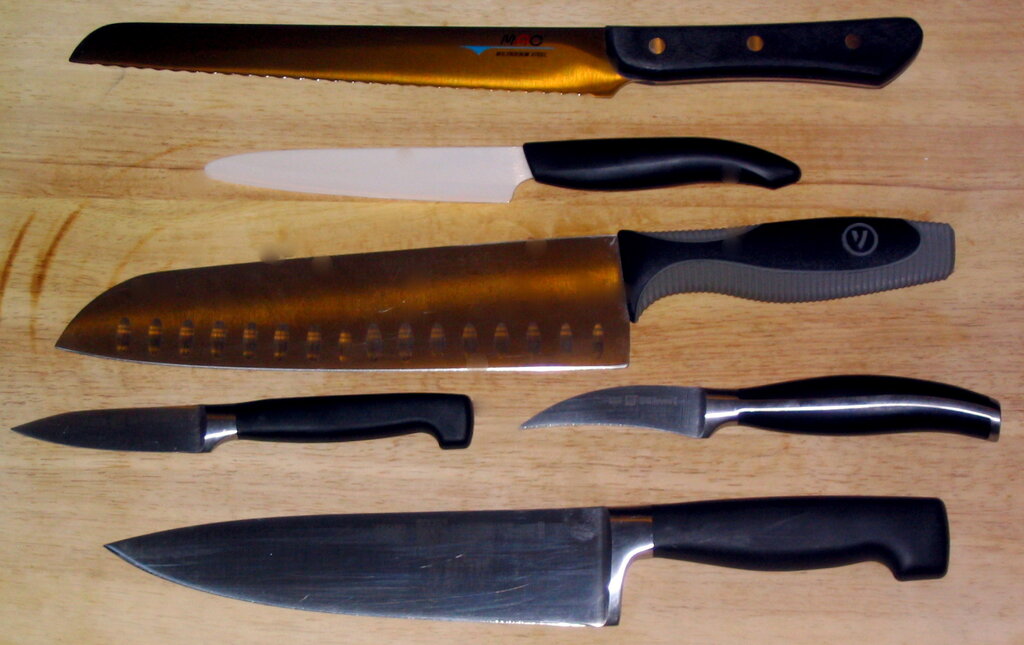
The chef's knife is your all-purpose tool. With its broad, tapering blade, it's perfect for chopping vegetables, dicing meat, and mincing herbs. It's the knife you'll reach for most often.
For smaller, more delicate work, you'll want a paring knife. Its small, sharp blade gives you precision for tasks like peeling an apple, deveining shrimp, or slicing a single clove of garlic.
The serrated knife, often called a bread knife, has a toothed edge. This design allows it to saw through foods with tough exteriors and soft interiors without squishing them. Think crusty bread, tomatoes, and citrus fruits.
Holding Your Knife Safely
Proper grip is the key to control, efficiency, and safety. You'll use two different grips: one for the hand holding the knife and another for the hand guiding the food.
Good knife skills are the foundation of efficient and safe cooking.
For your knife hand, use the pinch grip. Hold the handle with your last three fingers, and pinch the blade right where it meets the handle with your thumb and forefinger. This grip offers far more control than just holding the handle.
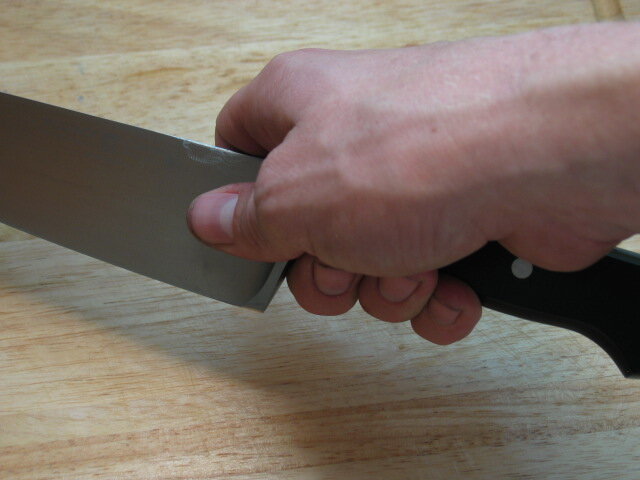
Your other hand, the guiding hand, should form a claw grip. Curl your fingertips under, resting your knuckles against the blade. Your knuckles guide the knife, while your tucked-away fingertips stay safe from the blade. Your thumb should be tucked behind your fingers, acting as an anchor.
Making the Cut
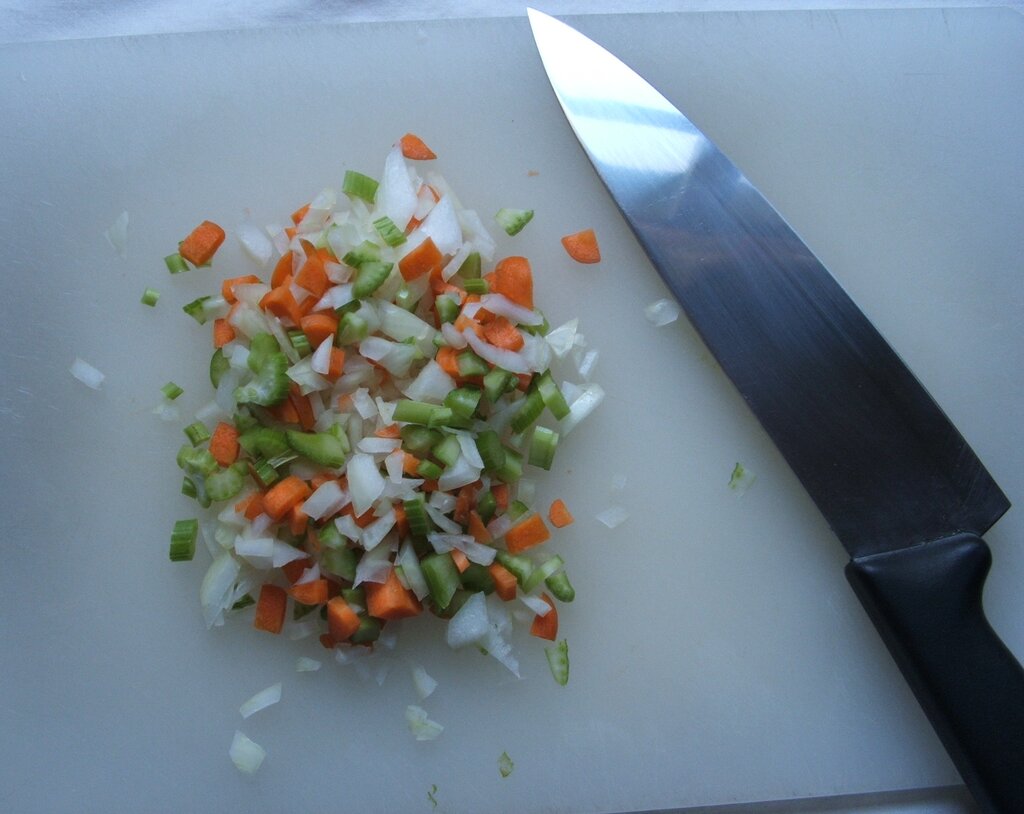
Learning a few basic cuts will dramatically improve your cooking. When ingredients are cut to a uniform size, they cook at the same rate, leading to a better final dish.
Basic knife and cutting skills are essential because evenly cut pieces cook more evenly.
Here are the five most common cuts you'll encounter:
| Cut | Description | Best for... |
|---|---|---|
| Chop | Irregular, bite-sized pieces where uniformity isn't crucial. | Soups, stews, rustic dishes. |
| Dice | Uniform cubes, typically specified as small, medium, or large. | Mirepoix (onions, carrots, celery), potatoes. |
| Mince | Chopped as finely as possible into tiny, irregular pieces. | Aromatic ingredients like garlic, ginger, and shallots. |
| Julienne | Long, thin matchstick-sized pieces. | Salads, slaws, garnishes. |
| Chiffonade | Finely sliced or shredded leafy greens or herbs. | Garnishing pastas, soups; incorporating herbs into sauces. |
Keeping Your Edge
A sharp knife is a safe knife. A dull blade requires more pressure to cut, increasing the chance it will slip. Maintaining your knife involves two key processes: honing and sharpening.
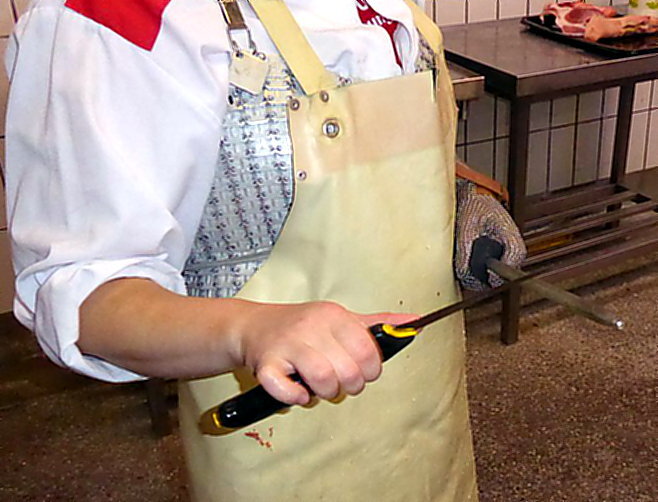
Honing uses a steel rod to straighten the edge of the blade, which gets slightly bent with regular use. It doesn't remove metal; it just realigns the edge. You should hone your knives frequently.
Sharpening actually removes material from the blade to create a new, sharp edge. This is done less often, typically with a whetstone or an electric sharpener, when honing is no longer effective.
Which knife is considered the most versatile, all-purpose tool for general tasks like chopping vegetables and dicing meat?
For maximum control and safety, what is the proper grip for the hand holding the knife?
With the right tools and techniques, you'll find that prep work in the kitchen becomes faster, safer, and more enjoyable.