CUDA Programming for Parallel Computing
Parallel Computing Basics
From One to Many
Most computers traditionally work like a diligent, single-minded librarian. They receive a list of tasks and complete them one by one, in order. This is called serial processing. The librarian first finds book A, then finds book B, then finds book C. No matter how fast the librarian is, they can only do one thing at a time.
This works fine for simple task lists. But what if the list has thousands of books, or the tasks are incredibly complex? The one-by-one approach becomes a bottleneck. That's where parallel processing comes in. Instead of one librarian, you hire a whole team. You can give each librarian a part of the list, and they can all search for books simultaneously. The entire job gets done much faster.
In computing, parallel processing means breaking down a large problem into smaller, independent parts and running them at the same time on different processors. These processors could be multiple cores in a single chip or multiple computers connected in a network.
Why Go Parallel?
The primary benefit is speed. By tackling multiple parts of a problem at once, you can dramatically reduce the time it takes to get a final answer. This isn't just about making your web browser a little faster; it's about making previously impossible calculations possible.
Think of weather forecasting. To predict tomorrow's weather accurately, meteorologists need to process vast amounts of data from satellites, weather stations, and atmospheric sensors. A single processor would take so long to crunch the numbers that the forecast would be for weather that has already happened. With parallel computing, thousands of processors work together to model the atmosphere, delivering timely and life-saving predictions.
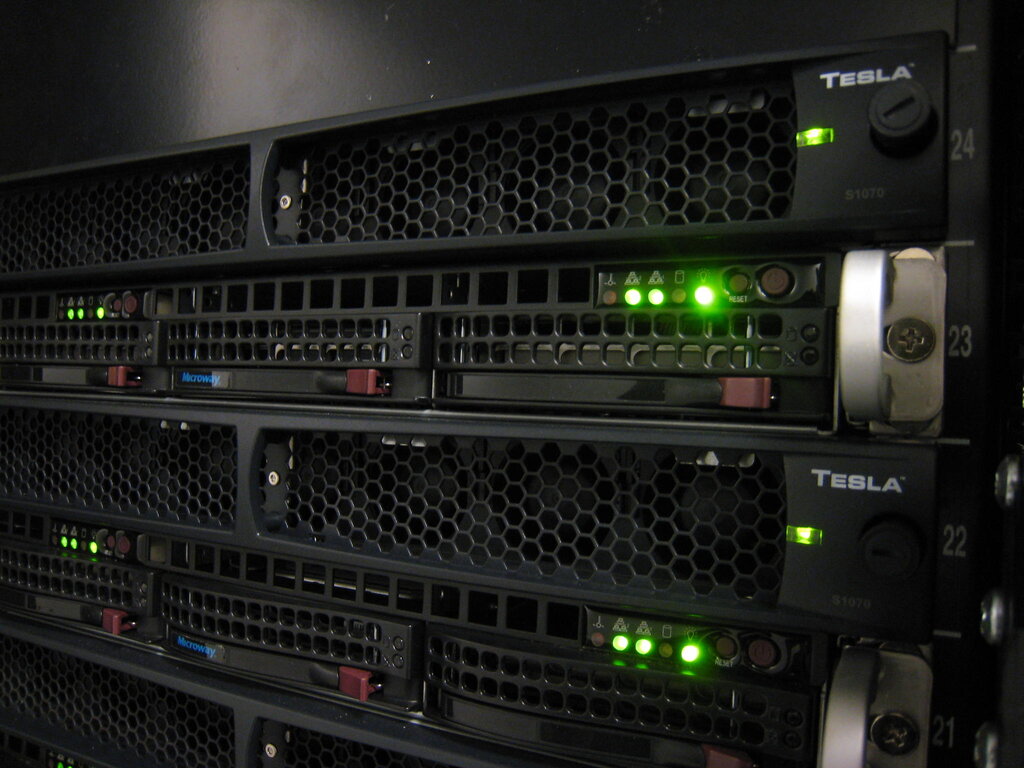
This power also lets us tackle bigger problems. We can create more detailed simulations for scientific research, analyze massive datasets to find new medicines, or train complex artificial intelligence models. Parallelism expands the frontier of what we can compute.
More processors working together can solve a problem faster and handle larger, more complex tasks than a single processor could alone.
Structuring the Work
Just as there are different ways to organize a team of librarians, there are different ways to structure parallel computing. A common way to classify these approaches is by how they handle instructions and data. An instruction is a command (like "add two numbers"), and data is the numbers being added.
| Category | Name | What it Means |
|---|---|---|
| SISD | Single Instruction, Single Data | One instruction acts on one piece of data. This is standard serial processing. |
| SIMD | Single Instruction, Multiple Data | One instruction acts on many pieces of data at the same time. |
| MISD | Multiple Instruction, Single Data | Many instructions act on one piece of data. This is very rare. |
| MIMD | Multiple Instruction, Multiple Data | Many instructions act on many pieces of data. Each processor runs independently. |
The most common parallel architectures you'll encounter are SIMD and MIMD.
SIMD (Single Instruction, Multiple Data) is like a manager telling an entire assembly line to perform the same action: "Everyone, tighten the bolt on the part in front of you." The same instruction is executed by many different workers on many different parts simultaneously. This is highly efficient for repetitive tasks, like adjusting the brightness of every pixel in an image.
MIMD (Multiple Instruction, Multiple Data) is more like a full-service workshop where each mechanic works on a different car, performing different tasks. One might be changing the oil, another might be fixing the brakes, and a third could be rotating the tires. Modern multi-core CPUs are a great example of MIMD architecture. Each core can run a different program or a different part of the same program, all at once.
Understanding these fundamental strategies for dividing labor is the first step. With this foundation, we can start to look at the specialized hardware that's been designed to make massive parallel computing a reality.