CUDA Parallel Computing
CUDA Overview
What is CUDA?
Think of a computer’s central processing unit, or CPU, as a brilliant but small team of managers. They can handle complex, varied tasks one after another with incredible speed. A graphics processing unit, or GPU, is different. It's more like a massive factory floor with thousands of workers, each specialized in performing a single, simple task. When thousands of these tasks need to be done at once, the GPU is far more efficient.
For a long time, this massive workforce was only used for rendering graphics in video games and professional software. CUDA is the platform that changed that. It’s a set of tools and a programming model from NVIDIA that lets developers use the massive parallel power of GPUs for general-purpose computing.
Compute Unified Device Architecture (CUDA) is NVIDIA's GPU computing platform and application programming interface.
In short, CUDA gives developers a way to speak directly to the thousands of workers on the GPU's factory floor, assigning them complex computational problems far beyond graphics. This opened the door for massive speedups in all kinds of applications.
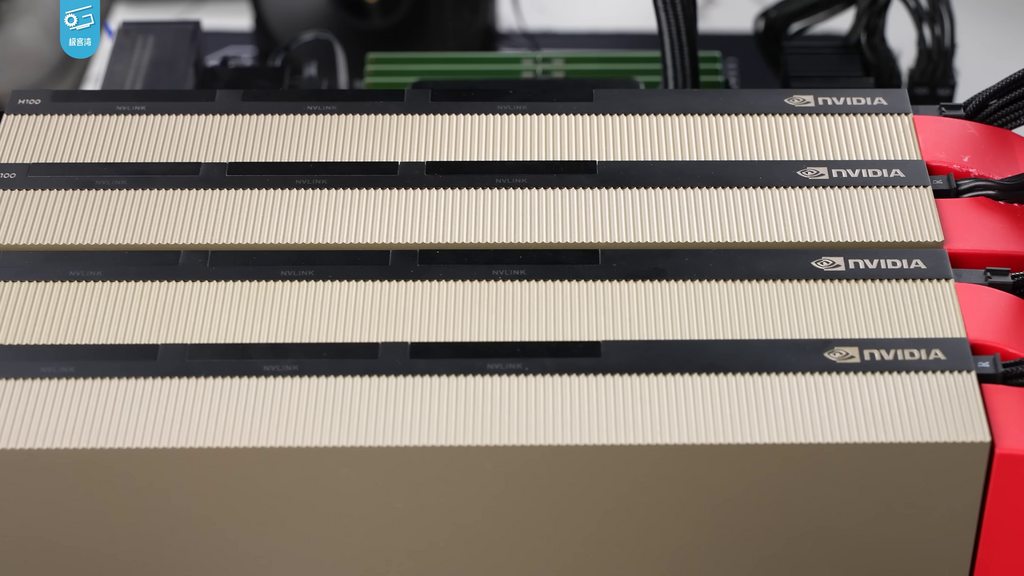
From Graphics to Supercomputing
Before CUDA, using a GPU for non-graphics tasks was a difficult hack. Researchers knew GPUs were great at math-heavy, parallel problems, but they had to disguise their calculations as graphics problems. It was like trying to write a novel using only a calculator—possible, but incredibly inefficient and complex.
Then, in 2007, NVIDIA released the first version of CUDA. Suddenly, there was a clear, direct way to program their GPUs.
CUDA is an extension of C, and designed to let you do general purpose computation on a graphics processor.
By building on C, one of the most common programming languages, NVIDIA made GPU programming accessible to a huge community of developers. This decision transformed GPUs from specialized graphics hardware into the powerhouses of modern high-performance computing.
Applications Powered by CUDA
The impact of CUDA has been enormous because so many challenging problems are naturally parallel. Instead of waiting for a single powerful CPU core to solve a problem step-by-step, you can split the problem into thousands of pieces and have a GPU solve them all at once.
This approach has revolutionized several fields:
| Field | How CUDA Helps |
|---|---|
| Scientific Research | Simulating complex systems like weather patterns, molecular dynamics, and astrophysical events. |
| Artificial Intelligence | Training deep learning models, which involves massive matrix calculations that are perfect for GPUs. |
| Data Science | Processing huge datasets, running complex analytics, and accelerating machine learning algorithms. |
| Medical Imaging | Reconstructing and analyzing data from CT and MRI scans in real-time. |
| Finance | Running risk analysis models and pricing financial derivatives with incredible speed. |

The CUDA Software Stack
CUDA isn't just a single piece of software; it's an entire ecosystem that works together to make GPU programming possible. At the heart of this is the CUDA Toolkit.
The NVIDIA® CUDA® Toolkit provides the development environment for creating high-performance, GPU-accelerated applications.
The toolkit includes everything a developer needs to get started. Here are the key components:
Together, these components create a powerful environment that abstracts away much of the low-level hardware complexity, allowing developers to focus on solving their computational problems.
Time to test what you've learned about CUDA.
According to the "managers vs. factory workers" analogy, why is a GPU more efficient than a CPU for certain tasks?
What fundamental capability did NVIDIA's CUDA platform provide to developers?
CUDA transformed the field of computing by making the immense power of GPUs available for a wide range of tasks, driving progress in science, AI, and beyond.