Cryptocurrency Fundamentals
Introduction to Cryptocurrency
Money for the Internet
At its heart, a cryptocurrency is a digital or virtual token that uses cryptography for security. Think of it as a form of money that exists only in the digital world. Unlike the dollars or euros in your bank account, which are managed by banks and governments, cryptocurrencies are designed to be a peer-to-peer form of electronic cash.
This means you can send money directly to someone else online without needing a middleman like a bank or a payment processor. The main purpose is to create a secure, decentralized, and global financial system that isn’t controlled by any single entity.
Essentially, cryptocurrency is an attempt to build a more open financial system, accessible to anyone with an internet connection.
New Money, New Rules
Cryptocurrencies are fundamentally different from the traditional money, often called fiat currency, that we use every day. The biggest distinctions come down to how they are created, controlled, and valued.
| Feature | Traditional Currency (Fiat) | Cryptocurrency |
|---|---|---|
| Issuer | Issued by a central government | Created by a distributed network of computers |
| Control | Centralized (controlled by banks & governments) | Decentralized (no single entity is in charge) |
| Form | Physical (coins, notes) and digital | Exists only in digital form |
| Transactions | Verified by banks and payment processors | Verified by a network of users (peers) |
Because of this structure, cryptocurrency transactions can be sent anywhere in the world nearly instantly, often with lower fees than traditional international bank transfers.
The Path to Digital Cash
The idea of digital money isn't new. For decades, computer scientists and cryptographers tried to create a secure form of electronic cash. Early projects in the 1990s, like DigiCash, explored ways to make anonymous digital payments, but they never gained widespread adoption. They were still centralized, relying on a single company to manage the system.
The breakthrough came in 2008 when a person or group using the pseudonym Satoshi Nakamoto published a paper titled "Bitcoin: A Peer-to-Peer Electronic Cash System." This paper outlined a new system that solved a long-standing problem in computer science: how to get a network of strangers to agree on a shared history of transactions without a central authority.
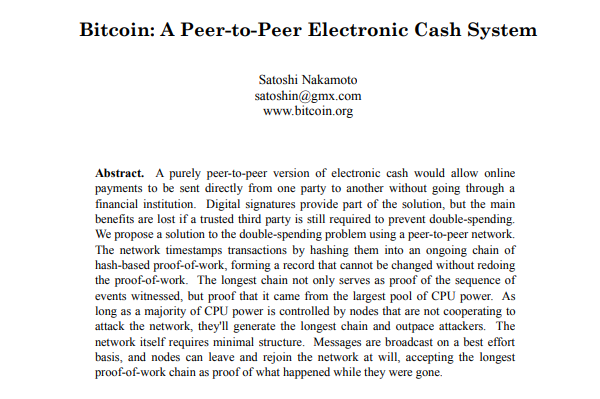
This innovation laid the groundwork for Bitcoin, the first successful cryptocurrency, which launched in 2009. It introduced three key principles that now define almost all cryptocurrencies.
Decentralization: There's no central server or controlling entity. The network is maintained by a global community of volunteers and participants.
Cryptographic Security: The "crypto" in cryptocurrency refers to cryptography. It uses advanced mathematical techniques to secure the network and verify transactions, making it extremely difficult to cheat or counterfeit.
Peer-to-Peer Transactions: Payments go directly from one person to another across the network, without passing through a financial institution.
This combination of ideas created a way to transfer value online in a way that was secure, transparent, and censorship-resistant.
A Diverse Digital Economy
Since Bitcoin’s creation, thousands of other cryptocurrencies have emerged. While Bitcoin is often seen as a store of value, like digital gold, others are designed for different purposes.
Some, like Ethereum, are platforms for building decentralized applications, which are like apps that run on a global, shared computer. Others are focused on privacy, fast transaction speeds, or specific use cases like gaming or supply chain management. This growing ecosystem of digital currencies is often called the "digital economy" or "Web3."

Together, these digital assets represent a new frontier in finance and technology, challenging our traditional ideas about what money is and how it can be used.