Crypto Tech vs. Hype
Introduction to Cryptocurrencies
What Is Cryptocurrency?
Cryptocurrency is a type of digital money. Unlike the dollars in your bank account, it doesn't exist in any physical form and isn't issued by a central authority like a government or bank. Instead, it uses cryptography to secure transactions.
The first and most famous cryptocurrency is Bitcoin. It was created in 2008 by an anonymous person or group known as Satoshi Nakamoto. The idea was introduced in a white paper that outlined a new form of electronic cash that could be sent directly from one person to another without a financial institution.
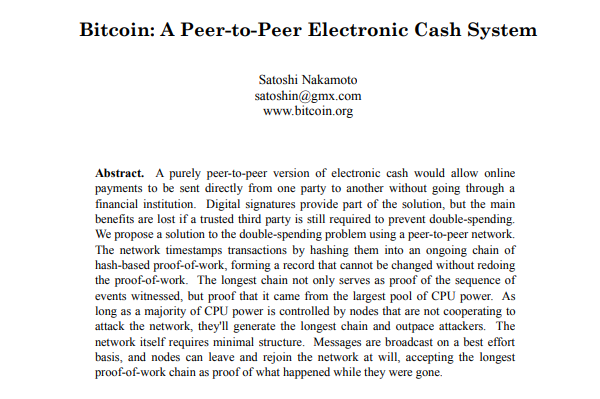
Bitcoin's creation came on the heels of a global financial crisis, a time when trust in traditional banks was low. It proposed a new way to handle money, one that was transparent and controlled by its users rather than a central entity.
Cryptocurrency is a digital or virtual form of money that relies on cryptographic technology to secure transactions, control the creation of new units, and verify transfers.
The Tech Behind the Coins
Most cryptocurrencies run on a technology called blockchain. Think of it like a shared digital notebook that is duplicated and spread across a massive network of computers. Every time a transaction happens, it's recorded as a new entry in the notebook.
Once an entry is added, it can't be altered. This notebook, or ledger, is public, meaning anyone can view it. This transparency ensures that all transactions are legitimate.
Transactions are bundled together into "blocks." Each block is then cryptographically linked to the one before it, forming a secure chain. If someone tried to change a transaction in an old block, they would have to redo all the blocks that came after it, which is practically impossible. This structure is what makes the blockchain so secure and tamper-proof.
Key Concepts
To really understand cryptocurrencies, a few core ideas are essential. These principles are what separate them from traditional financial systems.
Decentralization
noun
The transfer of control and decision-making from a centralized entity (individual, organization, or group thereof) to a distributed network.
Decentralization means there is no central point of control. No single bank, company, or government owns the blockchain or dictates the rules. The network is maintained by a global community of users, making it resistant to censorship or manipulation.
Cryptographic security is another key feature. All transactions are secured using advanced mathematics. This ensures that funds can only be spent by their rightful owners and that the integrity of the network is protected.
But how does a decentralized network agree on what's true without a boss? This is solved by consensus mechanisms. These are the rules that govern how participants on the network agree on the validity of transactions. The most well-known is Proof of Work (PoW), used by Bitcoin, where participants (called miners) solve complex mathematical puzzles to add new blocks to the chain. Another popular one is Proof of Stake (PoS), which requires participants to hold and "stake" cryptocurrency to validate transactions.
Why Does It Matter?
Cryptocurrencies represent a potential shift in how we think about money and finance. They offer a way to transact globally without intermediaries, which could lower costs and increase speed, especially for international payments.
For some, cryptocurrencies offer financial inclusion. Anyone with an internet connection can access them, providing an alternative to people in countries with unstable economies or for those who don't have access to traditional banking services. They have also enabled new technologies like smart contracts and decentralized applications, paving the way for innovations beyond just digital cash.
However, it's also a new and volatile space. Prices can swing wildly, and the technology is still evolving.
Let's review the core ideas we've covered.