Creative Media Computer Systems
Understanding Creative Media Workflows
The Demands of Creation
Creative work isn't like checking email or writing a document. Tasks like video editing, graphic design, and music production push computers in unique and demanding ways. They involve manipulating massive files, running complex calculations, and providing instant feedback, all at the same time.
This intensity means that building a computer for creative work requires a different mindset. It's not about just getting the "best" parts, but about understanding how different tasks stress different components. A smooth, efficient workflow depends on a balanced system where no single part creates a bottleneck.
Handling High-Resolution Video
Video editing is one of the most demanding tasks you can throw at a computer. You're working with enormous files, often in 4K or even 8K resolution. Every cut, color correction, transition, and special effect requires the computer to process a staggering amount of data.
When you preview your work, the system has to apply all those effects in real-time. When you export the final video, it has to render every single frame, encoding it into a new file. This process is incredibly computationally intensive.
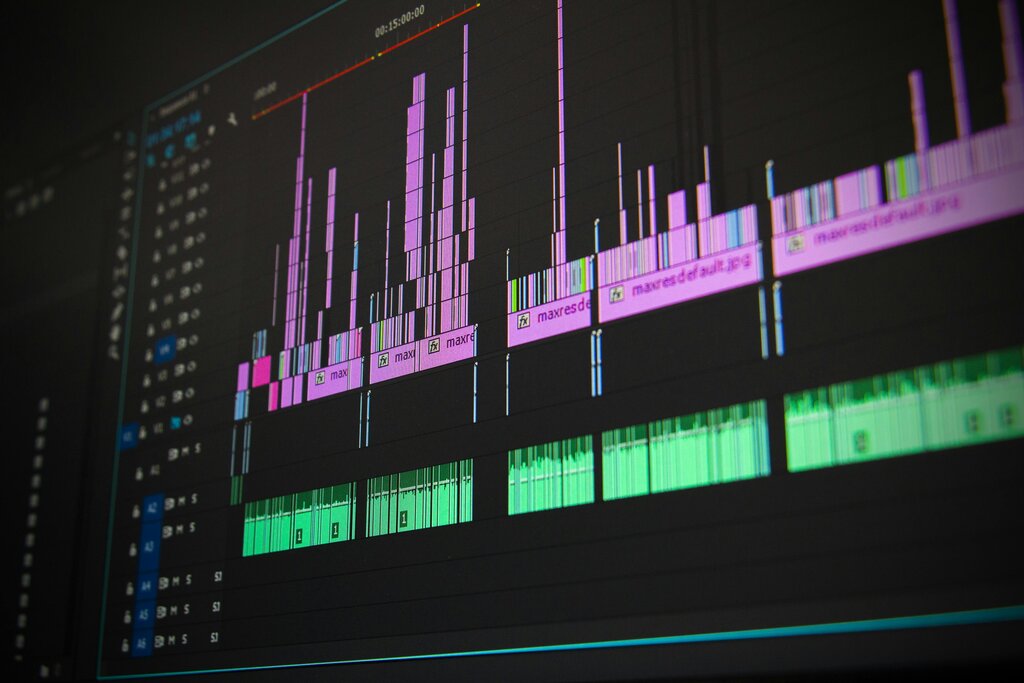
To handle this, a video editing machine needs a powerful processor (CPU) to manage the overall project and encode the final file. It also relies heavily on a strong graphics card (GPU) to accelerate visual effects and previews. Large amounts of RAM are essential to hold the massive video files in active memory, preventing slowdowns. Finally, fast storage is critical for reading and writing these huge files without stuttering.
Crafting Visuals and Music
Graphic design work, from photo editing to 3D modeling, has its own set of challenges. A designer might work with hundreds of layers in a single high-resolution image. Each layer, filter, and brush stroke adds to the computational load. Just like with video, the computer needs enough power to make these adjustments instantly, allowing for a fluid creative process.
A powerful processor is key for handling complex operations and filters. The graphics card helps render the visual information on screen, making it possible to pan and zoom smoothly on a massive canvas. Ample RAM is also crucial for keeping all those layers and high-resolution assets ready for immediate access.
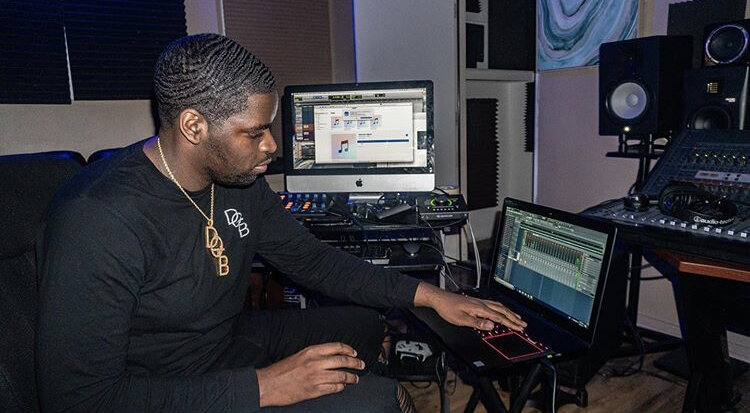
Music production is a different kind of beast. It’s all about real-time audio processing. A music producer might have dozens of audio tracks, virtual instruments, and effects like reverb, compression, and equalization all running at once. The key is low latency, meaning the time between playing a note and hearing the sound should be practically zero.
This requires a very strong processor to handle all the audio calculations without crackles, pops, or delays. While a powerful graphics card is less critical than for video or design, fast storage is still important for loading large sample libraries quickly. Sufficient RAM is also needed to load those samples and keep the project running smoothly.
Ultimately, the goal is to build a system that gets out of the way. The technology should be so responsive that it feels invisible, allowing creative ideas to flow without being interrupted by technical limitations.
What is the primary goal when selecting components for a computer built for creative work?
Which of the following tasks relies most heavily on a powerful graphics card (GPU) for accelerating real-time previews and visual effects?
Understanding these workflows is the first step in choosing the right hardware for your creative pursuits.