Convexity in Fixed Income
Bond Basics
What Is a Bond?
Think of a bond as a formal IOU. When you buy a bond, you are essentially lending money to an organization, like a company or a government. The organization that borrows the money is called the issuer, and you, the lender, are the bondholder.
In exchange for your loan, the issuer promises to pay you periodic interest payments over a set period. At the end of that period, they promise to return your original loan amount.
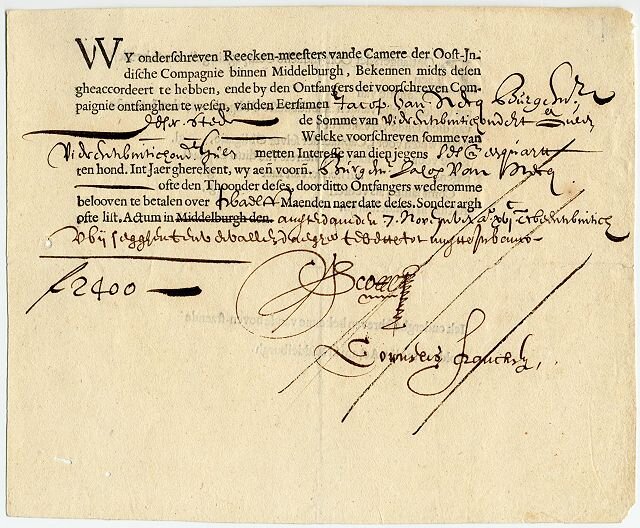
This structure makes bonds a type of fixed-income investment. You know exactly how much interest you'll receive and when you'll get your principal back, providing a predictable stream of income. This predictability is one of the main reasons investors are drawn to them.
The Language of Bonds
Bonds come with their own set of terms. Understanding them is key to understanding how a bond works and what its value is.
Face Value
noun
The amount of money a bond will be worth at its maturity. It's also the reference amount the issuer uses when calculating interest payments.
The face value, also called par value or principal, is the amount you get back when the loan term ends. A typical face value for a single bond is $1,000.
Coupon Rate
noun
The annual interest rate paid on a bond, expressed as a percentage of the face value.
The term "coupon" is a holdover from the past, when physical bond certificates had actual coupons that bondholders would clip and redeem for their interest payments. If a $1,000 bond has a 5% coupon rate, the issuer will pay the bondholder $50 each year. These payments are usually made semi-annually, so in this case, you'd receive two payments of $25.
Maturity Date
noun
The date on which the final payment is due on a bond, at which point the principal is repaid to the bondholder.
The maturity date is when the bond's term ends and the issuer repays the face value. Bond terms can be very short (a few months) or very long (30 years or more).
Yield to Maturity
noun
The total return anticipated on a bond if the bond is held until it matures. It is expressed as an annual rate.
Yield to maturity (YTM) is where things get a bit more interesting. While the coupon rate is fixed, the price of a bond can change on the open market. YTM is the total return you can expect if you hold the bond until it matures. This includes all the coupon payments plus the return of the face value.
If you buy a bond for exactly its face value, its YTM will be the same as its coupon rate. However, if you buy it for less than face value (at a discount), your YTM will be higher than the coupon rate. If you buy it for more (at a premium), your YTM will be lower.
Types of Bonds
Bonds are issued by different entities, and the type of issuer tells you a lot about the bond's purpose and its level of risk.
| Bond Type | Issuer | Purpose | Risk Level |
|---|---|---|---|
| Government Bonds | National governments (e.g., U.S. Treasury) | Fund government spending | Very low |
| Corporate Bonds | Companies | Raise capital for expansion, operations, etc. | Varies by company's financial health |
| Municipal Bonds | States, cities, counties | Fund public projects like schools, roads, and bridges | Generally low, often tax-exempt |
Government bonds, often called Treasuries in the U.S., are considered among the safest investments because they are backed by the full faith and credit of the government. They are a benchmark for the entire bond market.
Corporate bonds are issued by businesses to fund everything from new factories to research. Their risk depends heavily on the company's financial stability. Credit rating agencies like Moody's and Standard & Poor's evaluate this risk, assigning grades that help investors make informed decisions.
Municipal bonds, or "munis," are issued by state and local governments. A key feature is that the interest income from these bonds is often exempt from federal taxes, and sometimes state and local taxes, too, making them especially attractive to investors in high tax brackets.
Now that you understand the key terms and types of bonds, you can better analyze these fundamental investment tools.