Context Engineering for LLMs
Introduction to Context Engineering
What is Context Engineering?
Think of a large language model (LLM) as a brilliant but very literal assistant who has read almost everything ever written but has no personal experience. To get a useful answer, you can't just ask a vague question. You need to provide the right background information, or context. This is the core idea behind context engineering.
Context Engineering is the emerging discipline of designing, managing, and optimizing the context that large language models (LLMs) and AI agents use to generate accurate, useful, and safe outputs.
It’s not just about what you ask, but how you ask and what information you provide alongside your question. Giving an LLM the right context is like giving a chef the right ingredients. Without them, you might get something edible, but you're unlikely to get the amazing dish you were hoping for.
How Context Shapes Answers
The quality of an LLM's output is directly tied to the quality of its input context. Vague prompts lead to generic, often unhelpful, responses. Specific, well-structured prompts guide the model toward the precise answer you need.
Let’s look at a simple example. Consider this prompt:
Write about dogs.
The LLM has countless directions it could go. It might generate facts about dog breeds, a short story about a dog, or a poem. The result is a gamble.
Now, let's engineer the context:
Write a 100-word paragraph for a 5th-grade science class about the symbiotic relationship between early humans and wolves, leading to the domestication of dogs.
This prompt provides clear context: the topic (symbiotic relationship), the audience (5th graders), the format (a paragraph), the length (100 words), and key terms (domestication). The LLM now has a clear blueprint to follow, dramatically increasing the chances of getting a useful and relevant response.
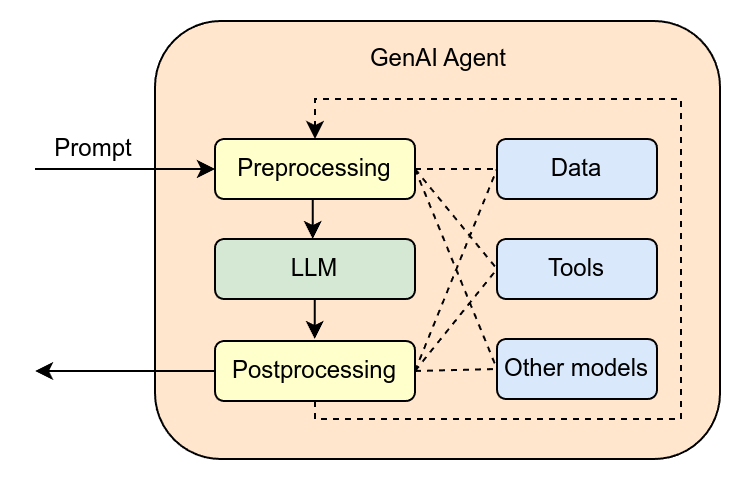
Effective context acts as a guardrail, keeping the model's response focused and on track. Too little context leaves the model guessing, while too much irrelevant information can confuse it, introducing noise that degrades the quality of the output.
Principles of Good Prompt Design
Crafting effective prompts is a skill. It's less about finding a secret magic phrase and more about applying a few key principles. A good prompt is clear, specific, and provides all necessary information for the task.
| Principle | Description | Example |
|---|---|---|
| Be Specific | Provide details. Avoid ambiguity. | Instead of "Write a poem," try "Write a four-stanza poem about the ocean in the style of Emily Dickinson." |
| Define the Persona | Tell the model who it should be. | "You are an expert travel agent. Plan a 3-day itinerary for a first-time visitor to Paris." |
| Set the Format | Specify the desired output structure. | "Summarize the article in five bullet points." or "Provide the answer in JSON format." |
| Provide Examples | Give the model a template to follow. | "Translate the following English phrases to French, like this: 'Hello -> Bonjour'. Now translate 'Goodbye'." |
Combining these principles allows you to construct prompts that guide the model precisely. It's an iterative process. You might start with a simple prompt, see the output, and then refine it with more specific context to get closer to what you need.
Know Your Model's Limits
Every LLM has its own strengths, weaknesses, and limitations. One of the most important is the context window, which is the amount of information the model can consider at one time, including your prompt and its own response. If your context exceeds this limit, the model will forget the earliest parts of the conversation.
Understanding this helps you structure your interactions. For complex tasks, you might need to break your request into smaller parts, feeding the model information chunk by chunk to keep everything within its context window. It's also important to remember that LLMs don't "know" things in the human sense. They are masters of pattern recognition, generating responses based on the data they were trained on. They can make mistakes, invent facts (a phenomenon called "hallucination"), and reflect biases from their training data.
Thinking critically about an LLM's output is just as important as crafting the initial prompt. Always verify important information, especially facts and figures.
By understanding these capabilities and limitations, you can use LLMs more effectively, treating them as powerful tools that perform best when guided by clear, well-engineered context.
What is the primary goal of context engineering when interacting with a Large Language Model (LLM)?
The provided text compares giving an LLM good context to what activity?
Mastering these fundamentals is the first step toward using language models to their full potential.