Computer Networks Explained
Introduction to Computer Networks
What Is a Computer Network?
At its core, a computer network is simple: it's a group of two or more devices connected together so they can share information. Think of it like a conversation. For a conversation to happen, you need at least two people who can communicate with each other. A network does the same thing, but for computers, phones, printers, and servers.
The main purpose of a network is to make sharing easy. Instead of copying a file to a flash drive and walking it over to another computer, you can send it instantly over the network. This saves time and makes collaboration possible, whether you're in the same room or across the globe.
The Building Blocks
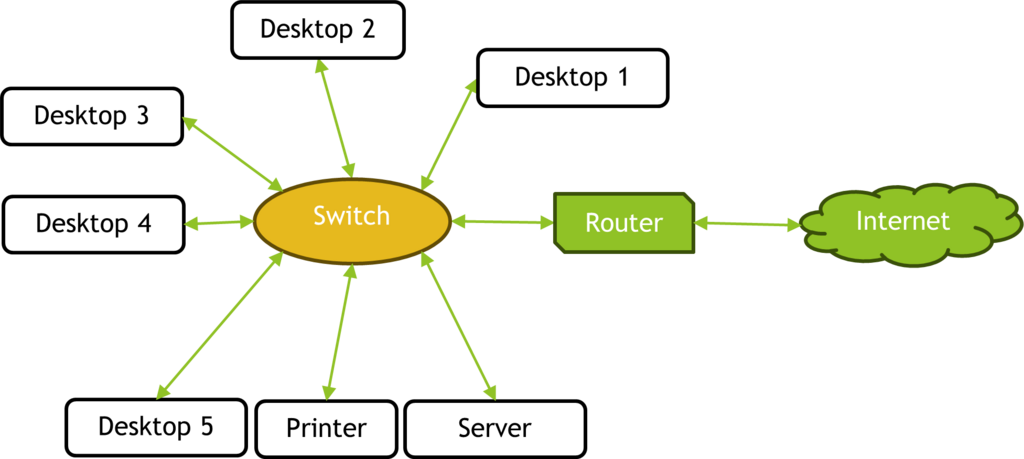
Every network, from the small one in your home to the vast global internet, is built from three fundamental components: nodes, links, and protocols.
Nodes are the devices on the network. This includes obvious things like your laptop and smartphone, but also printers, servers, and smart home devices. Anything that can send or receive data on the network is a node.
Links are the connections between nodes. These can be physical, like an Ethernet cable, or they can be wireless, using radio waves like Wi-Fi or Bluetooth. The link is the path that data travels along.
Protocols are the rules of communication. Just like humans need a common language to understand each other, devices need protocols. These are sets of rules that dictate how data is formatted, transmitted, and received so that different devices can speak the same digital language. A common protocol you use every day is the Hypertext Transfer Protocol (HTTP), which your web browser uses to fetch websites.
Different Scales, Different Networks
Networks come in all sizes, depending on the area they need to cover. The three most common types are PAN, LAN, and WAN.
| Type | Name | Area Covered | Example |
|---|---|---|---|
| PAN | Personal Area Network | A few meters | Connecting your phone to Bluetooth headphones. |
| LAN | Local Area Network | A single room, building, or campus | Your home Wi-Fi or an office network. |
| WAN | Wide Area Network | A large geographical area, like a city or country | The internet is the ultimate example of a WAN. |
A PAN is for your personal devices. A LAN connects devices in a limited area, making it easy for a family or a company to share files and a single internet connection. A WAN connects multiple LANs together, often over vast distances, to create the interconnected world we rely on.
What is the primary purpose of a computer network?
In a computer network, what is the term for the rules that govern how data is formatted, transmitted, and received?
Understanding these basics is the first step. With nodes, links, and protocols, we create networks of all sizes that allow for the seamless communication and data sharing that powers our digital lives.