Coding Fundamentals for Young Innovators
Introduction to Programming
Giving Computers Instructions
At its heart, programming is simply the act of giving a computer a set of instructions to perform a task. Think of it like writing a recipe. A recipe lists ingredients and step-by-step directions to bake a cake. If the instructions are clear and in the right order, you get a cake. If they're wrong or out of order, you get a mess.
Computers are powerful, but they are also incredibly literal. They don't understand nuance or common sense. They do exactly what you tell them to do, which is why the instructions—the program—must be precise.
Programming
noun
The process of creating a set of instructions that tell a computer how to perform a task.
Programming is everywhere. The apps on your phone, the websites you visit, the video games you play, and even the system that controls the traffic lights in your city are all powered by programs. It’s the tool we use to solve problems, automate tasks, analyze data, and create new forms of entertainment and communication.
How Computers Process Information
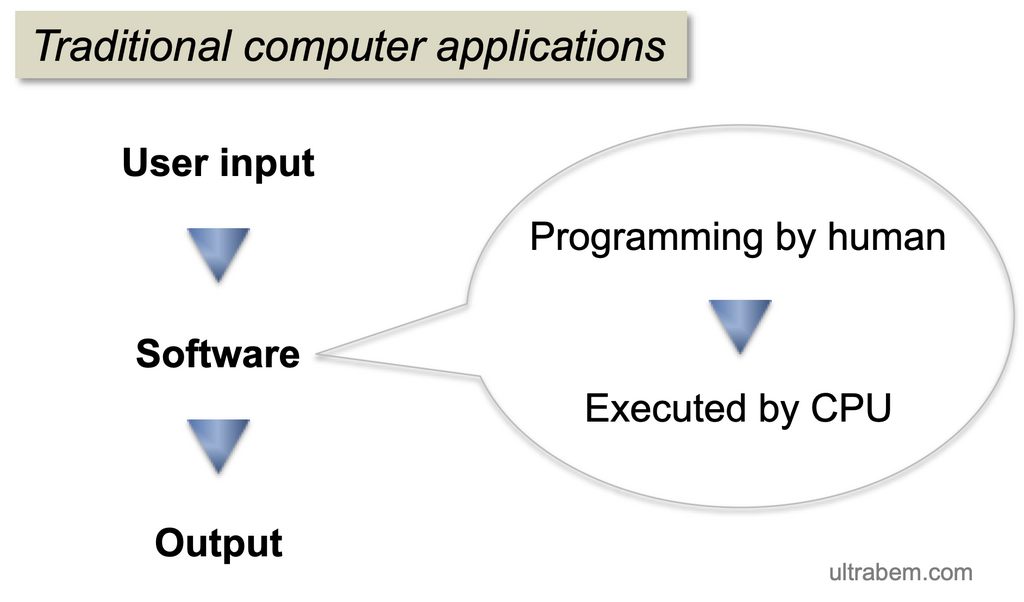
A computer's brain is the Central Processing Unit, or CPU. The CPU doesn't understand English or any other human language. It operates on a much simpler level, understanding only electrical signals that are either on or off. We represent these two states with the numbers 1 (on) and 0 (off). This system is called binary code, and it's the fundamental language of all computers.
Every action a computer takes, from displaying an image to calculating a sum, is broken down into millions or billions of simple binary instructions that the CPU can execute very quickly. A program is essentially a long sequence of these tiny, precise steps.
The Role of Programming Languages
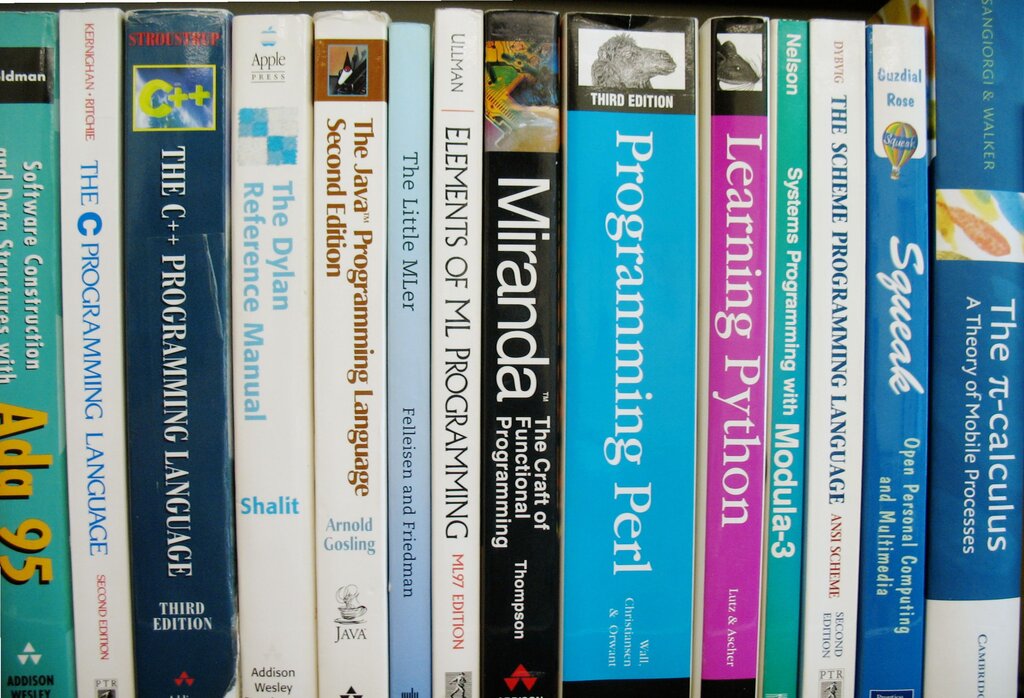
Writing instructions in long strings of 1s and 0s would be incredibly tedious and difficult for humans. That's where programming languages come in. They act as a bridge, or a translator, between human-readable language and machine-readable binary code.
Programming languages like Python, Java, or C++ use words and symbols that are much closer to human language. We write our instructions in one of these languages, and then a special program called a compiler or interpreter translates our code into the binary instructions the CPU can understand and execute. This allows us to write complex programs without having to think in ones and zeros.
Now let's review these foundational concepts.
At its most fundamental level, what is programming?
The fundamental language of a computer's Central Processing Unit (CPU), consisting of only 1s and 0s, is known as ______.
Understanding these core ideas is the first step on your journey into the world of programming.