Code-Driven 3D Printing
Introduction to 3D Printing
From Idea to Object
Imagine drawing an object in the air and having it appear, solid and real, in your hands. That’s the core idea behind 3D printing. Instead of carving a shape out of a block of material, 3D printing builds it from the ground up, one tiny layer at a time. It’s a process also known as additive manufacturing.
This technology didn’t appear overnight. It started in the 1980s with a technique called stereolithography, invented by Chuck Hull. Early machines were expensive and clunky, used mainly by large companies for creating prototypes. For decades, 3D printing remained a niche tool for engineers and designers. But as patents expired and technology improved, smaller, more affordable printers became available, sparking a revolution for hobbyists, artists, and small businesses.
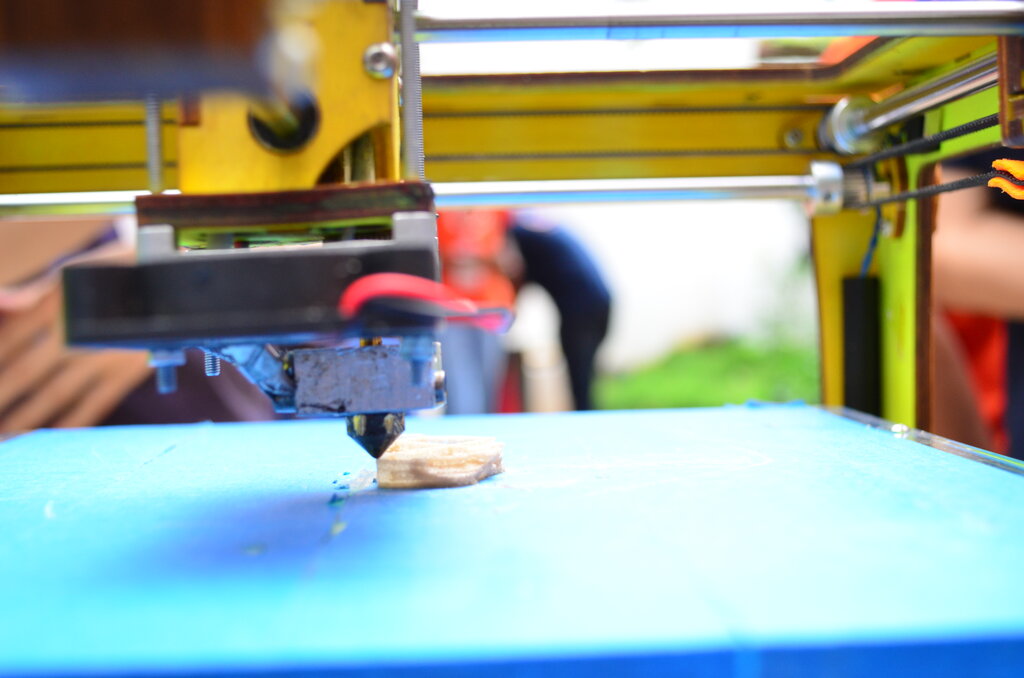
Today, 3D printing is a diverse field with many different methods for turning a digital file into a physical object.
How It Works
While there are many types of 3D printing, most follow the same fundamental steps. It all starts with a digital design.
The core process generally involves:
Modeling: Designing the 3D object using CAD software
Slicing: Dividing the model into thin cross-sectional layers
Printing: Depositing or solidifying material layer-by-layer to construct the final part
The first step is creating a 3D model using Computer-Aided Design (CAD) software. This is the digital blueprint. Next, a special program called a “slicer” cuts the digital model into hundreds or thousands of horizontal layers. The slicer then generates instructions, called G-code, that tell the printer exactly how to move and where to place material for each layer.
The final step is printing. The machine reads the G-code and begins building the object, layer by painstaking layer, until the final form is complete. Two of the most common technologies you'll encounter are Fused Filament Fabrication and Stereolithography.
| Technology | Material | How It Works |
|---|---|---|
| Fused Filament Fabrication (FFF) | Spools of plastic filament (PLA, ABS) | Melts and extrudes plastic through a nozzle, drawing each layer. |
| Stereolithography (SLA) | Liquid photopolymer resin | A UV laser hardens the liquid resin layer by layer in a vat. |
FFF printers are the most common type for hobbyists. They are relatively simple, affordable, and work like a precise, robotic hot glue gun. SLA printers, on the other hand, can produce objects with much finer detail, making them ideal for things like jewelry or dental models, but the materials can be messier and more expensive.
Beyond Prototypes
What began as a tool for rapid prototyping has exploded into countless industries. The ability to create custom, complex parts on demand has changed how we make things.

In medicine, surgeons use 3D-printed models of a patient's organs to plan complex surgeries. Custom prosthetic limbs can be designed and printed to perfectly fit an individual. In aerospace, companies like NASA and SpaceX print lightweight, intricate parts for rockets and satellites, reducing weight and cost.
Even on the International Space Station, astronauts use 3D printers to create replacement parts and tools on demand, rather than waiting for a resupply mission from Earth.
The technology is also used in construction to print entire houses, in fashion for creating futuristic clothing, and in food production to craft intricate chocolate designs. It gives creators immense freedom to design objects that would be difficult or impossible to make with traditional methods.
Think you've got the basics down? Let's check your understanding.
What is the fundamental principle behind the technology known as 3D printing?
In the 3D printing workflow, what is the primary function of a 'slicer' program?
From a simple idea in a lab to a tool that’s reshaping industries, 3D printing puts the power of manufacturing into the hands of anyone with a design.