Cloud Computing Mastery Path
Cloud Computing Basics
What is the Cloud, Really?
You’ve probably heard the term “the cloud” used to describe where your photos or documents are saved. But it’s more than just a digital storage locker. At its core, cloud computing is about accessing computing services over the internet instead of from your own hard drive.
Cloud computing is the delivery of computing services (servers, storage, databases, networking, software, and more) over the internet (the cloud), offering faster innovation, flexible resources, and economies of scale.
Think of it like electricity. In the early days, a factory would have to build and maintain its own power generator. It was expensive, took up space, and required constant upkeep. Today, we just plug into the grid. The power company manages all the complex infrastructure, and we only pay for what we use.
Cloud computing does the same for things like processing power, data storage, and software. Instead of buying and managing your own powerful servers, you can “plug in” to a cloud provider's massive data center and use their resources on demand.
From Mainframes to the Internet
The idea behind cloud computing isn't entirely new. It evolved from decades of changes in how we handle information. In the 1950s and 60s, computing was done on enormous mainframe computers. These machines were too expensive for one organization to own, so they would often share access through a concept called “time-sharing.” It was a first step toward sharing a central computing resource among many users.
The personal computer revolution in the 1980s shifted the focus to individual machines. Everyone had their own computer with their own software and storage. While this empowered individuals, it also created silos of information and required each person or company to manage their own hardware.
The real game-changer was the widespread adoption of the internet in the 1990s. As network speeds increased, it became practical to access services and data from remote computers. This paved the way for companies like Salesforce, which began offering business software over the web in 1999, and Amazon Web Services (AWS), which launched in 2006 and made raw computing power available for rent to anyone.
Key Traits and Benefits
What makes cloud computing different from just using the internet? It comes down to a few key characteristics. First is on-demand self-service. You can get the resources you need, like more storage or processing power, instantly and without having to talk to anyone.
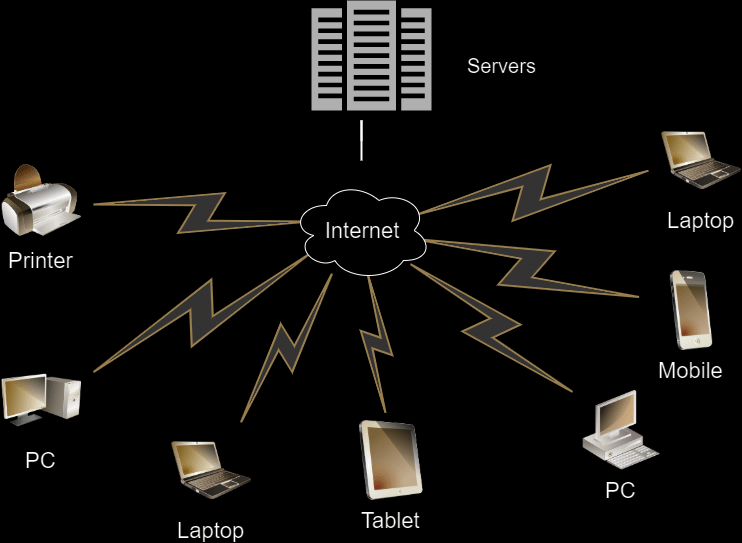
Another trait is broad network access. Services are available over standard networks and accessible from any device, whether it's your laptop, tablet, or phone. This is possible because cloud providers use resource pooling, where they serve many customers using the same physical infrastructure, securely separating each customer's data.
The cloud is also known for its rapid elasticity. This means you can scale your resources up or down quickly to meet demand. If your website suddenly gets a surge of traffic, you can instantly add more server capacity to handle it. When traffic goes back to normal, you can scale back down. Finally, cloud services use a measured service model. You only pay for what you use, much like a utility bill. This moves IT spending from a large upfront investment to a more manageable operating expense.
| Key Benefit | Traditional Computing | Cloud Computing |
|---|---|---|
| Cost | High upfront cost for hardware and software | Pay-as-you-go model, no large initial investment |
| Speed | Slow procurement and setup | Resources available in minutes |
| Scale | Limited by owned hardware; scaling is slow and expensive | Scale globally and instantly based on demand |
| Productivity | IT teams spend time on hardware maintenance | Teams focus on business goals, not managing infrastructure |
| Performance | Limited by your own data center's capabilities | Access to a global network of secure, state-of-the-art data centers |
| Reliability | Data backup and recovery can be complex and expensive | Simpler and cheaper data backup and disaster recovery |
These characteristics deliver powerful benefits. Companies can innovate faster because they aren't bogged down by managing hardware. They can operate more efficiently, saving money and redirecting their resources toward building better products and services for their customers.
Which analogy best describes the core concept of cloud computing?
A streaming service sees a huge spike in viewers during a live sports final. Which key characteristic of the cloud allows it to handle this sudden increase in demand without crashing?