Cloud Computing and Virtualization Explained
Introduction to Cloud Computing
What Is Cloud Computing?
Think about how you get electricity. You don't own a power plant in your backyard. You just plug into a massive, shared grid and pay for what you use. Cloud computing applies the same idea to computer resources.
Instead of buying and maintaining your own expensive servers, you can access services like storage, databases, and processing power over the internet. A cloud provider, like Amazon Web Services (AWS), Google Cloud, or Microsoft Azure, manages all the underlying hardware for you.
Cloud computing is the delivery of computing services (servers, storage, databases, networking, software, and more) over the internet (the cloud), offering faster innovation, flexible resources, and economies of scale.
This model isn't just a different way of doing things; it's defined by a specific set of characteristics that make it powerful and efficient.
The Five Essential Traits
For something to be considered “cloud computing,” it needs to have five key traits. These aren't just features; they're the principles that make the cloud work.
1. On-Demand Self-Service You can access and set up computing resources on your own, whenever you need them, without having to talk to a human. It's like ordering a product online instead of having to call a salesperson. You just log into a dashboard, click a few buttons, and you have a new server or database ready to go in minutes.
This self-service model removes delays and gives developers and businesses immediate control over their resources.
2. Broad Network Access Services are available over the internet and can be accessed through standard devices like laptops, tablets, and smartphones. As long as you have an internet connection, you can manage your applications and access your data from anywhere in the world.
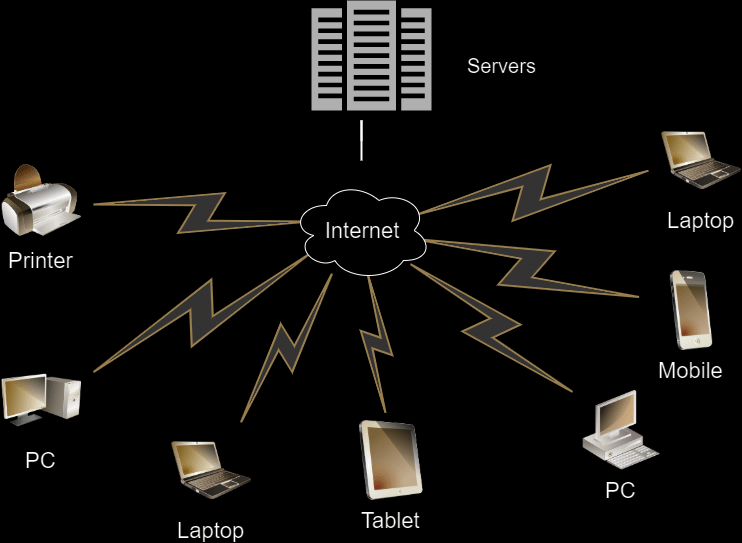
This flexibility is crucial for remote teams and global businesses.
3. Resource Pooling Cloud providers serve multiple customers using a shared pool of resources. The provider dynamically assigns and reassigns physical and virtual resources according to customer demand. You don't know or care exactly which physical server is running your application, just that it's running smoothly. It's like a city's water supply—everyone draws from the same reservoir.
This pooling allows for massive economies of scale, making services cheaper for everyone.
4. Rapid Elasticity Resources can be scaled up or down quickly and, in some cases, automatically. Imagine a retail website during a massive holiday sale. With the cloud, it can instantly add more server capacity to handle the surge in traffic and then scale back down when the sale is over. This elasticity prevents crashes during peak times and saves money during quiet periods.
5. Measured Service Cloud systems automatically control and optimize resource use by using a metering system. You only pay for what you actually use. This could be measured by the amount of storage you consume, the processing power you use, or the data you transfer. It’s a shift to a utility-style payment model, just like your electricity or water bill.
Why Bother with the Cloud?
These characteristics lead to some major advantages over traditional IT infrastructure.
Cost Efficiency
noun
The ability to achieve a goal or produce a result in the most economical way.
With the cloud, you trade large upfront expenses, like buying physical servers, for variable expenses. You pay as you go. This means you don't have to guess your future capacity needs and risk overspending on hardware that sits unused. This model also reduces costs for power, cooling, and IT staff needed to manage the hardware.
The scalability and flexibility of the cloud are game-changers. A small startup can access the same powerful computing resources as a large enterprise, allowing it to compete on a more level playing field. As the business grows, its infrastructure can grow with it instantly.
Finally, cloud providers offer robust disaster recovery and backup solutions that are often too expensive for a single company to implement. They operate data centers in multiple geographic locations. If a disaster like a flood or fire strikes one location, your data and applications can failover to another location and continue running with minimal disruption.
Ready to test your knowledge? Let's see what you've learned about the basics of cloud computing.
What is the core financial advantage of the cloud computing model described in the text?
According to the text, the ability for a user to provision computing resources as needed without requiring human interaction from the service provider is known as what?
Understanding these core concepts is the first step. They explain why cloud computing has become the standard for building and running modern applications.