Cloud and Grid Security Essentials
Security Fundamentals
The Pillars of Security
Security isn't just about stopping attackers. It's about ensuring a system works exactly as it should, without surprises. In computing, security principles are built on a simple, powerful framework known as the CIA triad. It stands for Confidentiality, Integrity, and Availability.
These three pillars provide the foundation for securing any system, from your personal laptop to a massive cloud network.
Confidentiality ensures that information is not disclosed to unauthorized individuals, entities, or processes. Think of it like a sealed letter. Only the intended recipient should be able to read its contents. In the digital world, this is often achieved through encryption.
Integrity is about maintaining the consistency, accuracy, and trustworthiness of data. Data should not be altered in transit or at rest by an unauthorized party. If you have $100 in your bank account, you expect it to remain $100 unless you make a transaction. Integrity checks, like checksums, help verify that data hasn't been tampered with.
Availability means that information and systems are accessible when needed by authorized users. An ATM is only useful if you can withdraw money from it when you need to. Similarly, a cloud service is only useful if it's online and responsive. This principle protects against things like denial-of-service attacks, which aim to make a system unavailable.
The core objectives of cybersecurity are structured around a fundamental framework known as the CIA Triad: Confidentiality, Integrity, and Availability.
A Shared Task
When you use a cloud service, who is responsible for security? The answer is both you and the cloud provider. This is known as the shared responsibility model.
Think of it like renting an apartment. The landlord is responsible for the security of the building. They maintain the main entrance, the foundation, and the fire alarms. But you are responsible for the security in your apartment. You lock your door, secure your windows, and decide who gets a key.
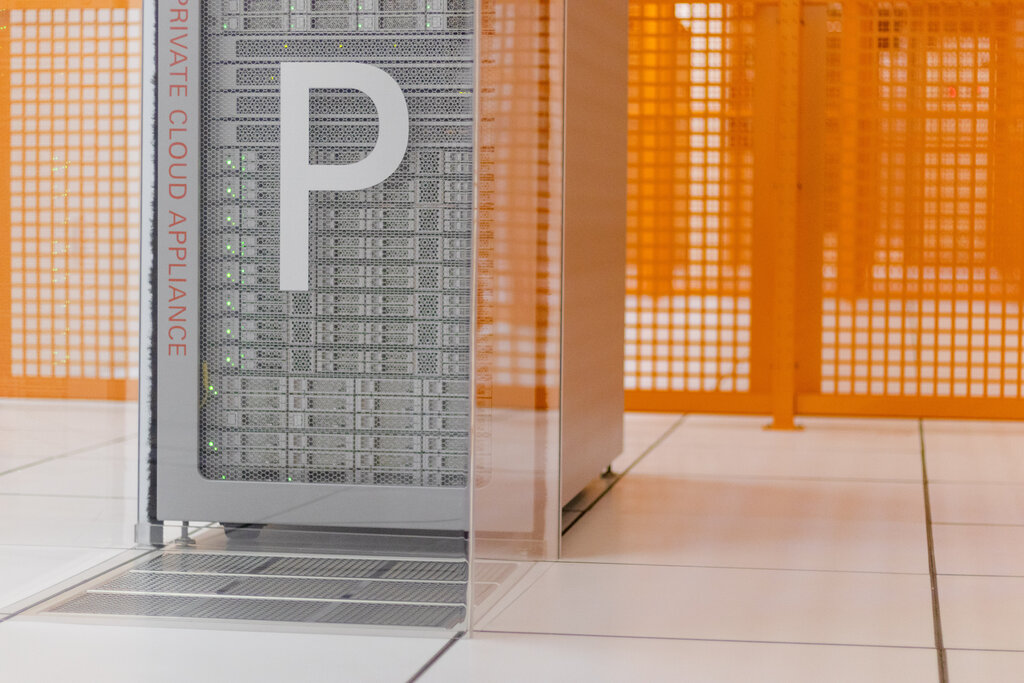
In the cloud, the provider (like Amazon Web Services or Google Cloud) is responsible for the security of the cloud. This includes the physical data centers, the servers, and the core networking infrastructure.
The customer (you) is responsible for security in the cloud. This means you manage who can access your data, configure your applications securely, and protect your user accounts. You control your virtual locks and keys.
| Responsibility | Cloud Provider (Security of the Cloud) | Customer (Security in the Cloud) |
|---|---|---|
| Hardware | Manages and secures physical servers, storage, and data centers. | N/A |
| Software | Secures the foundational software that runs the cloud services. | Secures the operating systems and applications they install. |
| Data | N/A | Responsible for classifying and protecting their own data. |
| Access | Secures the physical infrastructure access. | Manages user identities, permissions, and network access rules. |
Challenges in Distributed Systems
Cloud and grid computing rely on distributed systems, where tasks are spread across many different computers that communicate over a network. This distribution creates powerful and scalable systems, but it also introduces unique security challenges.
First, there's a larger attack surface. Instead of a single machine to protect, you now have many interconnected components. A vulnerability in any one of them could potentially compromise others.
Second, data is constantly in motion. Information travels between different nodes in the network, making it vulnerable to interception if not properly encrypted. Securing data at rest (on a hard drive) is one challenge; securing it in transit is another entirely.
Finally, establishing trust is more complex. In a distributed system, how does one component verify that it's communicating with a legitimate partner and not an imposter? This requires robust authentication and authorization mechanisms to ensure every part of the system is who it says it is.
Understanding these core ideas—the CIA triad, shared responsibility, and the challenges of distributed systems—is the first step toward building secure and reliable cloud environments.
Ready to check your understanding? Let's see what you've learned about these core security concepts.