Chronicles of Iran and the Persian Legacy
Ancient Imperial Foundations
Forging an Empire
Before the Achaemenid Persians, empires often ruled by force and suppression. When Cyrus the Great conquered Babylon in 539 BCE, he took a different path. Instead of razing the city and enslaving its people, he presented himself as a legitimate successor to the Babylonian throne and a liberator, famously allowing exiled peoples, including the Jews, to return home.
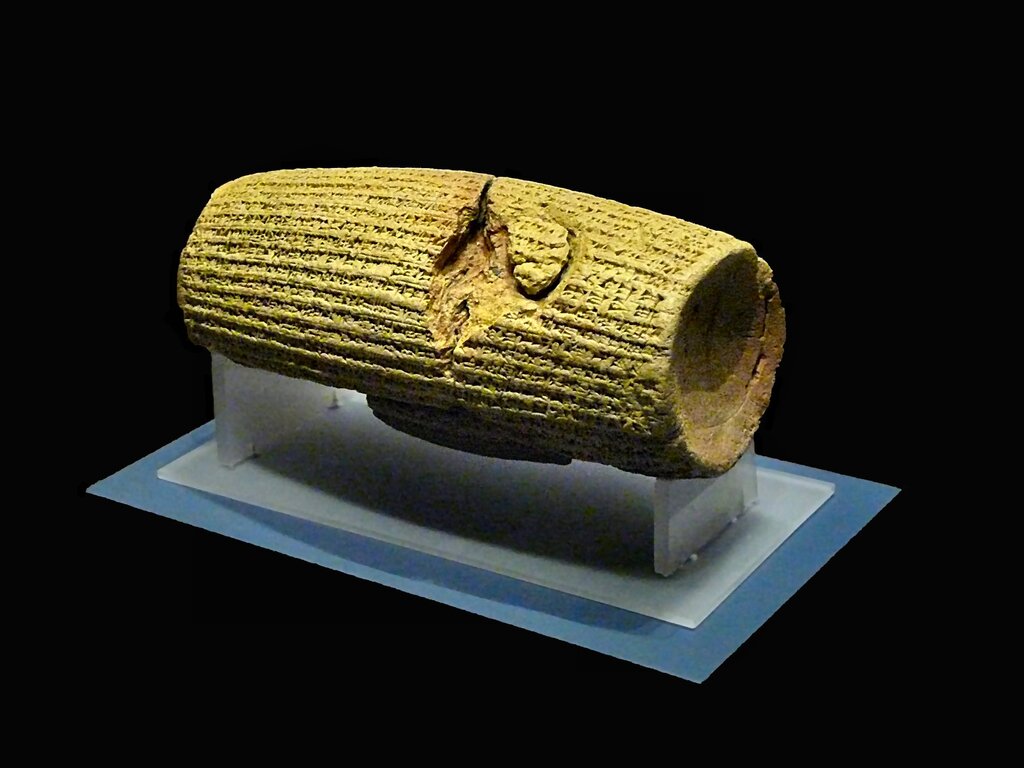
This approach, blending military might with strategic tolerance, was revolutionary. It laid the foundation for an empire that wasn't just held together by fear, but by a system of mutual benefit. Cyrus established a vast domain, but it was his successor, Darius I, who truly organized it into a stable, functioning state. Darius inherited a sprawling, diverse territory and needed a way to govern it effectively without being everywhere at once.
The King's Eyes and Ears
Darius I's solution was the satrapy system, a sophisticated form of decentralized governance. The empire was divided into provinces, or satrapies, each managed by a governor called a satrap. These officials were responsible for collecting taxes, administering justice, and raising soldiers. Crucially, they were often locals who understood the region's customs and culture, which helped to prevent unrest.
To prevent any single satrap from becoming too powerful, Darius implemented a brilliant system of checks and balances. While the satrap managed civil affairs, a separate military commander controlled the troops in the province. Both the satrap and the commander reported directly to the king. A third official, a royal secretary or inspector known as the "King's Eye and Ear," traveled the empire to observe and send secret reports back to the capital. This division of power ensured loyalty and kept the central government firmly in control.
Paving the Way for Unity
Governing a vast empire required more than clever administration; it needed physical connections. The Royal Road was the Achaemenid Empire's information superhighway. Stretching over 1,600 miles from Susa in Persia to Sardis in Anatolia, this well-maintained road was a logistical marvel.
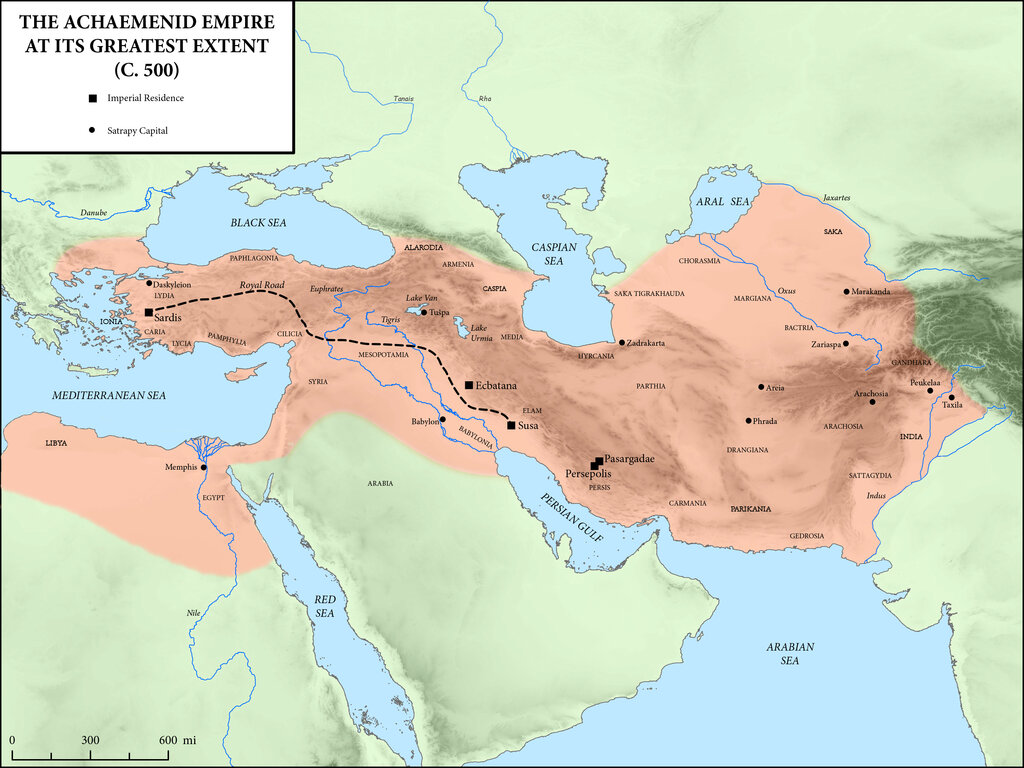
A system of relay stations, stocked with fresh horses and riders, was set up along the route. Royal couriers could travel the entire length of the road in about seven to nine days, a journey that would take a normal traveler three months. This speed allowed for unprecedented communication across the empire, enabling the king to send decrees and receive intelligence with remarkable efficiency. The road also facilitated trade and the movement of troops, physically and economically knitting the diverse regions together.
The empire's unity was further cemented by a standardized currency. The gold and silver siglos were among the first truly international currencies. A daric had a standard weight and purity, guaranteed by the king, making it trusted by merchants from India to Egypt. This economic integration simplified trade, streamlined tax collection, and projected the king's authority into every marketplace.
A Culture of Synthesis
The Achaemenid genius for administration was mirrored in their art and architecture. The ceremonial capital of Persepolis was not just a Persian city; it was a physical manifestation of the empire's multicultural identity. Darius I initiated its construction, and his successors continued to build upon it.
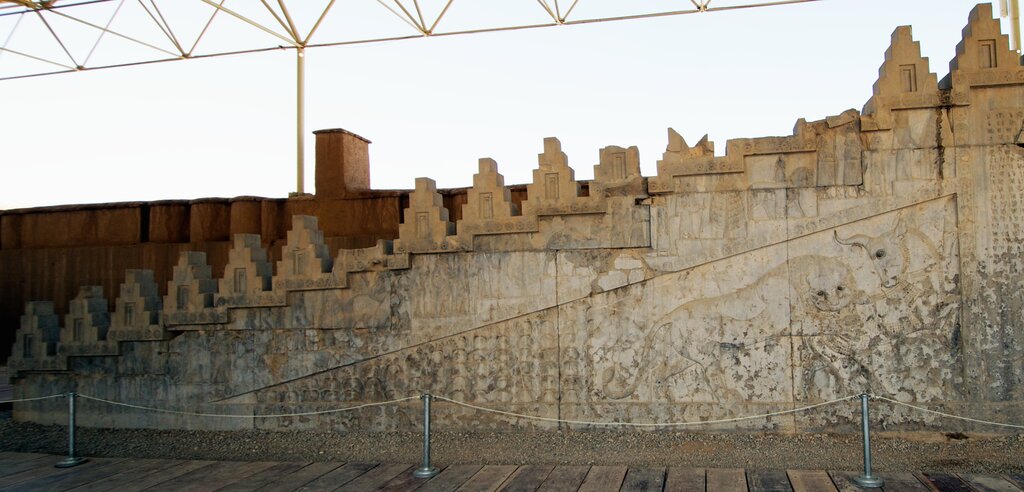
The architecture of Persepolis is a deliberate fusion of styles. The grand columns were inspired by Egyptian and Greek techniques, the palace layouts drew from Babylonian precedents, and the intricate reliefs were carved by artisans from across the realm. The famous Apadana staircase depicts processions of delegates from every satrapy—Lydians, Ethiopians, Indians, and more—bringing tribute to the king. It was a powerful message in stone: all peoples were united under the benevolent rule of the Persian king, each contributing their unique strengths to the whole.
The Achaemenid model of governance, infrastructure, and cultural integration created a template for empire that would be studied and emulated for centuries, from the Romans to modern states.
Here's a chance to test your knowledge of the Achaemenid Empire's foundations.
What was the primary purpose of the satrapy system established by Darius I?
How did Darius I ensure that provincial governors, known as satraps, did not become too powerful?
These innovations established a new paradigm for what an empire could be—a stable, multicultural, and interconnected state that influenced the course of world history.