Choosing Your Investment App
Investment Basics
The Building Blocks of Investing
Investing is essentially putting your money to work with the goal of growing it over time. Instead of letting cash sit idle, you buy assets that you believe will increase in value. Think of it as planting a money tree; it takes time and the right conditions, but it has the potential to grow much larger than the single seed you started with.
To get started, you need to know about the basic building blocks you can invest in. These are called asset classes.
Stock
noun
A type of security that signifies ownership in a corporation and represents a claim on part of the corporation's assets and earnings.
When you buy a stock, you're buying a small piece of a company. If the company does well and its value increases, the price of your stock may go up. If it does poorly, the price may fall. Stocks are known for their potential to grow significantly, but they also come with a higher level of risk because their value can change quickly.
Bond
noun
A fixed-income instrument that represents a loan made by an investor to a borrower, typically corporate or governmental.
Buying a bond is like giving a loan. You lend money to a government or a company, and in return, they promise to pay you back the full amount on a specific date, plus regular interest payments along the way. Bonds are generally considered safer than stocks, but their potential for high returns is typically lower.
So, stocks are about ownership and growth potential, while bonds are about lending and steady income.
What if you want to buy many stocks or bonds at once without having to pick each one individually? That's where exchange-traded funds, or ETFs, come in.
ETF
noun
An exchange-traded fund is a type of pooled investment security that operates much like a mutual fund. Typically, ETFs will track a particular index, sector, commodity, or other asset.
An ETF is like a basket holding many different investments. For example, you can buy an ETF that holds stocks from hundreds of different tech companies, or one that holds a variety of government and corporate bonds. They make it easy to spread your money around without a lot of hassle.
Don't Put All Eggs in One Basket
This leads to one of the most important concepts in investing: diversification. You’ve probably heard the saying, "Don't put all your eggs in one basket." If you drop the basket, you lose everything. The same idea applies to your money.
Diversification is a cornerstone of investment risk management, embodying the timeless wisdom of “don’t put all your eggs in one basket”.
Diversification means spreading your investments across different asset classes. Instead of buying stock in just one company, you might buy stocks in several companies across different industries, and maybe some bonds and ETFs, too.
Why? Because different assets often behave differently. If the stock market is down, your bonds might be stable or even up. By diversifying, you reduce the risk that a poor performance from a single investment will have a major negative impact on your entire portfolio.
Risk and Return
Every investment involves a trade-off between risk and return. This is one of the most fundamental principles of finance.
Risk is the chance that your investment will lose value. Return is the money you make on your investment. Generally, the higher the potential return, the higher the risk involved.
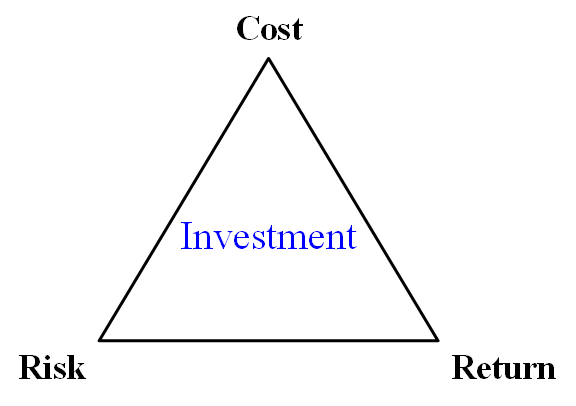
Think of it like this: a savings account at a bank has very low risk—your money is essentially guaranteed. But it also offers a very low return, often not even enough to keep up with inflation. On the other hand, investing in a brand new startup company could potentially bring a huge return if the company succeeds, but there's also a very high risk you could lose your entire investment if it fails.
Your job as an investor is to find a balance you're comfortable with. This depends on your financial goals, your time horizon (how long you plan to invest), and your personal tolerance for risk. Someone saving for a down payment on a house next year will likely take far less risk than someone saving for retirement in 30 years.
Now that you understand these core concepts, you're better equipped to think about your own financial goals.
Let's check your understanding of these foundational ideas.
What is the primary goal of investing?
When you purchase a stock, you are buying a small piece of ownership in a company.
Understanding these principles is the first step. They provide the foundation you need to evaluate different investment options and strategies.