CCNA Introduction to Networks Fundamentals
Networking Basics
What Is a Computer Network?
A computer network is a group of connected devices that can share resources and information. Think of it like a city's road system. Roads connect homes, stores, and offices, allowing people and goods to travel between them. In a network, digital roads connect computers, printers, and servers, allowing data to flow freely.
The main purpose of a network is to make sharing easier. Instead of copying a file onto a flash drive and walking it over to a colleague, you can send it instantly over the network. An entire office can share a single printer, and a team can work on the same project files stored in one central location. This interconnectedness is what makes everything from office collaboration to the global internet possible.
The Core Components
Every network, from the small one in your home to the vast internet, relies on a few key pieces of hardware to function. These components work together to direct traffic and keep everything running smoothly.
Client
noun
A device, such as a computer or smartphone, that requests information or services from a server.
Server
noun
A powerful computer that provides data or services to other computers (clients) over a network.
The client-server relationship is fundamental. When you visit a website, your computer (the client) sends a request to the website's computer (the server). The server finds the requested page and sends it back to your client. It’s like ordering at a restaurant: you (the client) ask the waiter for a dish, and the kitchen (the server) prepares and delivers it.
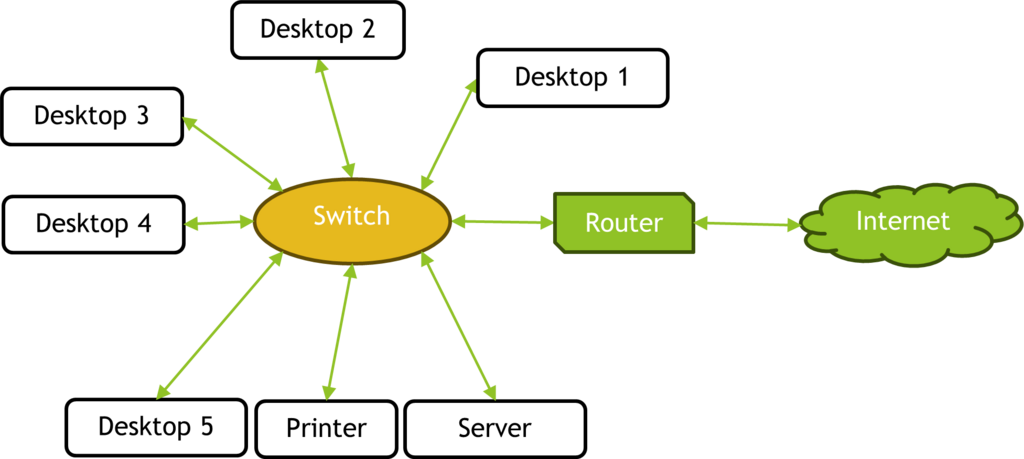
Now, let's look at the devices that manage the connections.
Switch
noun
A device that connects multiple devices together on a local computer network and intelligently forwards data to its intended destination.
A switch operates within a single, local network, like your home or office. Think of it as a smart postal worker inside an office building. It knows exactly which desk (device) each piece of mail (data) is supposed to go to, so it delivers it directly. This prevents data from being sent to every device on the network, which makes communication much more efficient.
Router
noun
A device that connects different networks together and directs traffic between them. It acts as a gateway to the internet.
While a switch manages traffic within a network, a router connects different networks. Your home router connects your local network (all your devices) to your Internet Service Provider's network, giving you access to the internet. A router is like an airport's air traffic controller. It looks at the destination of each data packet and chooses the best path to send it on its journey across the internet.
The final component acts as a security guard for your network.
Firewall
noun
A network security system that monitors and controls incoming and outgoing network traffic based on predetermined security rules.
A firewall sits between your internal network and the outside world, acting like a bouncer at a club. It inspects all data trying to enter or leave the network and checks it against a set of rules. If the data is from a trusted source and follows the rules, it's allowed through. If it's suspicious, it gets blocked. This is a critical first line of defense against cyberattacks.
How Networks Are Arranged
The physical or logical layout of a network is called its topology. It's the map of how all the different components are connected. While there are many complex designs, most are based on a few simple shapes.
Here are three of the most common topologies:
- Bus Topology: All devices are connected to a single central cable, called the bus. It's simple and cheap to set up, but if the main cable fails, the entire network goes down.
- Ring Topology: Devices are connected in a circle, with each device linked to its two neighbors. Data travels around the ring in one direction. This is more reliable than a bus, but adding or removing a device can disrupt the network.
- Star Topology: All devices are connected to a central hub or switch. This is the most common topology used today, especially in home and office networks. If one cable fails, only that one device loses its connection. However, if the central switch fails, the whole network goes down.
Understanding these basic components and layouts is the first step to understanding how digital information travels around the world.
What is the primary purpose of a computer network?
In the client-server model, what is the role of the client?