Carpet Beetle Control
Carpet Beetle Identification
Know Your Enemy
Finding the source of mysterious holes in your sweaters or carpets starts with correct identification. Carpet beetles are tricky pests because the creature doing the damage looks very different from the one you might see flying around your living room. The culprits are the larvae, while the adult beetles are mostly harmless.
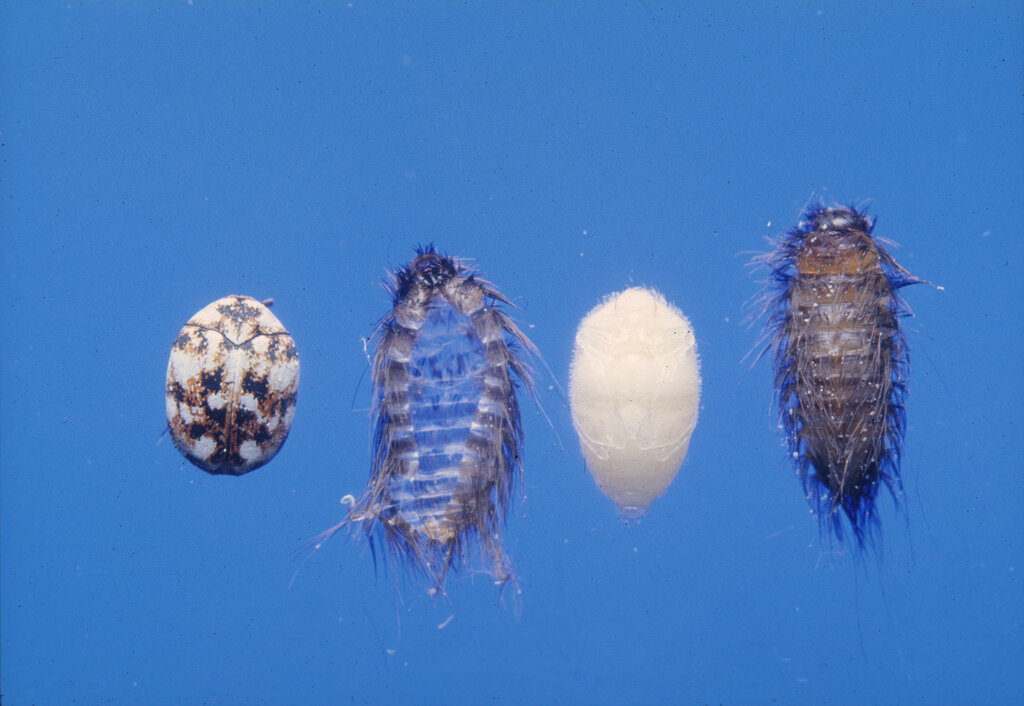
You’re looking for two forms: a tiny, bristly, worm-like larva hidden in dark places, and a small, rounded adult beetle, often found near windows as it tries to get outside to feed on pollen.
The Damaging Larva
The larval stage is when carpet beetles have a voracious appetite for natural fibers. This is the form you need to learn to spot. While they are all small and fuzzy, different species have unique looks.
larva
noun
The active immature form of an insect, especially one that differs greatly from the adult and forms the stage between egg and pupa.
Larvae are usually found in undisturbed, dark areas where food sources are plentiful, like closets, under furniture, or along the edges of carpets.
| Species | Larva Appearance |
|---|---|
| Varied Carpet Beetle | Short, broad, and covered in light and dark brown stripes. Has tufts of hair at its rear end. |
| Furniture Carpet Beetle | Broader at the front and narrower at the back, giving it a carrot shape. Covered in stiff, dark hairs. |
| Black Carpet Beetle | Long and narrow, reddish-brown to black, with a distinctive tuft of long hairs at its tail end. |
The Adult Beetles
Adult carpet beetles are small, oval-shaped insects that are often mistaken for other common household bugs. Finding them is a sure sign that larvae might be hiding nearby. Unlike their young, adults feed on flower pollen and are attracted to light, which is why they are frequently seen on windowsills.
An adult carpet beetle is about 2-5 millimeters long, making it smaller than a grain of rice.
The three common species of adult carpet beetles also have distinct appearances.
-
Varied Carpet Beetle (Anthrenus verbasci): This is the most common type. It has an irregular pattern of white, brown, and yellow scales on its back, giving it a mottled, calico-like look.
-
Furniture Carpet Beetle (Anthrenus flavipes): Similar to the varied carpet beetle, it's slightly larger and more rounded. Its coloring is also mottled, but the spots of white and yellow are often larger and more distinct.
-
Black Carpet Beetle (Attagenus unicolor): This one is easier to identify. It's solid black or dark reddish-brown and has a more elongated, oval shape than the others. It lacks the colorful patterns of its relatives.
Is It Something Else?
Carpet beetles are often confused with other small pests. Knowing the difference is key to tackling the right problem.
Ladybugs: Many people mistake patterned carpet beetles for ladybugs. However, ladybugs are typically larger, more dome-shaped, and have a distinctive bright red or orange color with black spots. Carpet beetles are smaller, more oval, and have mottled or plain dark coloring.
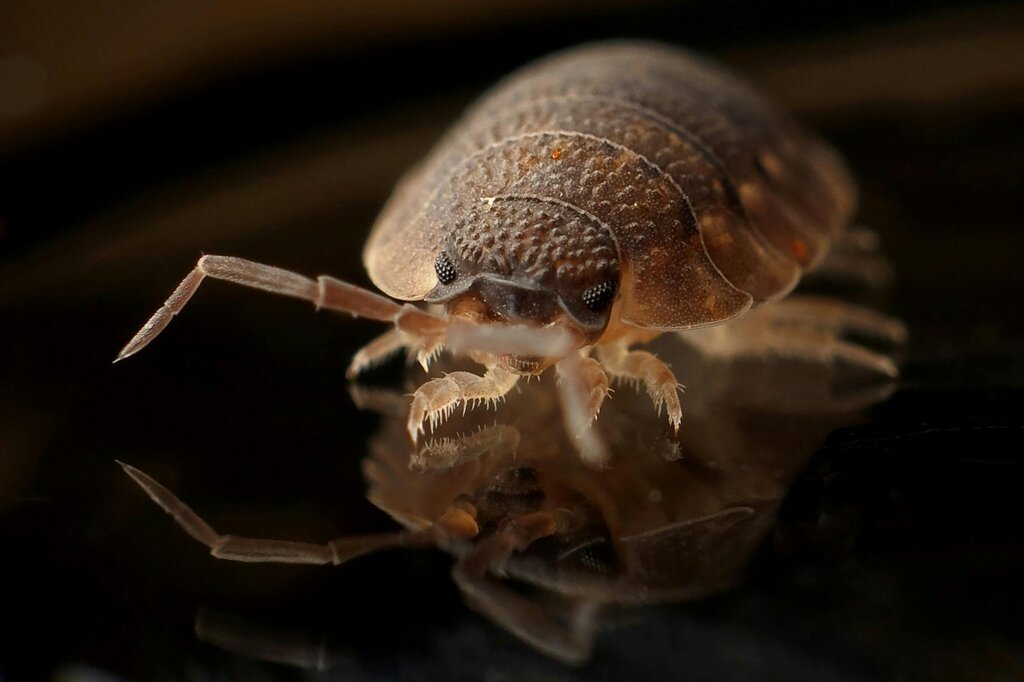
Bed Bugs: Adult bed bugs are reddish-brown, flat, and oval, but they are larger than carpet beetles and do not have wings. Bed bug larvae (nymphs) are translucent and look like smaller versions of the adults, unlike the hairy, worm-like carpet beetle larvae.
Moths: While clothes moths also damage fabrics, you're more likely to see the adult moth rather than the larva. The larvae are creamy-white caterpillars, not the dark, hairy larvae of carpet beetles. The adult moths are small, yellowish-beige, and avoid light, whereas adult carpet beetles are attracted to it.
Which stage of the carpet beetle's life cycle is responsible for damaging natural fibers like wool and silk?
You find a small beetle in your home that is solid black, lacks a mottled pattern, and has an elongated oval shape. Which species is it most likely to be?
Being able to correctly identify these pests is the first and most important step. Once you know what you're looking for, you can start to address the problem.