Building Basic Greek Sentences
Greek Alphabet
The Greek Alphabet
Welcome to the foundation of the Greek language: the alphabet. Learning these 24 letters is your first step toward reading, writing, and speaking Greek. Many letters might look familiar, but some have surprising sounds. The best way to learn is to dive right in.
Learning the Greek alphabet is the first step in mastering the language.
Here are all 24 letters in both their uppercase (capital) and lowercase forms, along with their names and sounds.
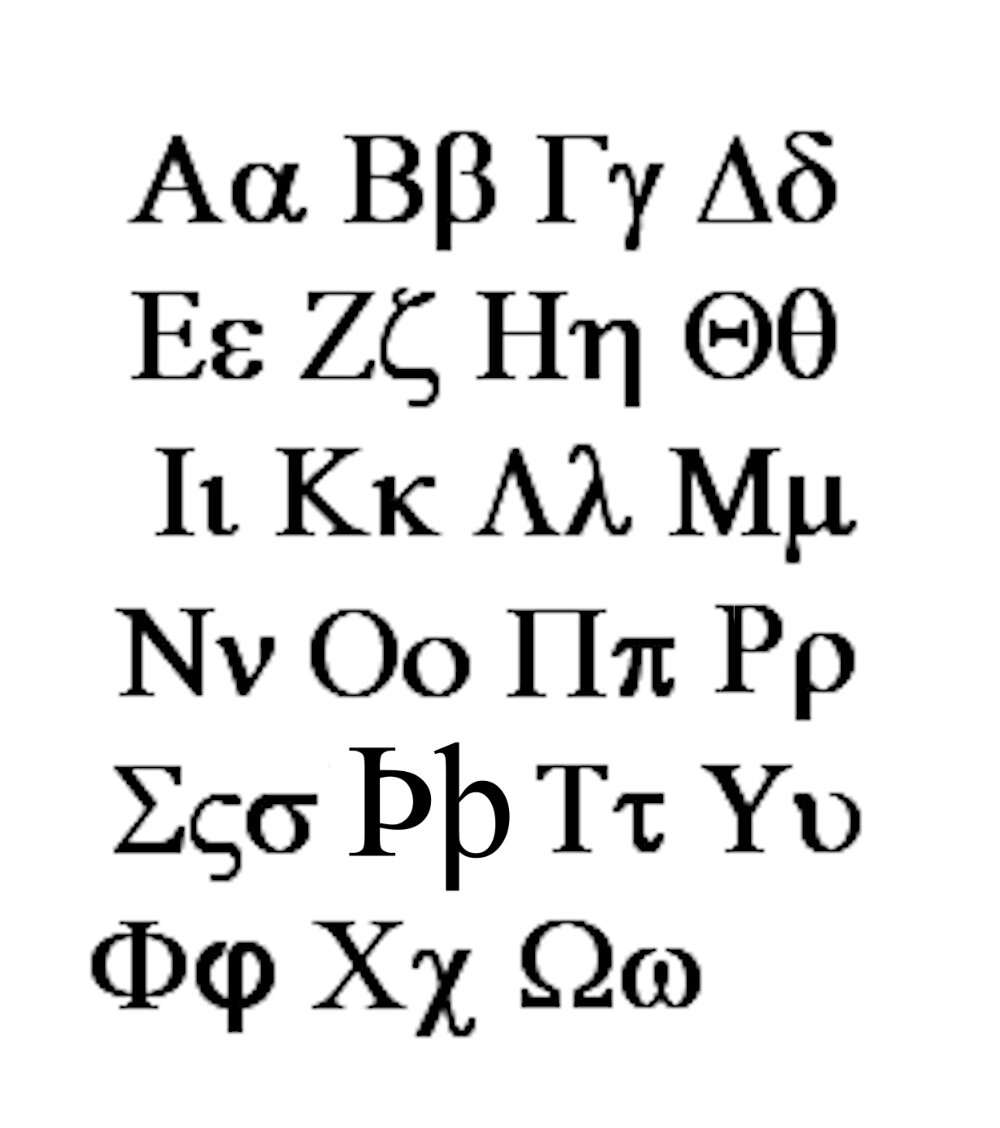
| Uppercase | Lowercase | Name | Pronunciation |
|---|---|---|---|
| Α | α | Alpha (άλφα) | like the 'a' in 'father' |
| Β | β | Beta (βήτα) | like the 'v' in 'vote' |
| Γ | γ | Gamma (γάμμα) | like the 'y' in 'yes' |
| Δ | δ | Delta (δέλτα) | like the 'th' in 'then' |
| Ε | ε | Epsilon (έψιλον) | like the 'e' in 'pet' |
| Ζ | ζ | Zeta (ζήτα) | like the 'z' in 'zoo' |
| Η | η | Eta (ήτα) | like the 'ee' in 'see' |
| Θ | θ | Theta (θήτα) | like the 'th' in 'thin' |
| Ι | ι | Iota (ιώτα) | like the 'ee' in 'see' |
| Κ | κ | Kappa (κάππα) | like the 'k' in 'kite' |
| Λ | λ | Lambda (λάμδα) | like the 'l' in 'love' |
| Μ | μ | Mu (μι) | like the 'm' in 'mom' |
| Ν | ν | Nu (νι) | like the 'n' in 'no' |
| Ξ | ξ | Xi (ξι) | like the 'x' in 'fox' |
| Ο | ο | Omicron (όμικρον) | like the 'o' in 'pot' |
| Π | π | Pi (πι) | like the 'p' in 'pie' |
| Ρ | ρ | Rho (ρω) | a rolled 'r' sound |
| Σ | σ / ς | Sigma (σίγμα) | like the 's' in 'sun' |
| Τ | τ | Tau (ταυ) | like the 't' in 'top' |
| Υ | υ | Upsilon (ύψιλον) | like the 'ee' in 'see' |
| Φ | φ | Phi (φι) | like the 'f' in 'fun' |
| Χ | χ | Chi (χι) | like the 'ch' in 'loch' |
| Ψ | ψ | Psi (ψι) | like the 'ps' in 'oops' |
| Ω | ω | Omega (ωμέγα) | like the 'o' in 'pot' |
Breaking it Down
Memorizing 24 new letters can seem like a lot. Let's make it easier by sorting them into three groups: letters that are familiar, letters that look familiar but sound different, and letters that are completely new.
Letters you already know: Α, Ε, Ι, Κ, Μ, Ν, Ο, Τ, Ζ. These look and sound very similar to their English counterparts. That's almost half the alphabet!
Next are the tricky ones. These letters look like English letters but have entirely different sounds. Pay close attention to these "false friends," as they are a common source of confusion for beginners.
- Β (Beta) looks like a 'B' but sounds like a 'V'.
- Η (Eta) looks like an 'H' but sounds like 'ee', as in see.
- Ρ (Rho) looks like a 'P' but is a rolled 'R' sound.
- Υ (Upsilon) looks like a 'Y' but usually sounds like 'ee'.
- Χ (Chi) looks like an 'X' but makes a throaty 'ch' sound, similar to the Scottish 'loch'.
Finally, we have the letters that will likely look brand new. Don't be intimidated by their shapes. With a little practice, they'll become second nature.
- Γ (Gamma) sounds like the 'y' in yes.
- Δ (Delta) makes a soft 'th' sound, like in the.
- Θ (Theta) makes a hard 'th' sound, as in think.
- Λ (Lambda) is your 'L' sound.
- Ξ (Xi) makes a 'ks' sound, like the 'x' in box.
- Π (Pi) is the 'P' sound.
- Φ (Phi) is your 'F' sound.
- Ψ (Psi) makes the 'ps' sound, as in lapse.
- Ω (Omega) is the final letter and sounds just like Omicron, an 'o' sound as in pot.
A Note on Sigma
You might have noticed that Sigma has two lowercase forms: σ and ς. The rule is simple: if the sigma is the very last letter of a word, you use the final sigma, ς. Anywhere else in the word—at the beginning or in the middle—you use the regular sigma, σ.
For example, the word σεισμός (seismós), meaning earthquake, uses both forms. It starts with a σ, has another σ in the middle, and ends with a ς.
Now you have the tools to recognize and pronounce every letter in the Greek alphabet. The next step is to practice reading and writing them until they feel natural.
Ready to test your knowledge? Let's see how well you remember the letters and their sounds.
The Greek letter Ρ (Rho) looks like an English 'P'. What sound does it make?
Which of the following Greek letters makes the 'ks' sound, like in the word 'box'?
Excellent work. Mastering the alphabet is the biggest and most important first step in learning Greek.